In North Korea's centrally planned economy, commercial advertising has traditionally been minimal. State enterprises rarely compete for customers, and the state dictates production, leaving consumers with few choices. Yet recent broadcasts of domestic football matches reveal a subtle but telling shift: tech firms are now vying for visibility on the pitch.
North Korean television briefly experimented with commercials in mid-2009, but the effort was abandoned after two months, replaced by music fillers. However, growing market activity in certain sectors has fostered a more competitive environment. State enterprises are now crafting brand identities with catchy logos and vibrant packaging to attract buyers. Advertising, however, remains largely confined to select spaces like newspapers and smartphone apps.
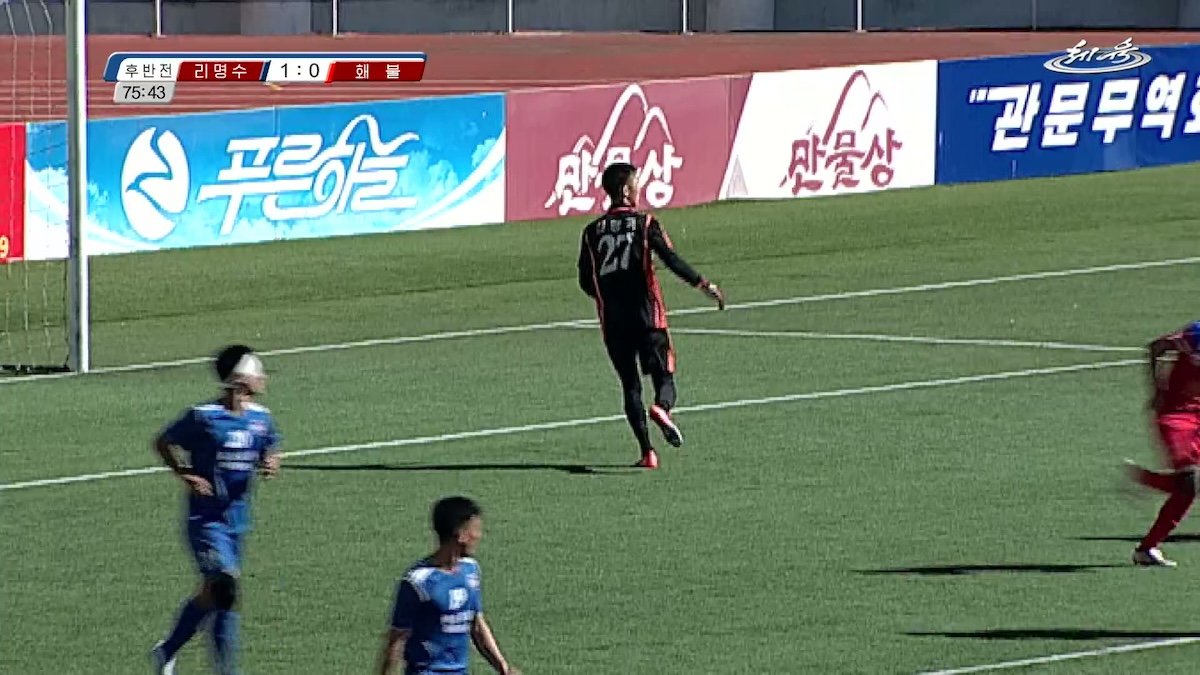
One notable exception is football stadiums. Sponsorship boards ring the field, reaching both live audiences and television viewers. While the exact process for securing these ads is opaque, their presence signals that companies recognize the unique exposure value of such placements.
Tech brands lead the advertising charge
Advertising at North Korean football matches is not new—it dates back at least a decade—but domestic games have not been regularly aired on internationally available Korean Central Television since 2014. Recently, however, the North Korean Sports TV channel has broadcast select matches, offering a rare glimpse into this advertising landscape.
Analysis of recent broadcasts from the Torch Cup (August) and the Republic Championship (September–October 2026), both held at Pyongyang's Kim Il Sung Stadium, reveals that tech companies, particularly those tied to the mobile economy, dominate the 36 advertising boards surrounding the pitch.
The largest advertiser at both tournaments was Korea Mangyong Trading Co., producer of the popular "Jindallae" smartphone series, with five ads per match series. Close behind was Phurunhanul Trading Co., another smartphone brand, with four ads at each event. Phurunhanul has also been involved in developing a North Korean AI chatbot with Kim Il Sung University.
The Korea Sports Fund, a public entity, placed four ads at the Torch Cup and three at the Republic Championship. Cheo Technology, which operates the Koryolink mobile network, and Manmulsang, an e-shopping app, each had three ads per tournament. Other advertisers included Reconstruction General Trade Group, which deals in precious metals and ships, and the Madusan Economic Federation, which split its ads between its main brand, Madusan Bank, and a battery-powered bicycle manufacturing station.
Single-advertiser appearances included Dansang Athletic Wear and Sujongchon Technology Trading Company, an LCD TV brand. These observations are not exhaustive, and the cost of such advertising remains unknown. But the practice underscores both an understanding of this unique exposure opportunity and the companies choosing to leverage it.
This trend aligns with broader shifts in North Korea's economy, where state-linked entities are exploring new revenue streams. It also reflects the regime's interest in promoting its tech sector, even as cyber activities continue to draw international scrutiny.
For observers, the stadium ads offer a rare window into North Korea's evolving commercial landscape. While the state still controls most economic activity, the presence of competing smartphone brands suggests a cautious embrace of market mechanisms—at least in the realm of consumer electronics.
As tensions on the peninsula persist, these small signs of change within North Korea's economy may carry significance beyond the football pitch, hinting at a gradual, state-managed opening to consumer choice.