When Kim Yo-jong, the influential sister of North Korean leader Kim Jong-un, recently warned of "strong retaliatory measures" against Seoul, many observers dismissed it as routine rhetoric. But a closer look at the military balance, diplomatic deadlock, and shifting regional dynamics suggests the Korean Peninsula is entering a more volatile phase than at any point since the armistice of 1953.
The erosion of conventional deterrence
For seven decades, South Korea has anchored its security in the alliance with the United States, relying on American airpower, carrier strike groups, and integrated command networks to deter aggression from Pyongyang. Yet North Korea's rapid advances in ballistic and hypersonic missiles now threaten the very bases and logistics hubs that sustain U.S. operations on the peninsula. Anti-ship missiles also raise the risks for American carriers operating in the region.
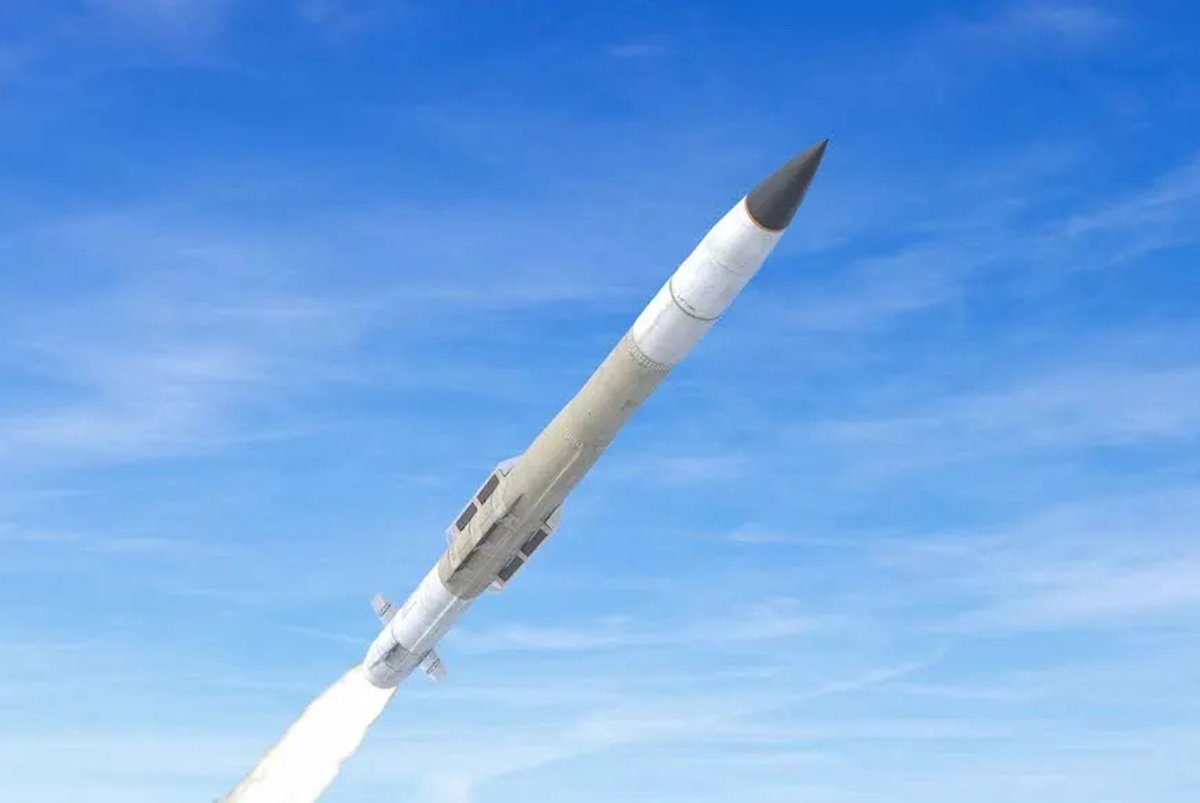
Seoul and Washington have invested heavily in layered defenses—THAAD, Patriot batteries, and Aegis systems—but no interceptor can guarantee success against a saturation attack involving multiple missiles and decoys. Questions about U.S. interceptor inventories further complicate the sustainability of a prolonged high-intensity conflict, especially if Washington must manage simultaneous crises elsewhere.
South Korea's dense urban and industrial landscape makes it uniquely vulnerable. A missile exchange would inflict far greater economic and societal damage on Seoul than on Pyongyang, whose population and infrastructure are more dispersed. In this new era of drone and missile warfare, even a smaller, poorer state like North Korea can challenge a technologically superior adversary, undermining long-held assumptions about military superiority.
North Korea appears to recognize the leverage it has gained. Its expanding arsenal emboldens Pyongyang to test the limits of the U.S.-led security order. Meanwhile, South Korea faces structural pressures: a declining birth rate is shrinking the pool of eligible recruits, forcing difficult choices about force size, automation, and readiness. Seoul has poured resources into AI, surveillance, and precision-strike systems, but battlefield effectiveness under sustained combat remains unproven.
North Korea, meanwhile, has reportedly gained operational experience by supporting Russia in the Ukraine war. Its personnel may have absorbed lessons on drones, electronic warfare, and modern tactics—knowledge that could sharpen its military adaptability and confidence.
The nuclear dimension and the limits of escalation
North Korea's nuclear arsenal fundamentally alters the strategic equation. Despite decades of sanctions and diplomatic pressure, Pyongyang has become a de facto nuclear state with increasingly diverse delivery systems. This creates a stark asymmetry: the United States cannot approach a confrontation with North Korea as it would a conflict with a non-nuclear adversary. Any major U.S. strike would have to account for the possibility of nuclear retaliation against South Korea.
Washington retains overwhelming aggregate military advantages, but North Korea's nuclear and hypersonic capabilities impose real constraints on how those advantages can be used. This emboldens Pyongyang to challenge the regional order, as seen in its recent submarine missile tests and hypersonic warnings to Japan.
The collapse of diplomatic safeguards
Diplomatic channels have largely atrophied. The Trump-era summits produced no lasting agreement, and the Biden administration has shown little appetite for high-stakes engagement. South Korea's conservative government under President Yoon Suk-yeol has taken a harder line, while North Korea has refused to return to talks. The result is a vacuum in which miscalculation becomes more likely.
Economic sanctions have inflicted pain on North Korea, but they have not altered its strategic calculus. Pyongyang has also found workarounds, including a shadow fleet that evades sanctions at sea and workers at Russian drone plants that raise proliferation concerns.
The erosion of deterrence, the nuclear asymmetry, and the absence of diplomatic guardrails are converging. While full-scale war is not imminent, the risk of a limited conflict—triggered by a border incident, a naval clash, or a cyberattack—is higher than it has been in years. Both Koreas, and their allies, must recognize that the old rules no longer apply. Without a renewed effort to rebuild communication channels and address the underlying security dilemma, the peninsula could stumble into a crisis that no one intended.