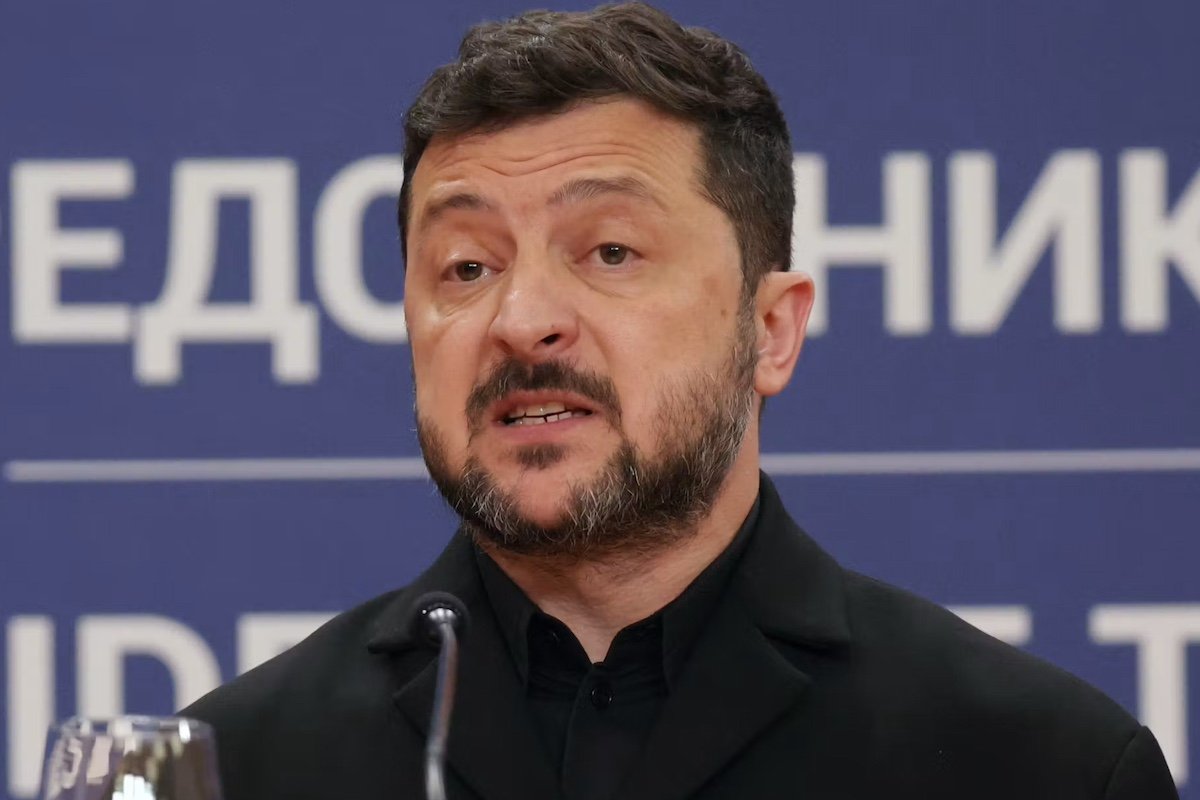
Ukraine marked its independence day on August 24 with allied leaders in attendance, but the celebration was overshadowed by yet another major corruption scandal. The latest turmoil began on August 19, when Mykhailo Fedorov, who had been dismissed as defense minister in a July reshuffle, released a nine-minute video widely interpreted as a direct challenge to President Volodymyr Zelensky.
Fedorov's video contained two provocative elements. First, he called for elections despite the ongoing war—a move both Zelensky and most Ukrainians have repeatedly rejected. Second, he diagnosed a “systemic crisis of governance,” a claim that resonates deeply with the country's long struggle against entrenched corruption.
Corruption in Ukraine is not a new phenomenon. It has persisted through every government since independence, survived the Orange Revolution of 2004 and the Euromaidan protests of 2014—both fought explicitly to end it—and now threatens the very war effort against Russia. The problem has become more visible in the past year, with scandals reaching the highest levels of power.
In November 2025, a bribery scheme worth an estimated $100 million in the energy sector forced the resignation of Zelensky's justice and energy ministers. Both denied wrongdoing, but the fallout also claimed Andriy Yermak, Zelensky's long-time chief of staff, who resigned that same month. His legal counsel has denied any involvement in illegal activities.
Fedorov's own dismissal in July 2026 followed a rift with the armed forces' commander-in-chief, Oleksandr Syrskyi, over strategy and procurement reforms that allegedly threatened entrenched interests. Large-scale public protests erupted, echoing similar unrest a year earlier. On August 5, Olha Stefanishyna, a former deputy prime minister and ambassador to the US, was formally charged with illicit enrichment and filing false asset declarations. She denies the allegations, and a separate investigation into her oversight of the asset recovery agency—where contracts allegedly went to companies linked to her ex-husband—remains open.
Adding to the pattern, Iryna Mudra, the deputy head of Zelensky's presidential office who oversaw judicial reform and the special tribunal on Russian aggression, was dismissed on August 19. Her removal came after anti-corruption agencies launched a new investigation into money-laundering allegations.
Systemic rot, not isolated incidents
These are not five unrelated crises. They are symptoms of the systemic failure Fedorov described. Corruption in Ukraine has evolved from the privatization auctions of the 1990s and gas-trading schemes of the 2000s to the procurement contracts and reconstruction funds of the 2020s. The same oligarchic networks that captured the economy after the Soviet collapse now fight over wartime assets.
The war has compounded the damage. A 2023 sham contract for undelivered mortar munitions worth some $40 million left a critical gap in an already stretched defense budget, straining frontline capabilities. A $100 million scheme in 2025 siphoned funds meant to protect Ukraine's energy grid, worsening the winter for ordinary citizens.
The crisis has now reached the parliament. On the day Mudra was charged, the parliamentary law enforcement committee blocked five bills designed to strengthen anti-corruption efforts. These bills are a non-negotiable EU requirement for releasing over €2 billion in aid before the end of the year and a key item in Kyiv's accession negotiations.
Fedorov's video is both a personal grievance and a diagnosis of a system that may be beyond repair. He alleged that his reforms of defense ministry procurement—worth billions of dollars annually—cost him his post. “The old system lives by its own rules too often. It protects itself. It is scared of change,” he said, without naming Zelensky directly. The asymmetry is stark: reformers get sacked, while insiders with connections seem to avoid prosecution.
When Zelensky was elected in 2019 on an anti-corruption platform, many believed the problem could be solved with political will. But if Zelensky ever had that will, many around him clearly did not. More than four and a half years of full-scale war later, corruption is embedded in sectors from arms procurement to energy, and the fight against it has become as critical as the fight on the battlefield.
For Ukraine's allies, including those in the Indo-Pacific watching the war's broader implications, the message is clear: Kyiv's ability to sustain its defense and reform its governance will determine not only its own future but also the credibility of Western support. As Ukraine's refinery strikes and drone pacts reshape the conflict, the internal battle against corruption remains a decisive front.