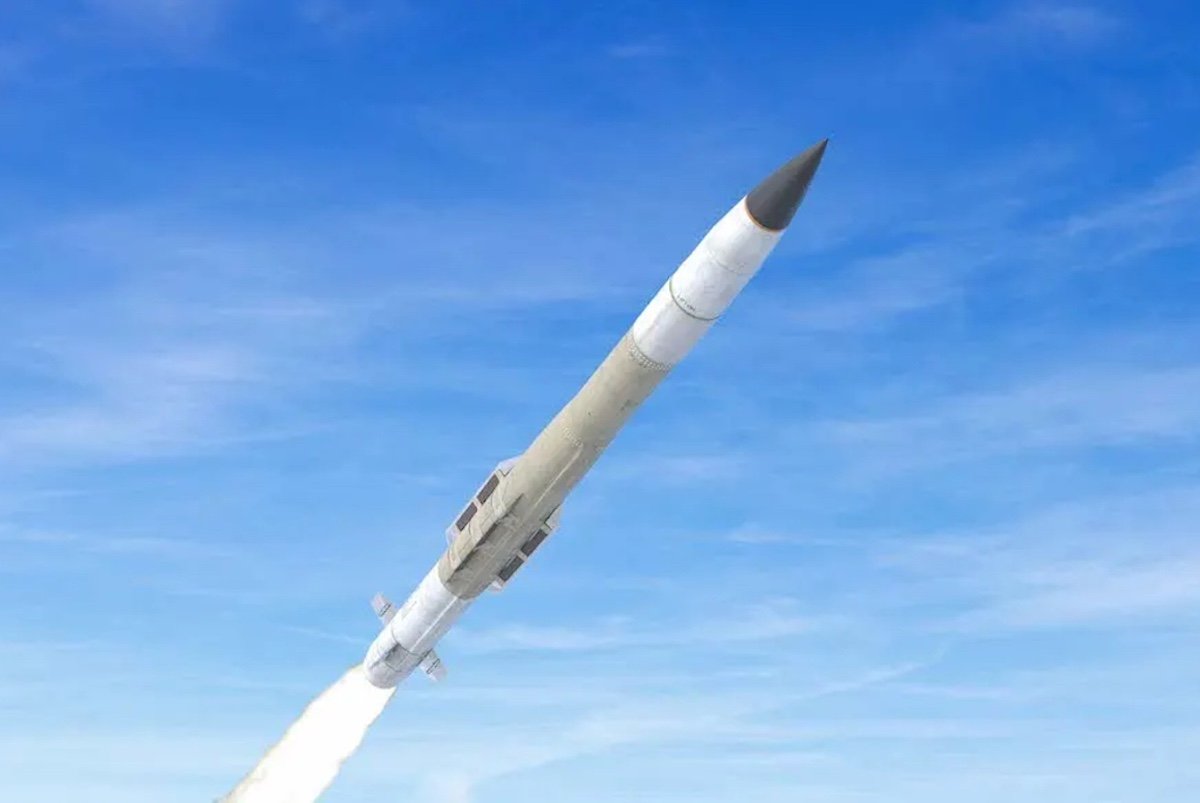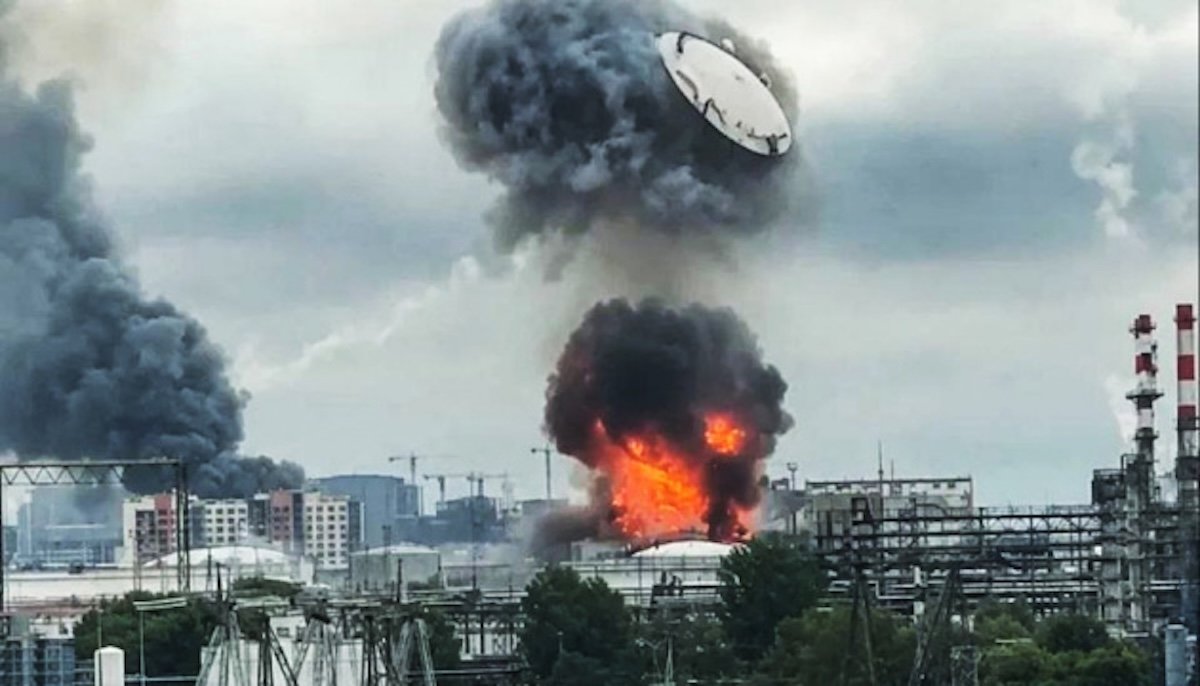
When London authorized Kyiv to use British-supplied Storm Shadow cruise missiles against targets inside Russia in late 2024, Moscow predictably accused the UK of escalating the war and threatened retaliation. Russia's latest warnings over Ukrainian use of British-made drones—that "the deeper its involvement in the conflict … the higher the price it will pay"—may sound familiar. But there is a crucial difference: scale.
Storm Shadow, with a range of 250 kilometers, gives Ukraine a highly capable weapon for striking high-value targets behind Russian lines. Yet Britain and its allies hold finite inventories of this expensive missile. Replenishing stocks demands time, money, and industrial capacity, placing a practical ceiling on their use.
Long-range drones could loosen that constraint. They carry smaller warheads and are easier to intercept than cruise missiles, but they are far cheaper and simpler to manufacture. If Britain and Ukraine produce them in sufficient quantities, their significance lies less in what any single drone can destroy than in the cumulative effect of repeated mass strikes deep inside Russia.
This does not make drones infinitely scalable. Production depends on components, manufacturing capacity, and secure supply chains, while effectiveness hinges on overcoming Russian air defenses and electronic warfare. But these constraints differ from the finite inventories limiting cruise missiles.
A new model for defense cooperation
The UK now has a substantial uncrewed-systems sector. Its drone programs include the jet-powered Nyan, AR3, K3 Scout, and Octopus, spanning long-range strike, surveillance, maritime autonomy, and counter-drone warfare. They are backed by the Uncrewed Systems Centre in Swindon, which the government describes as Europe's "largest drone testing center."
No testing facility, however, can replicate Ukraine's live battlefield, where designs are continuously evaluated against a capable enemy. According to aerospace manufacturer Tekever, this real-world experience has driven more than 100 upgrades to its AR3 surveillance drone.
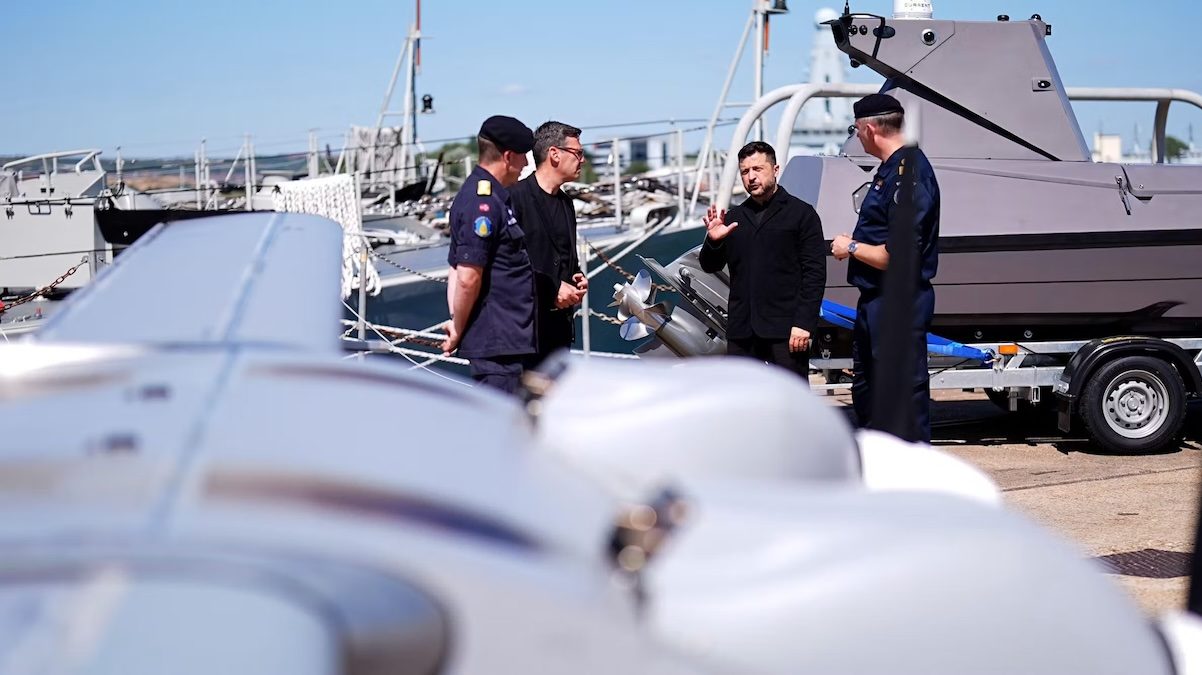
The Octopus program takes this relationship further and is emerging as a model for UK drone manufacturing: take battlefield-tested Ukrainian designs, refine them with British engineering expertise, then mass-produce them in UK factories. Designed to counter the Iranian-designed Shahed drones Russia has used against Ukrainian cities and infrastructure, Octopus is expected to be produced at a rate of thousands per month.
The UK government's technology-sharing arrangements with Kyiv and its co-leadership of the international Drone Capability Coalition extend this knowledge exchange to other systems. This effectively inverts the traditional relationship between Ukraine and its Western arms suppliers: Kyiv is no longer simply the customer. Ukraine increasingly contributes battlefield-tested designs and operational knowledge, while Britain provides engineering expertise, industrial capacity, certification, capital, and access to international markets.
But this is not the only arrangement Ukraine's partners have adopted. Under the "Danish model," European governments have financed weapons production in Ukraine itself, despite the risk of Russian attacks on these facilities. Germany, meanwhile, has become the clearest example of Kyiv's "Build with Ukraine" scheme, under which Ukrainian and German firms establish joint ventures to manufacture drones in Germany. Some of these are known as "resilience factories," relying on local supply chains and workforces far from Russian strikes, with the added deterrent of being manufactured on NATO soil.
Nevertheless, in aggregate, all these imported drones amount to just 5% of Ukraine's drone consumption. The UK's "biggest ever drone package for Ukraine," announced earlier this year, will provide 150,000 units—far fewer than the 10 million drones Ukraine seeks to domestically produce this year, even if most will be short-range battlefield systems rather than weapons capable of reaching deep into Russia.
Scaling up: challenges and opportunities
Were the UK to increase its drone output, this would also strengthen its own military. The government's recent defense investment plan outlined a drone-centric strategy across air, land, and sea, including a Royal Navy "hybrid fleet" combining crewed warships with cheaper autonomous vessels. Yet it remains unclear whether funding matches this reliance on drones. Just £5 billion has been earmarked across all three services, covering every type of uncrewed system and spread over four years, raising doubts about whether production can reach the scale and speed the strategy requires.
Government financing is only part of the equation. Private investment is needed not only to keep smaller drone firms and their supply chains in business and help them scale, but also to signal commercial credibility to prospective international customers. At the same time, drone manufacturers remain dependent to varying degrees on Chinese batteries, motors, electronics, and other components. In August, it was reported that cameras fitted to Royal Navy K3 Scout uncrewed vessels had been found communicating with an IP address in China, although the Ministry of Defense said these were non-sensitive signals.
The incident highlights one risk from Chinese components: industrial reliance. Eliminating such dependencies would make many drones more expensive and difficult to produce, while leaving them untouched creates security and supply risks during a crisis. If Kyiv brings battlefield experience of which designs work, and Britain's contribution is to turn those designs into secure, commercially viable, and scalable industrial production, then the UK must overcome these constraints to make the desired drone surge succeed.
Seen from Moscow, British support for Ukrainian long-range drones is a direct challenge. Russia's response may include increased attacks on Ukrainian production facilities, cyber operations against UK defense firms, or diplomatic pressure on European allies. The partnership also has implications beyond Europe: as drone warfare becomes central to modern conflict, the UK-Ukraine model could influence defense strategies in the Indo-Pacific, where nations like Japan, South Korea, and Australia are investing heavily in uncrewed systems. The depletion of US weapons stockpiles has already forced a shift in Indo-Pacific security posture, making cost-effective drone production a strategic priority. Similarly, China's stealth corvette tests directed-energy weapons for drone defense, underscoring the race to counter drone threats. The UK-Ukraine partnership, by blending real-world combat feedback with industrial scale, offers a template that could reshape how Western allies and their partners approach drone production and security cooperation in the years ahead.