The image of a battlefield where swarms of drones independently pick and strike targets, with no human in the loop, has long been the stuff of science fiction. But the war in Ukraine is pushing that scenario closer to reality. Over the past three years, both Moscow and Kyiv have moved from remotely piloted aircraft to semi-autonomous systems, and now to drones that can complete attacks on their own.
According to weapons technology experts, the pace of development and mass production means that within a few years we could see hundreds or even thousands of fully autonomous drones operating in a single conflict zone. The technology, however, is racing ahead of the legal and ethical frameworks that are supposed to keep human beings in control of lethal force.
From remote control to self-guided strikes
When Russia launched its full-scale invasion in February 2022, neither side had a large fleet of advanced drones. Moscow initially relied on Iranian designs, including the Shahed-136, and has since built its own production lines. Ukraine, which had a small drone sector, has expanded it through private firms and battlefield innovation.
Both sides have added autonomous features to existing platforms. Ukrainian forces have used AI-assisted guidance to complete strikes even when radio links to operators are jammed. In one reported incident in November 2025, a Ukrainian first-person-view drone hit a Russian tank after losing its communications link, with the onboard computer guiding the final phase of the attack.
Russia has gone further. Reports indicate that Moscow has fielded at least one fully autonomous drone model, the V2U, which uses an Nvidia computer to run AI decision-making software. Recovered variants from late 2025 no longer even carry the external communications gear that would allow operator control.
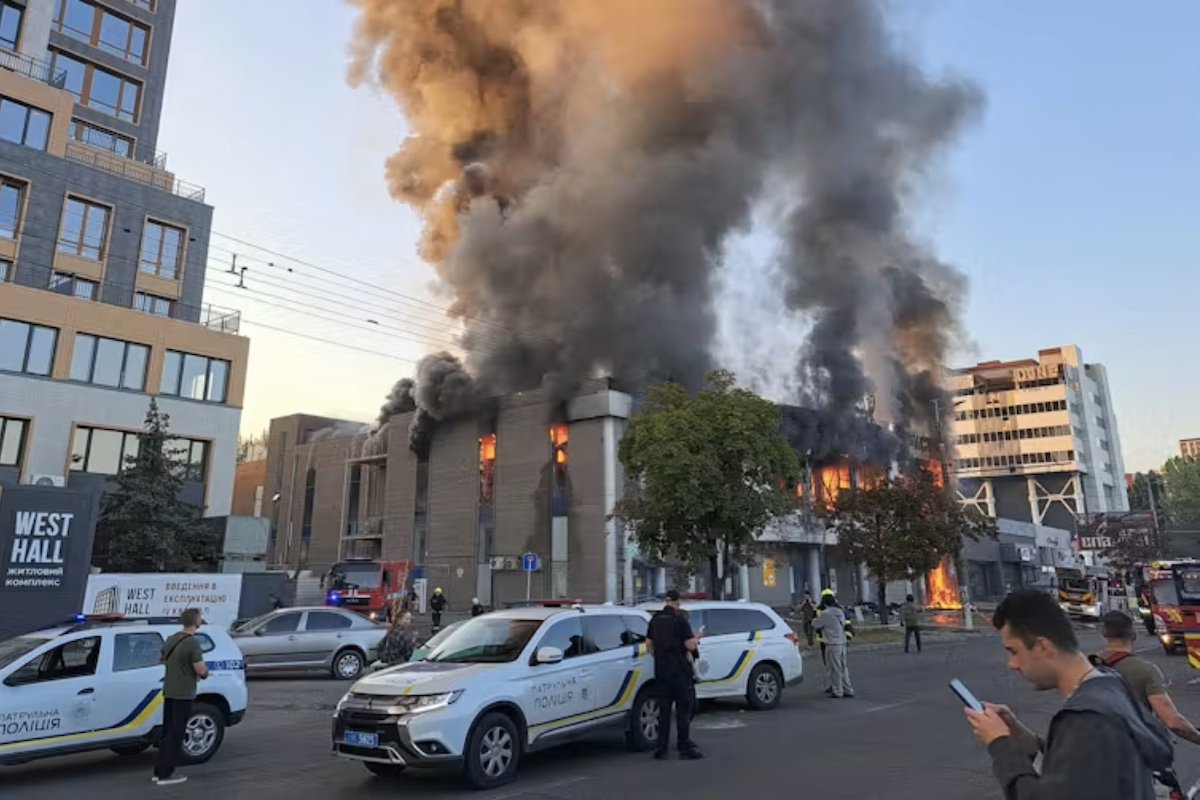
The V2U is designed to select and engage targets on its own after launch. Its onboard AI uses computer vision to recognize objects, track them, and choose aim points. In July, a Russian AI-enabled drone struck a gas station in Zaporizhzhia, killing three civilians. Human operators had selected the target area, but the software independently chose the exact point of impact.
Russia is also integrating similar seeker packages into its Geran series, which are based on the Iranian Shahed-136. These systems allow the drone to guide itself in the final flight phase after a human has picked the target.
Ukraine has focused on modular AI kits that can be fitted to a wide range of drones. One such module tracks a target and guides the drone for the final 500 meters. The manufacturer advertises more advanced versions that could provide full autonomy. Former Ukrainian Defense Minister Mykhailo Fedorov said in July that Kyiv had used a drone that autonomously chose its target with no radio link to a human pilot in strikes on Russian-occupied Crimea, though it has not been mass-produced.
There have also been reports of fully autonomous quadcopters used by Ukraine near Bakhmut two years ago, though questions remain about whether those drones were preprogrammed rather than independently selecting targets.
Battlefield gains, ethical costs
The advantages of autonomous drones are clear: they can operate in jamming-heavy environments, strike deep into enemy territory, and engage moving targets with greater precision. But experts warn that the same incentives that make them effective on the battlefield also undermine the principles of distinction and proportionality that govern the use of force.
“The pressure to deploy more autonomous systems will push aside human judgment about collateral damage and civilian casualties,” said one analyst. The risk is that as the technology becomes cheaper and more reliable, the threshold for using it will drop, and the role of human operators will shrink to simply approving target categories rather than individual strikes.
The trend is not limited to Europe. China's development of stealthy unmanned bombers shows that other militaries are watching closely. The lessons from Ukraine are likely to shape drone programs across Asia, from the resistance drones used in Myanmar to the AI training methods employed by Russian teams.
As the war grinds on, the question is no longer whether fully autonomous drones will appear on battlefields, but when—and whether any rules will be in place to govern their use. The international community, including Asian powers with their own drone ambitions, has yet to agree on limits. The window for setting those rules is closing fast.