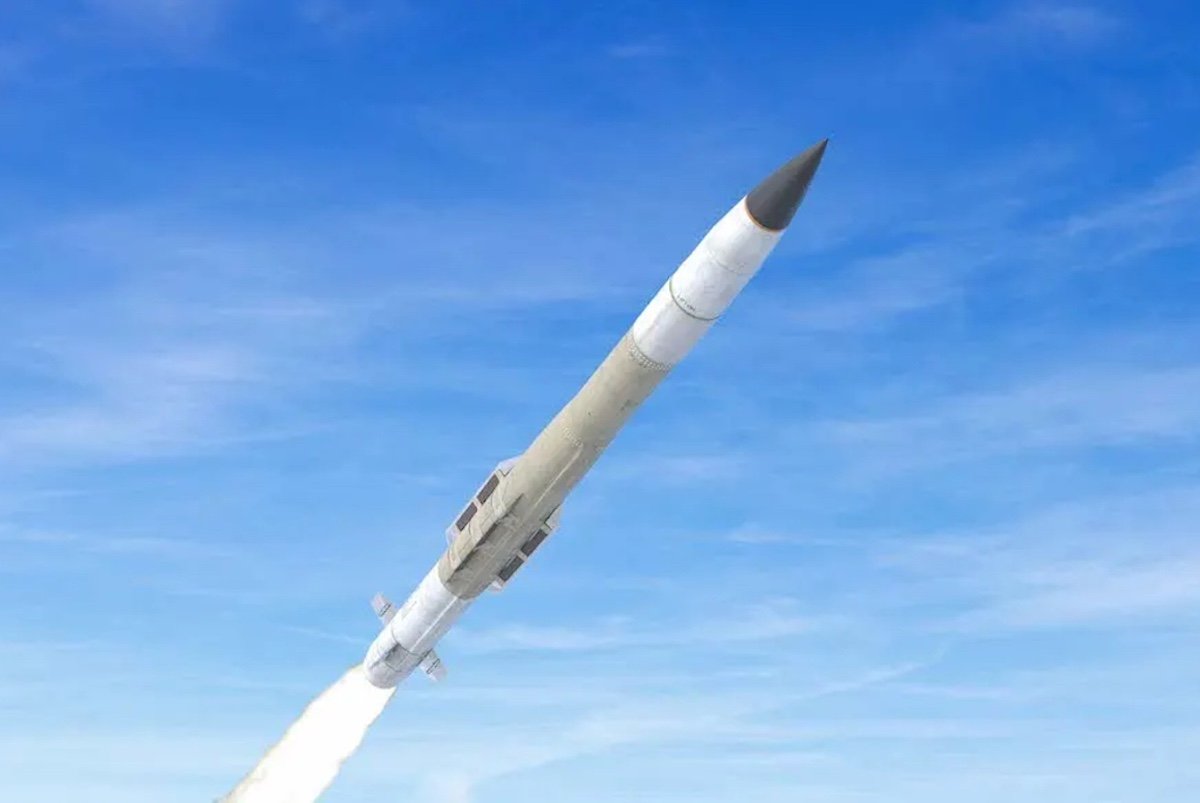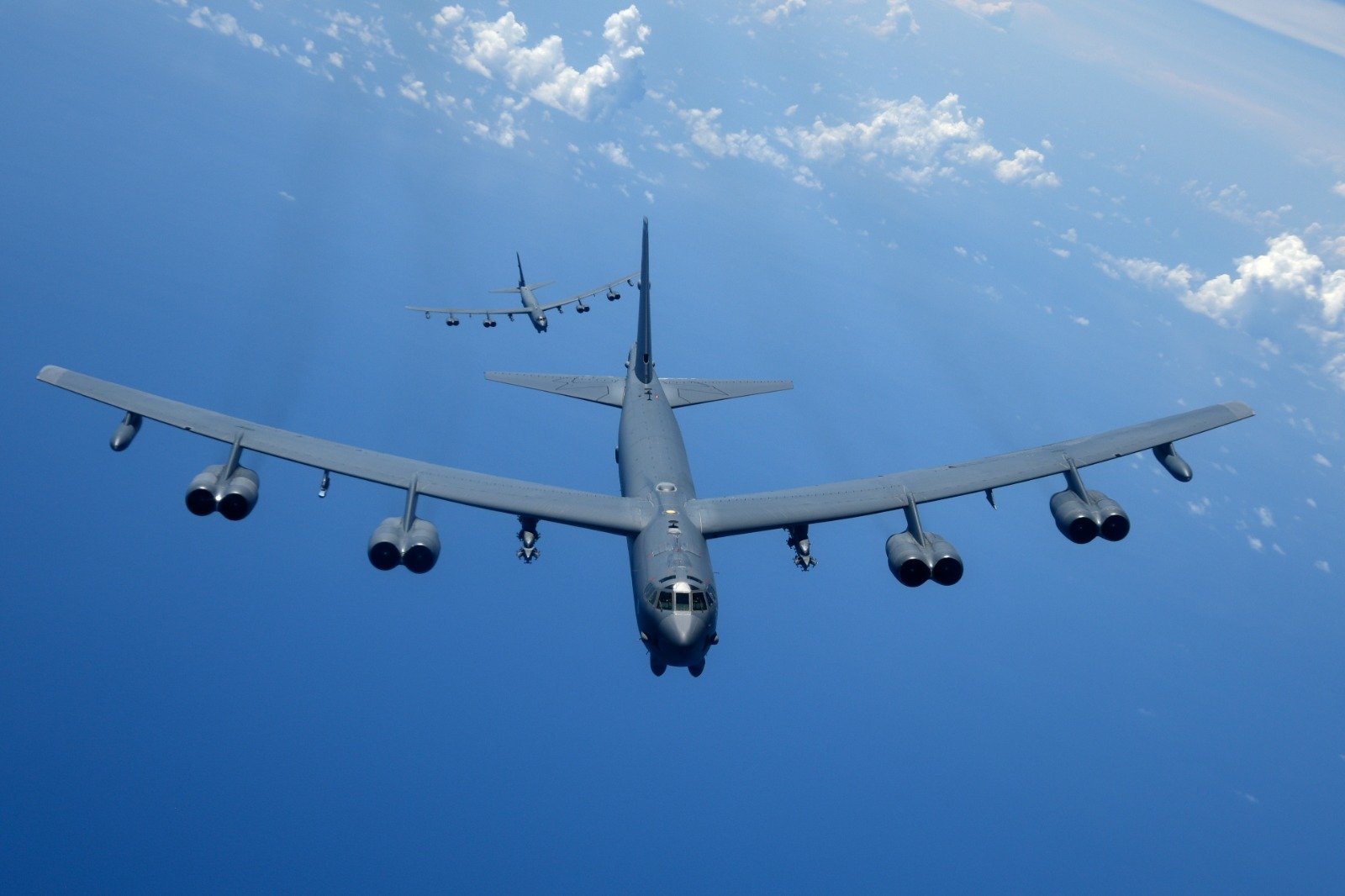
The United States is pushing ahead with plans to turn its aging B-52 Stratofortress bombers into long-range maritime strike platforms, arming them with the AGM-158C Long-Range Anti-Ship Missile (LRASM) to counter the People's Liberation Army Navy's (PLAN) expanding fleet. The integration, expected to be awarded to Lockheed Martin under a sole-source contract, would allow each B-52 to carry up to 20 of the stealthy, autonomous missiles, according to a Naval Air Systems Command notice.
The LRASM, derived from the AGM-158 Joint Air-to-Surface Standoff Missile (JASSM) already used on the B-52, employs onboard sensors, electronic support measures, and infrared terminal guidance to strike heavily defended naval targets beyond 320 kilometers without relying on GPS or active radar emissions. This capability is designed to penetrate modern air defenses and hit moving warships, making it a key tool in the US military's strategy to deter Chinese naval aggression in the Indo-Pacific.
Strategic rationale and the PLAN's numerical edge
The move comes as the PLAN has become the world's largest navy by hull count, surpassing the US Navy in battle force ships between 2015 and 2020, according to an April 2025 Congressional Research Service (CRS) report. The CRS, citing Department of Defense estimates, says the PLAN now operates more than 370 battle force platforms—excluding roughly 60 missile-armed patrol combatants—and projects that number to grow to 395 by 2025 and 435 by 2030, driven primarily by surface combatants.
US defense planners argue that strategic bombers like the B-52 offer an asymmetric, cost-effective counter to this numerical superiority. With intercontinental range, rapid transit speeds, and massive payload capacity, B-52s can launch multiple LRASMs from unpredictable azimuths outside hostile air defenses, creating a persistent maritime strike deterrent that reduces risks to carrier strike groups (CSGs) facing sophisticated Chinese air defenses.
This approach also addresses a potential anti-ship firepower gap in the US Navy. As Dmitry Filipoff noted in a February 2023 article for the Center for International Maritime Security (CIMSEC), the Harpoon missile—the Navy's main anti-ship weapon—cannot fit into more than 9,000 vertical launch cells across the fleet. Destroyers and cruisers carry only eight Harpoons each, and the missile's relatively short range of 128 kilometers for most variants forces vulnerable carrier air wings to mass salvos within hostile air defenses. Filipoff warns this could leave the US Navy virtually unable to mass modern anti-ship cruise missile strikes.
Integration and allied cooperation
The B-52 integration rounds out maritime strike upgrades across the US Air Force's strategic triad, following previous deployments on the B-1B Lancer and recently disclosed launches from the B-2A Spirit. The LRASM is also being integrated with the F-35 and operates from allied aircraft such as Australian F/A-18s and P-8 maritime patrol aircraft, creating multiple ways to expand US and allied maritime strike coverage.
Under the US Distributed Maritime Operations (DMO) concept, air-based anti-surface fires disperse launch platforms to confound adversary targeting while concentrating massed effects against enemy warships. By striking beyond enemy ranges, these aviation assets secure the localized sea control required for joint power projection. Bombers can also return to base and rearm within hours, generating high sortie salvos that saturate naval formations without placing vulnerable US carriers at risk—a contrast to surface combatants that face acute replenishment delays.
Limitations and vulnerabilities
However, the LRASM is not a wonder weapon. It might be effective against isolated PLAN ships, but such cases are probably rare. Daniel Rice, in a July 2024 China Maritime Studies Institute (CMSI) report, describes how PLAN carrier strike groups organize fleet air defense in three concentric rings. The outer zone, spanning 185 to 400 kilometers, uses carrier-borne J-15 fighters to intercept airborne hostiles. The middle zone, extending 45 to 185 kilometers, relies on Type 052D destroyers and Type 054A frigates equipped with radars, HQ-16 missiles, and HHQ-10 interceptors. The inner zone, reaching 45 kilometers, depends on terminal defense systems.
Moreover, a US-China conflict over Taiwan would consume vast quantities of precision-guided munitions like the LRASM, potentially outpacing US manufacturing capacity. Seth Jones, in a May 2026 article for the Center for Strategic and International Studies (CSIS), estimates the US could expend between 450 and 1,000 LRASMs within just the first week of such a conflict. Each missile costs roughly US$3 million and has a two-year production lead time, making rapid replenishment difficult.
Beyond munition limits, US kill chains—the assets, sensors, and processes guiding munitions to targets—could be disrupted by Chinese electronic warfare and cyber attacks. The B-52's age and lack of stealth also make it vulnerable to long-range air-to-air missiles and surface-to-air missiles, particularly if it operates within the outer defense ring of a PLAN CSG.
Despite these challenges, the integration program signals a broader shift in US strategy toward distributed, standoff maritime strike. As the PLAN continues to grow, the US and its allies are seeking ways to maintain deterrence without exposing high-value assets. The B-52, with its proven reliability and massive payload, is set to play a central role in this evolving approach.
For now, the focus is on completing the integration and ensuring the LRASM can be deployed effectively. But as analysts point out, the real test will come in a conflict, where munition stocks, production capacity, and the ability to penetrate layered defenses will determine the outcome. The US is betting that its bombers can tip the balance, but the margin for error is thin.