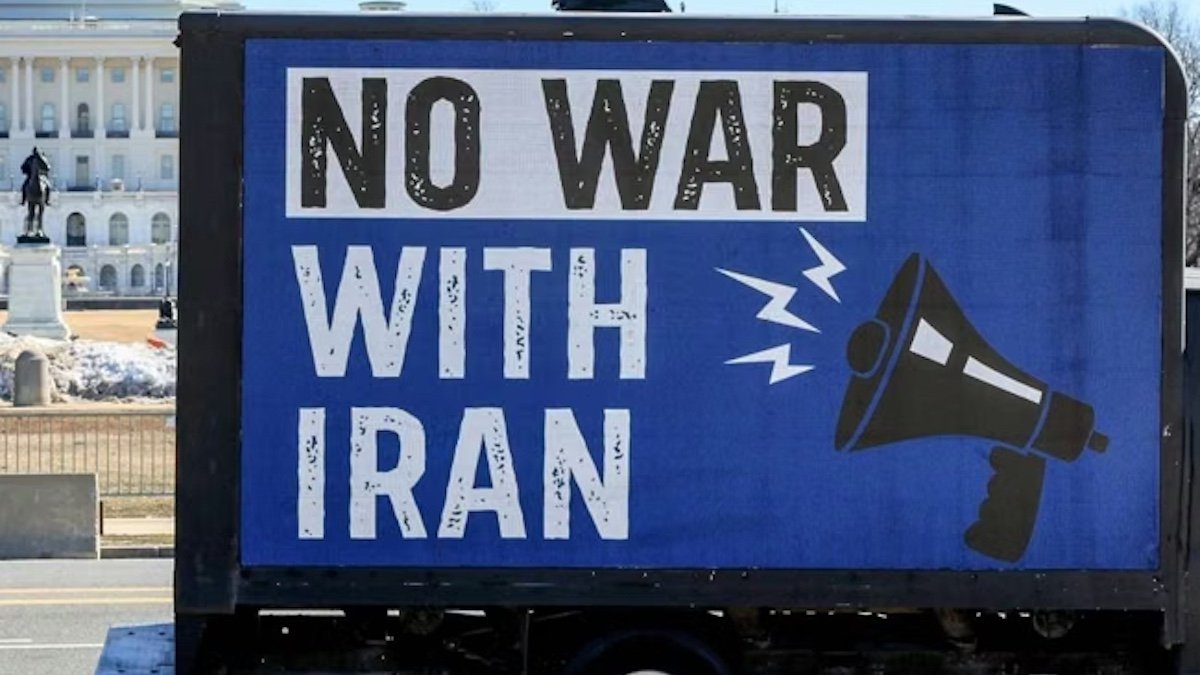
American voters delivered a resounding verdict on Tuesday, punishing the Trump administration for its costly war against Iran. The midterm elections were a clear repudiation of a foreign policy that prioritized military confrontation over diplomacy, and the economic strain that came with it.
For the Democratic Party, which now controls Congress, the lesson is twofold. While celebrating their victory, they must recognize that the same anti-war sentiment that propelled them to power also explains their defeat two years ago, when voters blamed the Biden administration for the wars in Ukraine and Gaza. The pattern is unmistakable: from Israel to Europe, electorates are turning against leaders who prolong conflicts.
On election night, President Trump conceded to Fox News, "I think a part of it was Iran." Vice President JD Vance was more direct, posting on X: "The reason we lost is the war. The president himself said so last night…. everyone knows why we lost." According to the AP Voter Poll, roughly 60% of voters deemed the military action against Iran wrong, while nearly 90% cited the cost of living as a crucial factor.
The war and the economy were inseparable. Gasoline prices, which hovered around $2.80 per gallon before the conflict began on February 28, surged by 55% by mid-May and averaged $4.43 in September. The 10-year Treasury yield climbed from below 4% to above 5%, and the Pentagon requested over $200 billion in supplemental war funding. Every household with a mortgage, car loan, or credit card balance felt the pinch.
A global shift toward peace
The anti-war message is not confined to the United States. In late October, Israeli voters stripped Prime Minister Benjamin Netanyahu of his majority following his wars in Gaza, Lebanon, and Iran. European leaders who have backed endless conflict in Ukraine are also facing electoral backlash. German Chancellor Friedrich Merz's approval rating has sunk to 10%, the lowest ever recorded for a chancellor, while French President Emmanuel Macron's approval fell to 15% in October. In Bulgaria, Iliana Iotova, who advocates dialogue with Moscow, won the presidency with over 58% of the vote.
This global trend underscores a simple truth: diplomacy is safer, more effective, and far cheaper than war. For the Democrats, the challenge is to translate this into policy, particularly on Ukraine.
The party must resist its instinct to demonize Russia and instead champion a diplomatic resolution. Understanding the war's origins is essential. In 1990, the United States assured Mikhail Gorbachev that NATO would not move "one inch eastward," a promise broken by the Clinton administration. In 2008, the Bush administration pushed the Bucharest declaration that Ukraine and Georgia "will become members of NATO," despite Ambassador William Burns's warning that this was a red line for Russia. In 2014, the US backed the coup against Ukraine's elected president, Viktor Yanukovych, as revealed in the leaked Nuland-Pyatt call. And in April 2022, when negotiators in Istanbul neared a peace deal based on Ukrainian neutrality, the US and UK intervened to block it.
Today, 75% of Ukrainians support negotiations with Russia to end the war. A pragmatic framework could include halting NATO's eastward expansion, Ukraine adopting permanent neutrality on the Austrian model of 1955, and drawing an armistice line with both sides renouncing force to change it. Ukraine could still pursue EU membership as a neutral state.
Democrats should embrace such a diplomatic path. It would end the war, save Ukraine, and resonate with both Ukrainian and American voters. The party's base is already ahead of its leaders: a New York Times/Siena poll from May 2026 found that three-quarters of Democratic voters oppose US military and economic assistance to Israel.
The midterm results are a mandate for peace. Democrats must heed it, not just to win elections, but to govern wisely. The first duty of the new Congress is to restore its constitutional authority over war and the power of the purse, ensuring that US forces are not sent into combat on a president's whim or at the behest of foreign lobbies. As the anti-war message of the midterms makes clear, voters want a foreign policy that prioritizes diplomacy. The Democrats have a historic opportunity to deliver it.