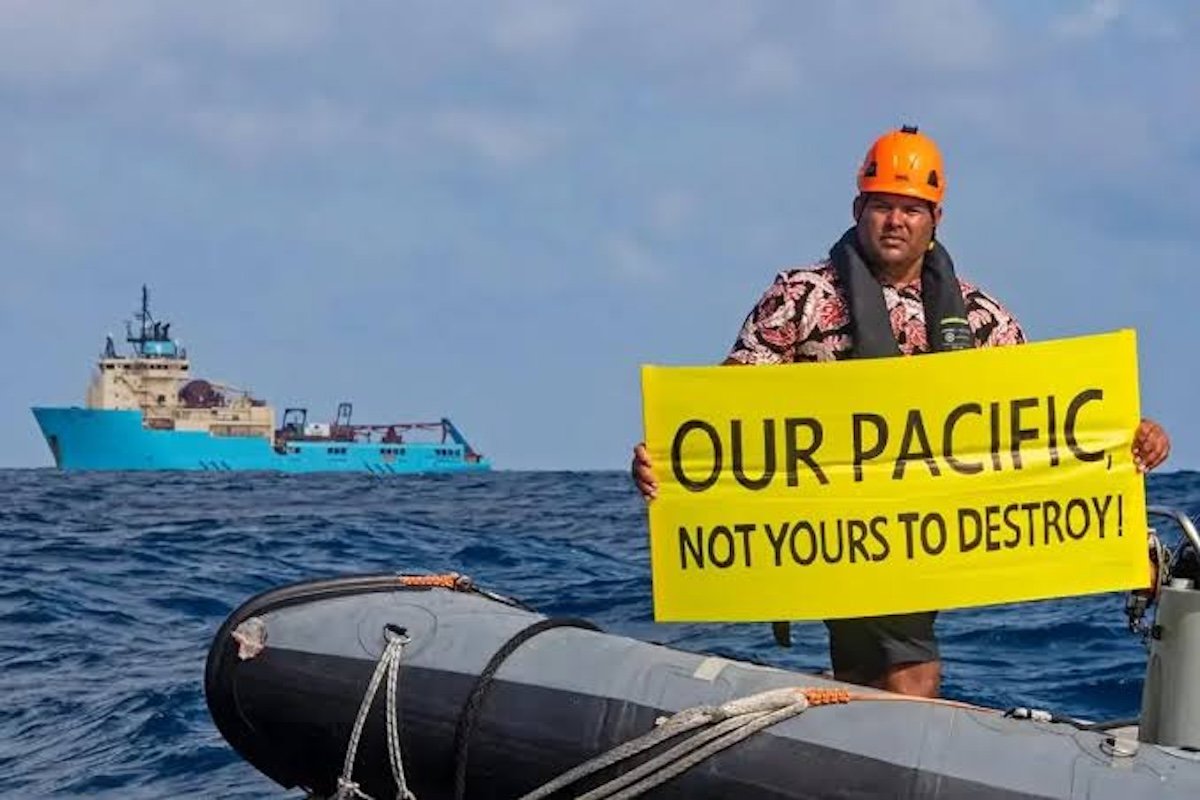
In a move that defies a federal judge's recent ruling, the Trump administration on Thursday auctioned off deep-sea mining leases covering more than 31 million acres of ocean floor near American Samoa. The sale, conducted by the Department of the Interior's Marine Minerals Administration, is a key step in President Donald Trump's push to accelerate seabed extraction of minerals like nickel, cobalt, copper, and manganese, which are vital for batteries and electronics.
The auction, held at a fire department headquarters in Thousand Oaks, California, drew protests from dozens of demonstrators. The only bidder, startup Wetstone US Ventures, secured both lease areas at the minimum bid of $3 million each. The 20-year leases permit surveys and exploration, but commercial extraction would require further approval.
Interior Secretary Doug Burgum hailed the sale as a historic step for American energy security, saying it "opens a path to learn more about the resources off the coast of American Samoa." However, the administration's deep-sea mining policy has faced fierce opposition from environmental organizations, marine scientists, and Pacific Island communities who warn of irreversible damage to fragile ecosystems and traditional ways of life.
Court ruling ignored
The lease sale proceeded despite a Monday ruling by US District Judge Jill Otake in Hawaii, who found that the National Marine Fisheries Service (NMFS) violated the Endangered Species Act (ESA) by failing to consider the impacts of potential mining activities, not just the lease sales. Judge Otake, a Trump appointee, wrote that "caution and foresight before acting are necessary" to prevent harm to vulnerable species.
Environmental groups condemned the auction. Julia Singer, campaign manager at Oceana, said, "These lease sales will open the floodgates to the exploitation of our deep seas." She added that thousands of scientists and local leaders have warned of the dangers, yet the administration continues to ignore widespread opposition.
Sabrina Suluai-Mahuka, founder of the American Samoan youth group Finafinau, expressed dismay: "We had hoped it would never come to this. Yet here we are, watching our ocean being auctioned to the highest bidder."
Arlo Hemphill of Greenpeace USA noted that the US has given the deep-sea mining industry its first foothold in US waters despite the court's finding. "Once mining strips away habitat that took millions of years to form, no amount of money can bring it back," he said.
David Henkin, deputy managing attorney at Earthjustice, argued that the auction was illegal because the government must comply with the ESA before any lease sale. "We will use the full extent of the law to vigorously push for the leases to be voided," he stated.
Three lawsuits are challenging the administration's deep-sea mining plans, including one brought by the Samoan council of chiefs Faleula o le Manu'atele, which questions federal authority over the waters. Meanwhile, a study in Scientific Reports found that polymetallic nodules, the mineral-rich rocks targeted by miners, are habitats for unique organisms, and commercial mining could lead to irreversible biodiversity loss.
The auction underscores the growing tension between the Trump administration's resource ambitions and environmental and indigenous rights concerns in the Pacific. As the US pushes forward, the region watches closely, with implications for similar industrial plans and US foreign policy in the Indo-Pacific.