When Indian leaders declared in 1998 that the United States and India were “natural allies,” it marked a deliberate break from decades of Cold War mistrust. A decade later, the 2008 US-India Civil Nuclear Agreement sought to turn that rhetoric into institutional reality, laying the groundwork for a strategic partnership that has since expanded into defense co-production and high-technology collaboration under initiatives like the Major Defense Partner designation and the TRUST framework.
Yet the relationship today faces fresh turbulence. Trade protectionism, tariff disputes, and divergent energy procurement choices have injected volatility into bilateral ties. In this context, civil nuclear energy should be reclaimed as the anchor of the partnership. While defense and technology foster alignment, nuclear projects create multi-billion-dollar, 60-to-80-year physical infrastructure that binds national power grids, supply chains, and regulatory bodies for the long haul.
Civil nuclear power is also the foundation for advanced technological collaboration. Powering the superintelligence infrastructure, semiconductor foundries, and industrial clean-tech facilities envisioned under TRUST requires dense, zero-emission baseload power that intermittency-constrained renewables cannot deliver. The timing to realize this vision has arrived: with the passage of India’s SHANTI Act in December 2025, New Delhi has delivered the statutory framework that foreign vendors long demanded, capping operator liability, establishing legal pathways for private joint ventures with up to 49% foreign direct investment, and streamlining regulatory channels.
Strategic autonomy and geopolitical imperatives
Pursuing US-India civil nuclear trade responds to three interconnected drivers: reinforcing India’s strategic autonomy, reducing New Delhi’s legacy dependence on Russia, and offering an alternative to Chinese dominance in the developing world.
First, civil nuclear cooperation serves India’s commitment to strategic autonomy. For New Delhi, independence is impossible without long-term energy security. As India advances toward its target of 100 gigawatts of nuclear capacity by 2047, nuclear energy provides the dense, zero-emission baseload power required to drive industrial expansion, high-performance computing centers, and domestic defense production without compromising net-zero commitments. From Washington’s perspective, supporting India’s autonomy reinforces a core US objective: fostering a more capable partner that can act as a security provider and economic anchor in the region. Expanding nuclear trade allows India to diversify its high-technology energy ecosystem, strengthening its resilience and fulfilling the US vision of an order upheld by capable partners.
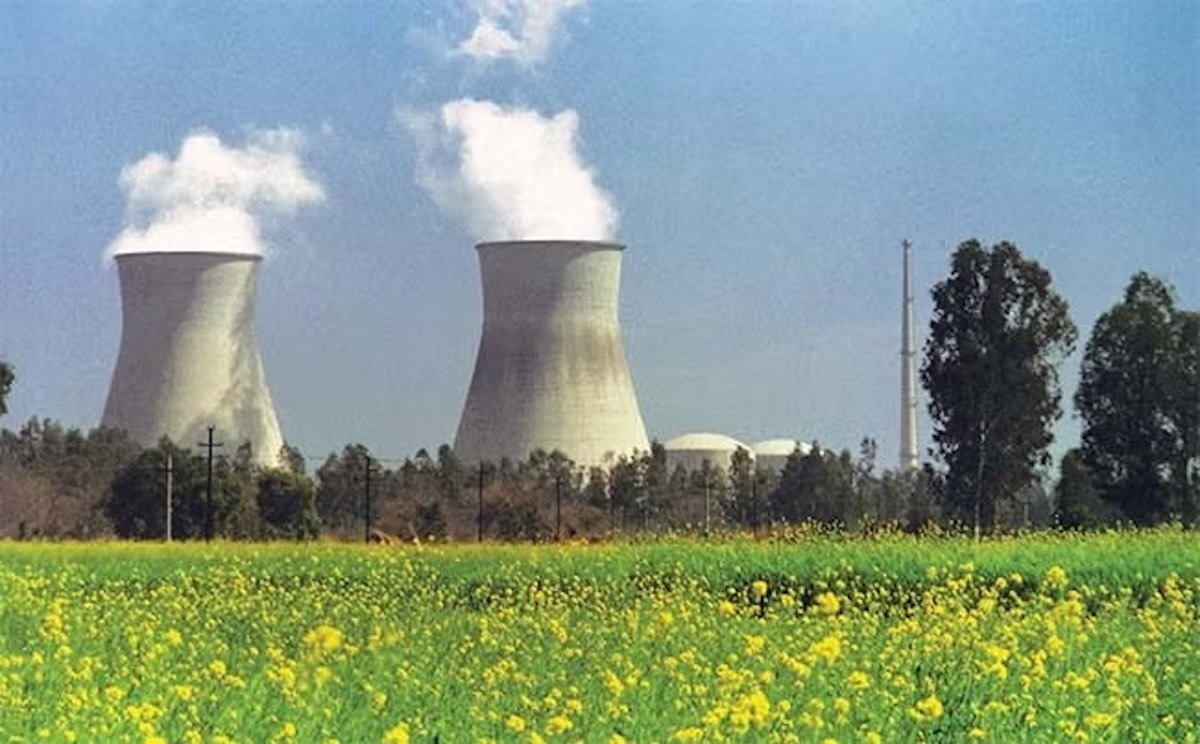
Second, expanding US-India energy trade helps reduce Indian dependence on Russia. For decades, Russia’s state nuclear corporation, Rosatom, has operated as the sole foreign vendor constructing light-water reactors on Indian soil. The Kudankulam complex stands as a monument to this reliance, rooted in Moscow’s willingness to absorb operational and financial risks, enabled by grandfathered bilateral liability protections and state backing that private Western vendors lacked. Over-reliance on Russian technology and fuel assemblies leaves India’s expanding power grid vulnerable to geopolitical friction and international sanctions. Facilitating bankable, Western-designed reactor builds helps India diversify its civilian energy sector.
Third, a functioning US-India nuclear partnership counters Chinese tech dominance in the Global South. Beijing is leveraging state-backed nuclear financing and technology exports—such as its Hualong One design—alongside its near-monopoly over critical mineral supply chains to dictate global clean-energy standards. Expanding US-India nuclear cooperation provides a transparent alternative, ensuring that emerging economies can access clean technology without accumulating opaque debt or sacrificing energy sovereignty.
Unlocking large-scale nuclear power plant megaprojects
Meeting India’s 100-gigawatt target by 2047 is impossible without multi-gigawatt, utility-scale light-water reactors. Large plants—such as the six Westinghouse AP1000 reactors planned for Kovvada, Andhra Pradesh—are India’s grid-level baseload strategy. Unlocking these megaprojects requires converting statutory progress into bankable projects. Overcoming historic pre-construction delays requires operationalizing the SHANTI Act’s streamlined land allocation mechanisms through state-level joint coordination committees to fast-track land bank clearance and local community siting approvals.
Until recently, the primary bottleneck was Section 17(b) of India’s Civil Liability for Nuclear Damage Act (2010), which exposed suppliers to open-ended liability. The SHANTI Act has resolved this impasse by aligning India’s liability regime with the Annex to the Convention on Supplementary Compensation for Nuclear Damage, a move that should reassure US vendors and their insurers.
Beyond liability, the next step is to establish a predictable project pipeline. Washington and New Delhi should agree on a rolling schedule of reactor orders, with clear milestones for site preparation, vendor selection, and fuel supply arrangements. This would allow US firms to invest in local supply chains and workforce training, creating a self-sustaining nuclear industrial base in India.
Deploying small modular reactors for industrial hubs
While large reactors anchor the grid, small modular reactors (SMRs) offer a faster, more flexible path for industrial use and advanced technology hubs. SMRs can be sited closer to demand centers, reducing transmission losses and enabling co-location with data centers, semiconductor fabs, and clean-tech manufacturing. The SHANTI Act’s provisions for private joint ventures and streamlined licensing make SMR deployment particularly attractive.
Washington should support India’s SMR ambitions by sharing regulatory best practices and facilitating technology transfer under the TRUST framework. A joint US-India SMR pilot project—perhaps at a designated industrial corridor—would demonstrate the model and build confidence for broader adoption. This dual-track strategy—large reactors for baseload, SMRs for distributed power—would maximize the strategic and economic benefits of civil nuclear cooperation.
The road ahead is not without challenges. Financing remains a hurdle, as does the need for a robust domestic supply chain and skilled workforce. But the SHANTI Act has removed the most significant legal obstacle, and the geopolitical logic is compelling. As India’s energy needs grow and its strategic ambitions expand, civil nuclear trade offers a durable foundation for the US-India partnership—one that can outlast political cycles and deliver tangible benefits for decades to come.