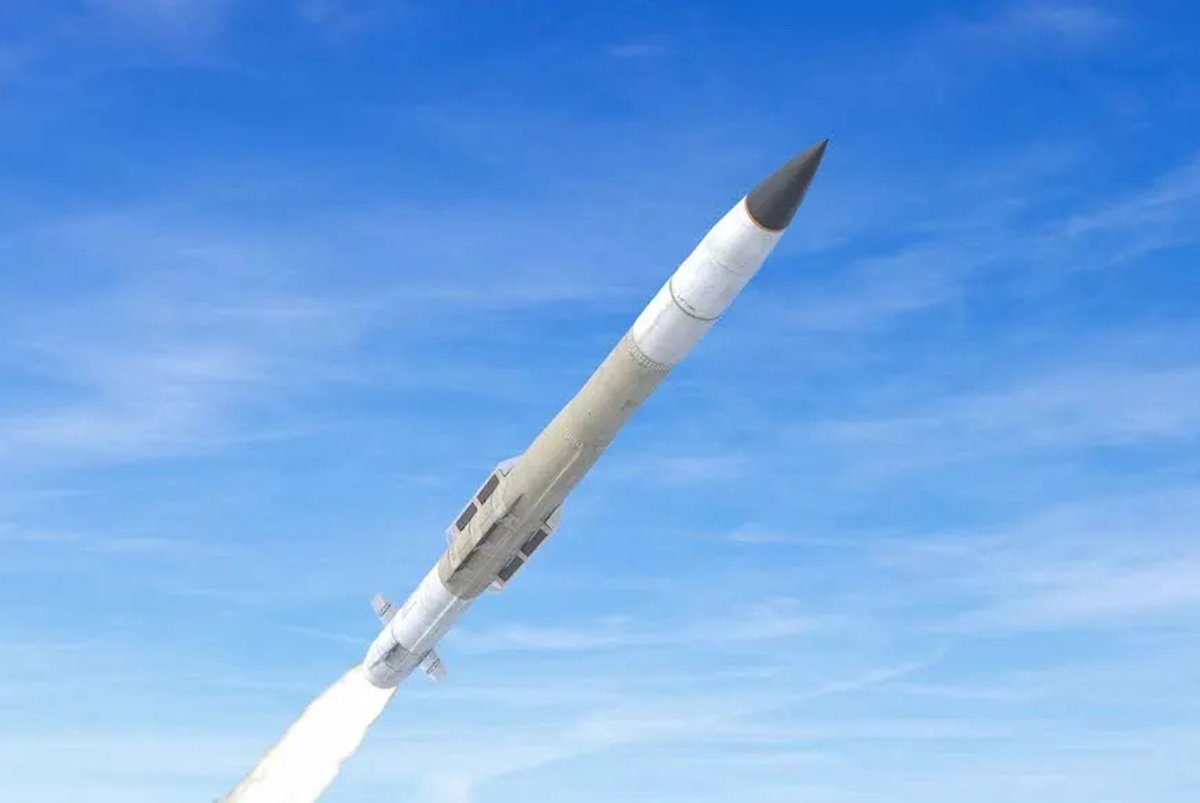
The US Marine Corps is weighing a significant upgrade to its ship-interdiction missile, a move that would expand its reach across the waters around Taiwan but also exposes the hard limits of small-island basing against a peer adversary.
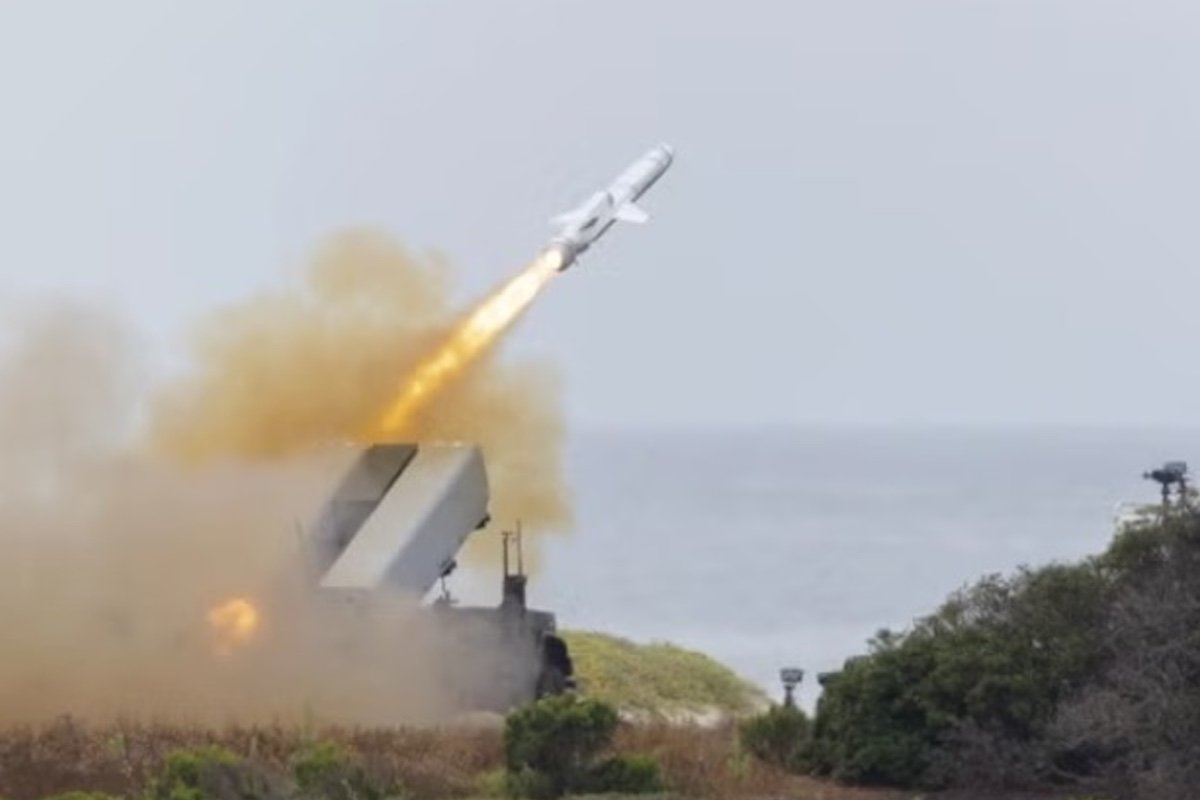
Multiple media reports this month confirmed that the service is studying how to double the range of its ground-launched Naval Strike Missile (NSM), built by Norway's Kongsberg and America's Raytheon, from roughly 250 kilometers to at least 500 kilometers. The weapon is fired from uncrewed ROGUE-Fires launchers under the Navy-Marine Expeditionary Ship Interdiction System (NMESIS), operated by dispersed Medium Missile formations, including the 3rd and 12th Marine Littoral Regiments and the newly activated 1st Battalion, 10th Marine Regiment.
The stealthy cruise missile uses GPS-assisted inertial navigation and passive imaging-infrared guidance for anti-ship and land-attack strikes. Doubling the engagement radius would quadruple the theoretical coverage footprint of each launcher, a key goal for the Corps' Expeditionary Advanced Base Operations concept, which envisions Marines shuttling launchers between austere island outposts to complicate Chinese targeting.
The upgrade is part of the service's Force Design modernization and helps offset the cancellation of ground-launched Tomahawk plans, as China's People's Liberation Army Navy (PLAN) expands its surface fleet and fortifies its own island outposts. Recent exercises in the Philippines and on Japan's Yonaguni Island, roughly 120 kilometers east of Taiwan, have demonstrated the concept.
Trade-offs and limits
To achieve the added reach, engineers are weighing trade-offs, such as reducing gross weight with a smaller warhead or boosting fuel capacity and efficiency. The service has not disclosed estimated costs, timelines, or technical specifications.
The move directly addresses operational vulnerabilities seen in the US Army's heavier Typhon missile system. An April 2026 Congressional Research Service (CRS) report notes that Typhon fires ground-modified SM-6 and Tomahawk cruise missiles, with Tomahawks reaching 1,250 to 2,500 kilometers depending on variant. That range would allow Typhon batteries in Japan or the Philippines to threaten targets deep inside China.
However, the CRS report highlights Typhon's ponderous footprint: a single battery comprises four tractor-trailer launchers with four launch cells each, a battery operations center, prime movers, generators, and support vehicles. That makes it ill-suited for austere island environments with sparse road and port infrastructure. Heavy reliance on specialized transport ships and aircraft, along with predictable storage and launch sites, leaves the system exposed to adversary space-based intelligence and vulnerable to follow-on strikes unless shielded by layered air and missile defenses.
By contrast, NMESIS mounts the NSM onto a Joint Light Tactical Vehicle in an uncrewed configuration far better suited to rugged islands. Its compact footprint allows Marines to shuttle launchers rapidly between firing positions, aligning with the service's Expeditionary Advanced Base Operations concept and complicating Chinese targeting.
Sea denial around Taiwan
Extending NMESIS range to 500 kilometers would sharpen sea denial across key maritime chokepoints around Taiwan. To the south, longer-range launchers positioned in the Philippines' Batanes Islands would cover waters the PLAN must transit to complete a blockade of Taiwan or break out into the open Pacific to deter US and allied intervention. Greater reach from the northern Philippines would also help deter a preemptive Chinese amphibious assault to seize the Batanes Islands and secure the Bashi Strait before flanking Taiwan from the south.
To the northeast, the upgrade would address one of US and allied defense planners' hardest operational problems: keeping Taiwan resupplied and reinforced during a Chinese invasion. From Yonaguni Island, an extended-range NSM could reach across the intervening waters to deter Chinese surface warships blockading Taiwan's northern and eastern ports, including Keelung, Suao, and Hualien, though it could not counter submarines, sea mines, or missile strikes against port infrastructure.
Even so, an extended-range NMESIS faces steep operational limits against a peer adversary. While individual NSMs can cripple or sink isolated surface combatants, PLAN warships rarely deploy without layered fleet protection. Chinese carrier strike groups and major surface action groups operate beneath overlapping shields of forward-deployed submarines, fighter escorts, area air-defense destroyers, and shipboard soft- and hard-kill defenses, including electronic warfare, decoys, and close-in weapons systems, that substantially lower the probability of a subsonic cruise missile penetrating to its target.
Terrain constraints on small outposts compound those maritime challenges. Small islands such as Batanes and Yonaguni lack the geographic depth required for dispersed munitions storage, deep concealment, or hardened fortifications. Under sustained Chinese missile and drone barrages, local air-defense units risk exhausting their interceptor stockpiles, leaving NMESIS launchers exposed to counter-battery strikes.
The upgrade is a pragmatic step, but it does not change the fundamental calculus: sea denial from small islands is a delaying tactic, not a war-winning strategy. As China's missile shield evolves, the US and its allies must weigh whether such investments are worth the vulnerability they create. The debate over NMESIS range is ultimately a debate about how far the US is willing to go to defend Taiwan—and what it can realistically achieve.