The US midterm elections have redrawn the political map in Washington, handing the Democratic Party control of both chambers of Congress and delivering a stinging rebuke to President Donald Trump and his Republican allies. While Ukraine barely featured in campaign ads or debates, the outcome carries significant implications for American policy toward the war—a conflict that has divided the Republican Party and exposed the limits of presidential power.
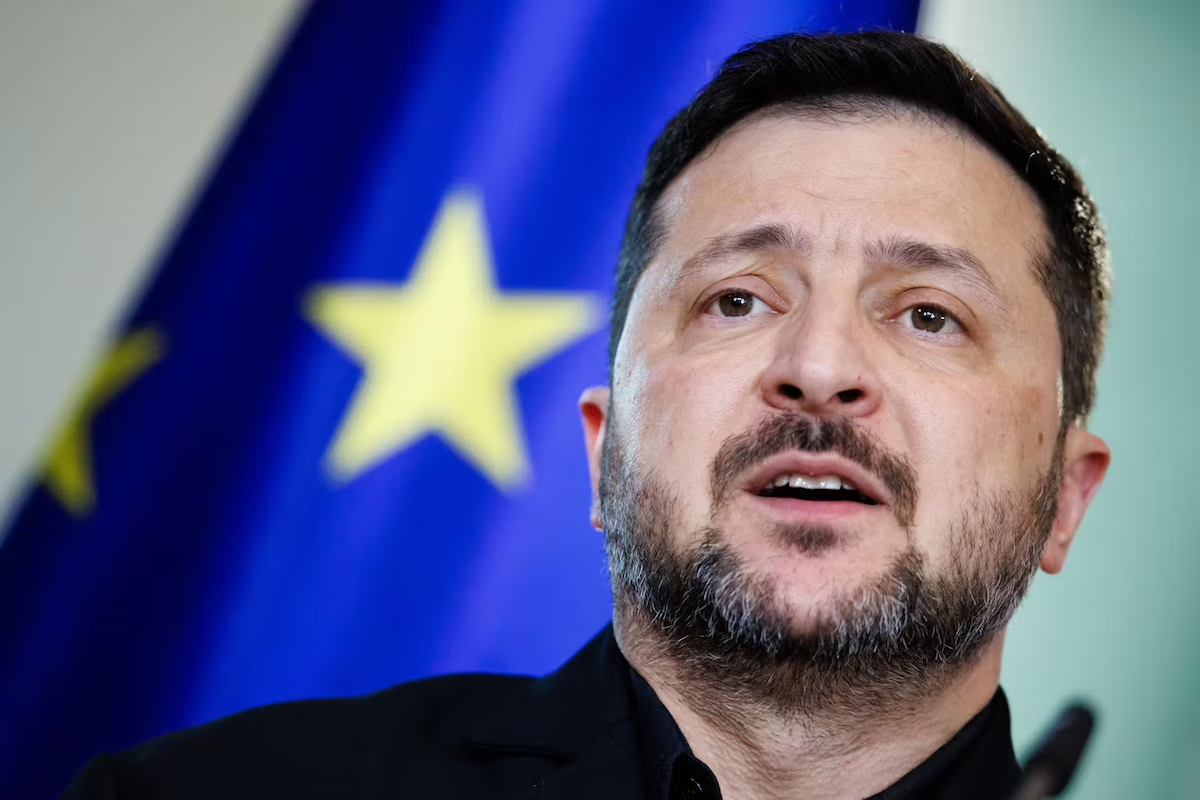
In the months before the vote, Trump had been quietly walking back US support for Kyiv. Intelligence sharing on Russian strikes was suspended, then restored; critical military aid was reduced; and several sanctions on Moscow were lifted. Ukrainian President Volodymyr Zelensky publicly condemned the moves as aiding Russia, while Trump defended them as being in the “national interests of the United States” and a way to lower gasoline prices ahead of the election.
The gambit failed. Voters punished the Republicans, and the Democrats now hold the levers of oversight and spending. Yet few analysts expect the midterm rout to fundamentally alter Trump’s worldview on Russia and Ukraine. “The Trump administration’s foreign policy is like a car going down the highway,” said James Green, a research fellow at the Centre for European Reform and a former Congressional aide. “Congress has the ability to slow that car down, maybe make it put on a turn signal, but it’s going to be very difficult for Congress to change the overall route over the next two years.”
Congressional limits and Democratic priorities
Congress does possess tools—hearings, subpoenas, and control over the purse—but the president retains broad authority as commander-in-chief and head of state, backed by a vast foreign policy bureaucracy. The Democrats, for their part, are unlikely to make Ukraine their top priority. Their immediate focus will be on building a winning platform for the 2028 presidential race, as Democrats plan to check Trump’s Iran war and other executive actions.
Still, Ukraine has long enjoyed bipartisan support, and public opinion remains wary of Moscow. According to the Pew Research Center, 67% of Americans distrust Vladimir Putin, and six in ten view Russia as an enemy. Democrats may calculate that escalating their attacks on a weakened Trump—if he continues to reward an aggressor while blaming the victim—could yield political dividends.
A possible Trump-Putin summit
The midterm result also presents an opportunity for Putin. The Russian leader may try to exploit Trump’s domestic weakness by offering a settlement that would let the US president claim a diplomatic victory. US, Chinese, and Russian officials have already discussed a possible summit on the sidelines of the Asia-Pacific Economic Cooperation (APEC) meeting in China later this month. Kremlin spokesperson Dmitry Peskov said Russia hopes to finalise the meeting in the coming days.
Trump has expressed interest, telling reporters in October that Ukraine would be on the agenda. “I would meet in order—anything I can do to end the war, whether somebody is there or not, whatever I can do to end the war,” he said. But any deal that excludes Ukraine and cedes 20% of its territory would likely face fierce opposition from an emboldened Democratic Congress.
Military experts caution against concessions. The Institute for the Study of War notes that Russia has secured a temporary advantage in the skies over Ukraine through jet-powered drones and a shortage of Patriot missiles, but a Russian victory is not inevitable unless Western aid dries up entirely. The war, which many predicted would end in months, is likely to grind on.
Trump’s view of Russia as a potential partner and Ukraine as a burden is unlikely to change. But with his back to the wall politically, shaping his own agenda on Russia and Ukraine will prove more difficult. The midterms have not ended the debate—they have only sharpened it.