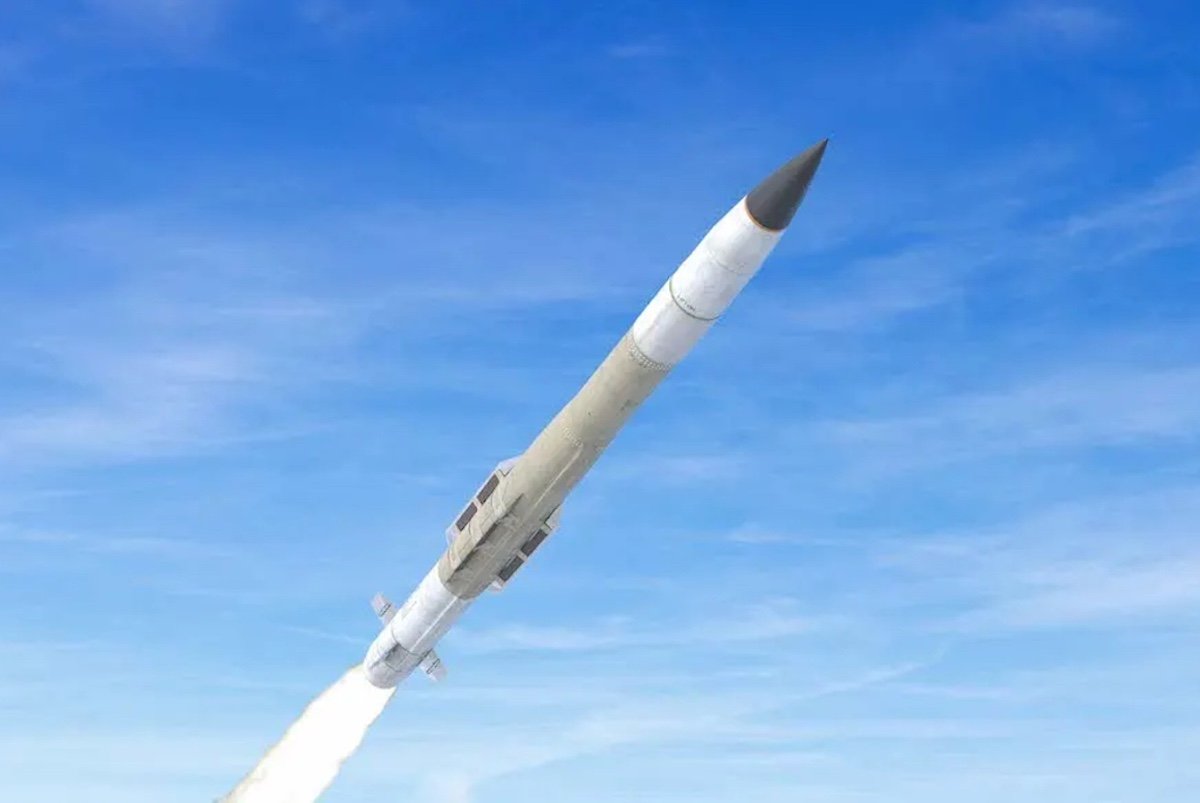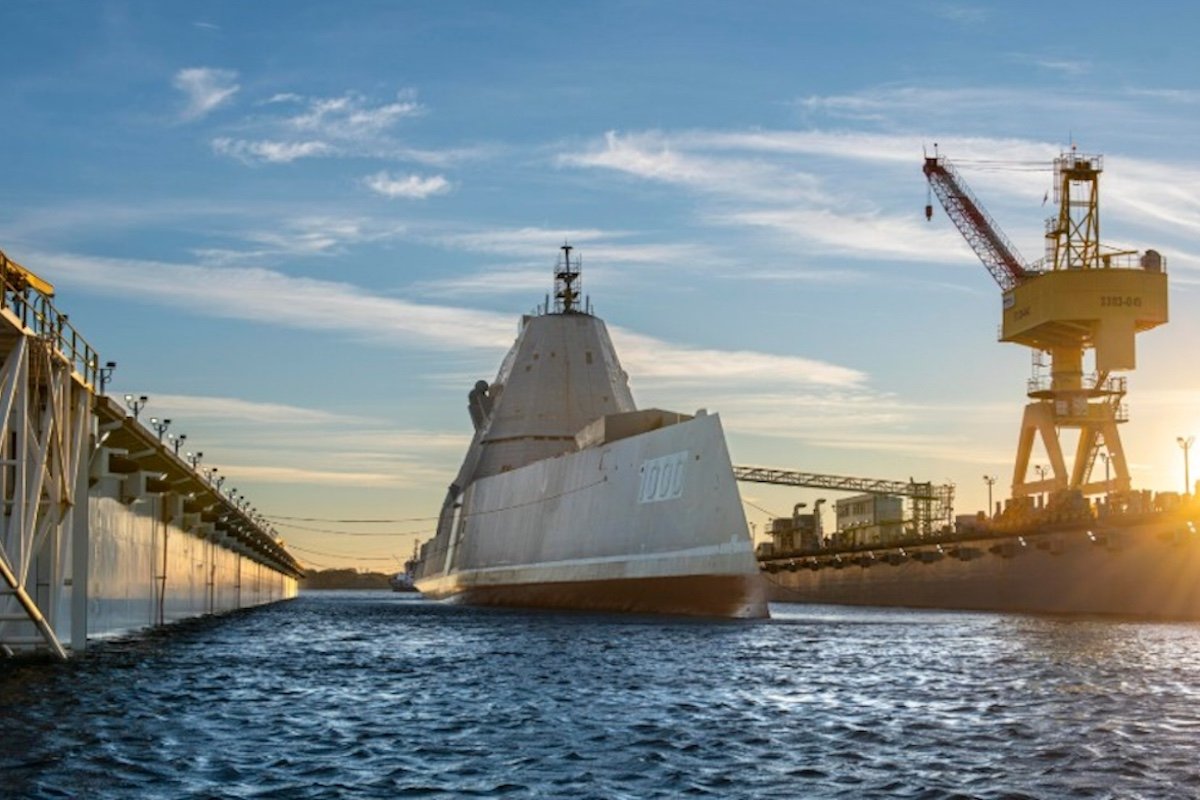
The US Navy's troubled Zumwalt-class destroyers, once envisioned as a revolutionary surface combatant, are now at the center of a delayed and costly effort to field hypersonic missiles. A recent report from the US Government Accountability Office (GAO) reveals that the program to equip all three ships with Conventional Prompt Strike (CPS) hypersonic weapons is running 24 months behind schedule, raising fundamental questions about whether the vessels can ever achieve a credible combat role.
The first ship, USS Zumwalt, was 94% complete with its modernization as of January 2026, but its yard period has slipped by 10 months to late fiscal 2026. Huntington Ingalls added 230,000 labor hours—costing US$20 million—for unexpected cabling, electrical-system failures, and other work. The Navy had planned to begin shipboard flight tests in 2025 but now targets the third quarter of fiscal 2027, after anomalies involving missile production, fire-control software, and an Army launcher. Officials have adopted incremental testing to reduce risks but acknowledge the revised timetable is optimistic.
Production and Strategic Bottlenecks
Lockheed Martin's production facility can build only six to seven CPS rounds annually, compared with the 12 needed to stabilize output, because the missile requires more labor than expected and has encountered coating, quality-control, and work-instruction problems. The GAO said fragmented Navy and Army investment decisions were contributing to delays and urged the US Department of Defense to adopt a joint strategy for an effort expected to cost at least US$50 billion.
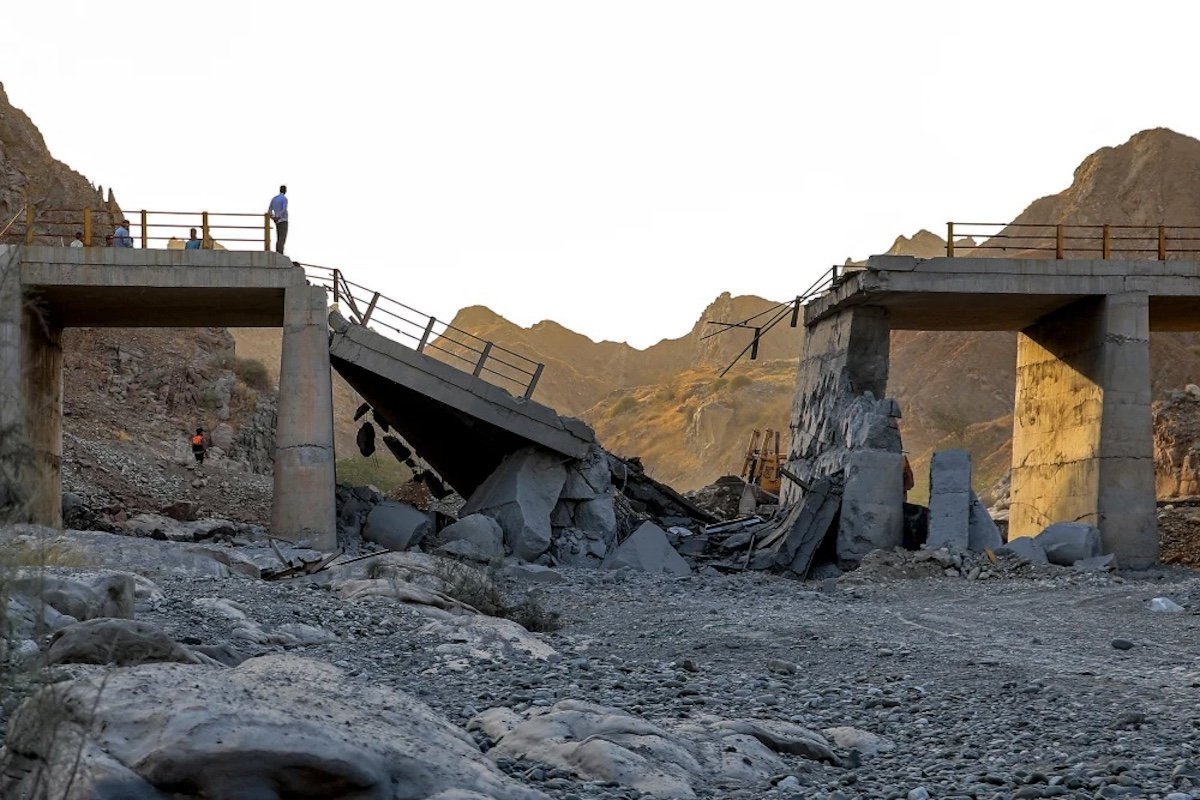
The delays are particularly consequential as China and Russia expand their high-speed strike arsenals. Michael White argued in a February 2026 Atlantic Council report that China and Russia have established a substantial lead by fielding hundreds of high-speed and hypersonic weapons while US systems are only approaching operational deployment. Russia has operational Kinzhal, Tsirkon, and nuclear-armed Avangard systems, including weapons used in Ukraine. China fields the DF-17 hypersonic glide weapon and its broader DF-21 and DF-26 high-speed missile forces, which threaten regional bases and aircraft carriers. As China's desert mock-up of a US destroyer suggests, Beijing is actively refining its anti-carrier strategy.
Equipping the Zumwalt class with CPS could allow the ships to strike time-sensitive, heavily defended targets from long range. But concentrating a small number of costly missiles aboard three distinctive surface ships could make the vessels priority targets for enemy surveillance and attack. Hypersonic weapons also depend on a broader network of sensors, communications, targeting systems, and command authorities, creating potential points of failure beyond the launch platform itself. An adversary could neutralize the capability indirectly, using drones, anti-ship missiles, mines, torpedoes, electronic warfare, or cyberattacks against its launch platforms, sensor networks, and command-and-control nodes before the hypersonic missile is fired.
Lessons from Ukraine and the Limits of Hypersonics
Combat experience suggests that hypersonic weapons are neither uniformly decisive nor impossible to defend against. Bill Christopher Arputharaj and Amit Mukherjee argued in a February 2026 Journal of Strategic Studies article that Russia's Kinzhal and Tsirkon weapons produced some tactical advantages in Ukraine but became increasingly vulnerable to Western-supplied air defenses. They estimated interception rates of 37.5% for Kinzhal and 28.5% for Tsirkon, although wartime claims remain difficult to verify independently. They identified Russia's Oreshnik missile as a potentially more consequential development because of its use of multiple reentry vehicles and its apparent ability to complicate Ukrainian defenses.
The Zumwalt class has been repeatedly reshaped by changing requirements and technological risk. Kevin Eyer wrote in an April 2026 Proceedings article that the class was initially conceived as an air-defense warship before cost limits drove its redesign as a coastal land-attack vessel centered on the Advanced Gun System (AGS). When the AGS's specialized ammunition rose to about US$1 million per round, the Navy canceled procurement, leaving the roughly $4 billion ship without its intended primary weapon and without a clear mission for nearly a decade. Eyer argued that experimental designs carry substantial financial risk, that critical technologies should be tested before being incorporated into a ship design, and that new classes require a clearly defined operational purpose.
The CPS delay is the latest setback for a class that has struggled to find its place. The broader question remains: can the Zumwalt class become a credible hypersonic strike platform, or will the refit reproduce the same design, cost, and mission problems that have followed the ships from their inception? As China's sea-skimming hypersonic missile ambitions continue to evolve, the US Navy's timeline for fielding comparable capabilities grows increasingly uncertain.