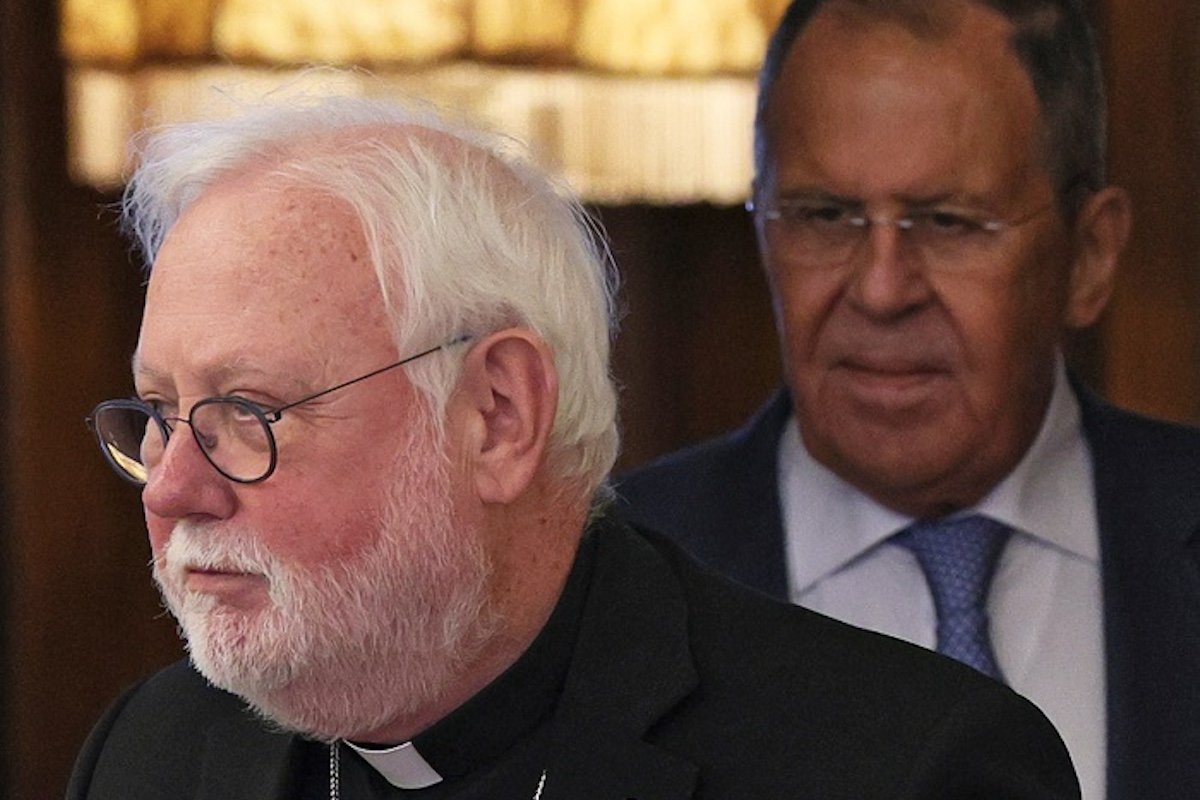
In a striking convergence of diplomacy and intelligence, Moscow this week hosted two very different visitors: Bishop Paul Richard Gallagher, the Holy See's Secretary for Relations with States, and CIA Director John Ratcliffe. While Gallagher held a televised press conference with Russian Foreign Minister Sergey Lavrov, Ratcliffe reportedly arrived to warn Moscow against supporting Iran and against destabilizing activities in Europe. The juxtaposition underscored the fragile state of global order—and the search for any channel that might still work.
Vatican's message: wars cannot be won militarily
Gallagher, speaking on behalf of Pope Leo and Cardinal Secretary of State Pietro Parolin, delivered a blunt message: modern wars cannot be ended by military means alone. "Serious political and diplomatic work" is required, he said, and the Holy See stands ready to offer its good offices to help achieve peace in Ukraine. His remarks were broadcast live on Russian television, a sign that both sides wanted to project an image of dialogue—even as the war grinds on.
Lavrov acknowledged the Vatican's "balanced" approach to the Ukraine crisis and praised its humanitarian efforts. He announced that Moscow is prepared to resume political consultations at the deputy foreign minister level, a modest but tangible step. The two also discussed artificial intelligence, particularly its military applications, and agreed to continue a substantive dialogue on the issue.
Not surprisingly, Lavrov raised the situation of Russian-speaking Ukrainians and the Ukrainian government's actions against the Ukrainian Orthodox Church, which is in communion with the Moscow Patriarchate. Metropolitan Anthony of Volokolamsk, who heads the Moscow Patriarchate's external relations department, also pressed Gallagher on what he called "persecution" of the church by Ukrainian authorities. While potentially divisive, these issues did not appear to derail the overall positive tone of the talks.
Beyond the public meeting, Gallagher held a discreet, confidential session with Yuri Ushakov, Putin's foreign policy adviser. The Holy See's State Secretariat posted a photo of the two shaking hands—a subtle but telling signal that the Vatican viewed the encounter as a step forward. As the old saying goes, a picture can speak volumes.
The visit comes at a time when international institutions that once mediated conflicts are weakened or absent. The post-Cold War order has frayed, and the vacuum is being filled by force. The Holy See, with its unique moral authority and its network of nunciatures, is stepping into that void—acting, in effect, as a proxy for the international community. It is an "unnatural" role for Vatican diplomacy, which traditionally prefers to work behind the scenes and through established bodies. But as credible super partes agencies falter, the Holy See may be the only actor left that can still talk to everyone.
Whether this Moscow visit will lead to concrete progress on Ukraine remains uncertain. The CIA chief's unannounced trip suggests that Washington, too, is probing for openings—though its goals may differ from the Vatican's. Meanwhile, the Anchorage framework is dead, and no new proposals are on the table. The Holy See's persistence, however, offers a glimmer of hope that dialogue—however difficult—remains possible.
For the wider Indo-Pacific, the Vatican's activism is a reminder that diplomacy is not the exclusive domain of great powers. Small states and non-state actors can also play a role in de-escalating tensions. As the region watches the Ukraine war and its global ripple effects, the Holy See's example may inspire other middle powers to step forward. The road to peace is long, but every journey begins with a single conversation.