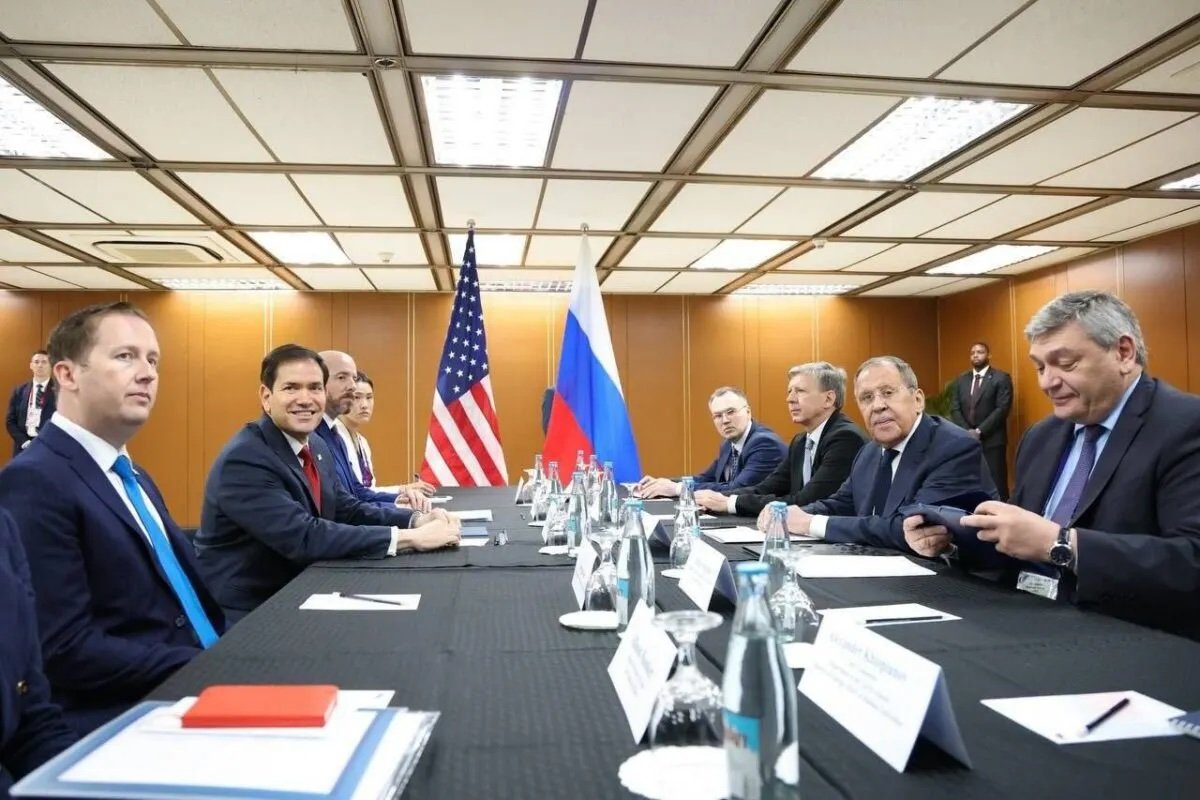
On the sidelines of the ASEAN Foreign Ministers meeting in Manila, US Secretary of State Marco Rubio met with Russian Foreign Minister Sergey Lavrov for a brief 35- to 37-minute discussion. The meeting, planned in advance with US and Russian flags displayed, focused primarily on Ukraine. Neither side provided a detailed readout, but Rubio later told reporters that the understanding reached in Anchorage between President Vladimir Putin and President Donald Trump was dead.
According to Rubio, the Anchorage framework failed because Ukraine would not accept it. “You can’t have a peace deal unless both sides agree to it, and the Ukrainians would not agree to it,” he said. Rubio added that the US remains willing to act as a mediator but needs new ideas to move forward. Currently, no fresh proposals are on the table.
The Anchorage framework and its collapse
The US tabled the Anchorage proposals on August 15, 2025, and Russia accepted them as concessions. The framework included four main points: a frontline freeze with territorial trade-offs, indefinite postponement of Ukraine's NATO membership, phased removal of some US sanctions on Russia, and guarantees for Russian language use and the Russian Orthodox Church in Ukraine.
The military freeze had two components. On the eastern front, Ukraine would withdraw from remaining fortified areas in Donbas, while Russia would pull out of non-annexed pockets in Kharkiv and Sumy. On the southern front, the line of control would be frozen in Kherson and Zaporizhzhia. The future of these territories was left for later negotiations.
On NATO membership, the US offered to indefinitely bar or postpone Ukraine's formal accession. The discussions did not address security guarantees from NATO members or the significant NATO operational presence in Ukraine. The sanctions relief and cultural safeguards were also left vague.
Anchorage was never intended as a final settlement but as an initial step in a long-term peace process. However, Ukraine's resistance, backed by European allies, effectively killed the deal. Since then, Ukraine has launched a massive drone campaign against Russian infrastructure, including refineries, military airfields, and even third-country ships in the Black Sea. These attacks have created a gasoline crisis in Russia and burdened its economy.
Ukraine's drone war and supply challenges
Ukraine's aggressive drone operations have forced Russia to scale back military operations to avoid heavy manpower losses, slowing its ground advances. The attacks on Russian territory demonstrate sophisticated routing and targeting, likely with NATO assistance using overhead sensors. Russia has retaliated with stepped-up operations in Odesa and Kyiv.
Despite these gains, Ukraine faces significant supply issues that could shift the battlefield. The supply of critical parts for Ukrainian drones primarily depends on China, while precision weapons and air defense systems rely on the US and Europe. As reports indicate, EU funds may flow to Chinese drone parts for Ukraine, highlighting the complex global supply chain. Meanwhile, Ukraine's recent command shake-up reflects democratic processes amid war, but also underscores internal pressures.
The broader regional context matters. ASEAN's role in mediating such conflicts has been limited, as no ASEAN chair can shift the South China Sea consensus, and the bloc's focus remains on its own priorities. The US-Russia meeting in Manila underscores how the Ukraine war continues to overshadow regional diplomacy, with no clear path to peace.