Washington has intensified its campaign against what it describes as the systematic theft of American artificial intelligence intellectual property, issuing a formal warning just as China's DeepSeek unveiled its latest model, V4. The White House Office of Science and Technology Policy (OSTP) released a memorandum on Thursday, April 23, accusing foreign entities, primarily based in China, of conducting industrial-scale distillation campaigns against US frontier AI systems.
Michael Kratsios, assistant to the president for science and technology and director of OSTP, stated in the memo that these efforts involve "tens of thousands of proxy accounts to evade detection" and "jailbreaking techniques to expose proprietary information." He argued that such coordinated campaigns systematically extract capabilities from American AI models, exploiting US expertise and innovation. Kratsios noted that while models developed through unauthorized distillation do not fully replicate the original's performance, they allow foreign actors to release products that appear comparable on select benchmarks at a fraction of the cost. He added that these campaigns also enable actors to strip security protocols and undermine mechanisms ensuring AI models remain "ideologically neutral and truth-seeking."
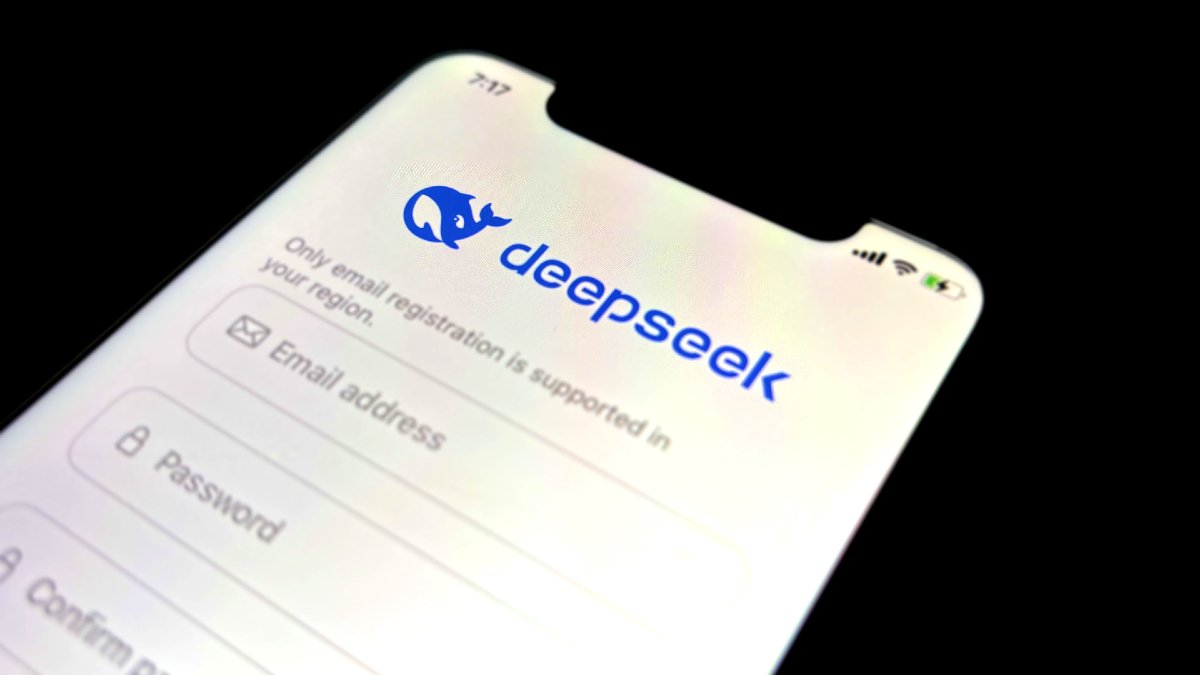
The Trump administration outlined several countermeasures: sharing intelligence with US AI companies on foreign distillation attempts, enabling closer private-sector coordination, developing best practices to detect and mitigate such activities, and exploring measures to hold foreign actors accountable. This warning comes amid a broader US-China technological rivalry, where AI capabilities are seen as a critical strategic asset. The timing is notable, as DeepSeek, based in Zhejiang province, released DeepSeek V4 on Friday, April 24, highlighting the narrowing gap between Chinese and US frontier models.
DeepSeek's Distillation Methods and Performance
DeepSeek has been transparent about its use of knowledge distillation. In January 2025, the company stated it used such techniques to train its V3 model, a process akin to a student learning by querying a teacher. For V4, the company advanced this with On-Policy Distillation (OPD), drawing on outputs from ten separate "teacher" models. OPD allows a model to generate its own responses before consulting multiple teachers to refine them, accelerating learning. DeepSeek claims that V4, which inherits its design from V3 but with modifications, demonstrates superior performance on standard reasoning benchmarks compared to GPT-5.2 and Gemini-3.0-Pro. The company asserts that V4's performance lags only 3 to 6 months behind state-of-the-art models like GPT-5.4 and Gemini-3.1-Pro. OpenAI released GPT-5.2 in December 2024, while Google launched Gemini 3.0 Pro in November 2024.
The debut of DeepSeek V3 in January 2025 sent shockwaves through Wall Street, as investors reacted to a low-cost Chinese AI model rivaling US systems. US Commerce Secretary Howard Lutnick told a Senate meeting on January 29 that DeepSeek built its models "dirt cheap" by purchasing Nvidia chips via third countries and drawing on data from Meta's open platform. However, President Donald Trump remarked in February 2025 that cheaper AI development was an inevitable technological shift that could ultimately benefit the US.
Criticism of Chinese AI firms' distillation practices cooled for nearly a year before recent reports reignited the debate. In a February 12 memorandum to the US House Select Committee on China, OpenAI stated that DeepSeek used distillation techniques to "free-ride on the capabilities developed by OpenAI and other US frontier labs." OpenAI reported identifying "new, obfuscated methods" to bypass safeguards. Anthropic, in a February 23 report, said it identified industrial-scale campaigns by three Chinese AI labs—DeepSeek, Moonshot, and MiniMax—to illicitly extract capabilities from its Claude model. Anthropic reported over 16 million exchanges with Claude through approximately 24,000 fraudulent accounts, violating terms of service and regional access restrictions. The company noted that such "distillation attacks" follow a pattern: attackers gain access via proxy services, using networks of fraudulent accounts to evade detection.
This escalation in US concerns reflects a broader strategic competition in the Indo-Pacific, where technology leadership is increasingly tied to national security. The US Navy's drone swarm strategy and next-gen fighter competition are part of this context, as Washington seeks to maintain technological superiority. Meanwhile, China's industrial overcapacity and state-led growth models are reshaping global trade, pressuring Asian economies. The US and China also compete to build fusion energy supply chains, forcing European choices. As DeepSeek's V4 demonstrates, Chinese AI firms are rapidly closing the gap, prompting Washington to act.