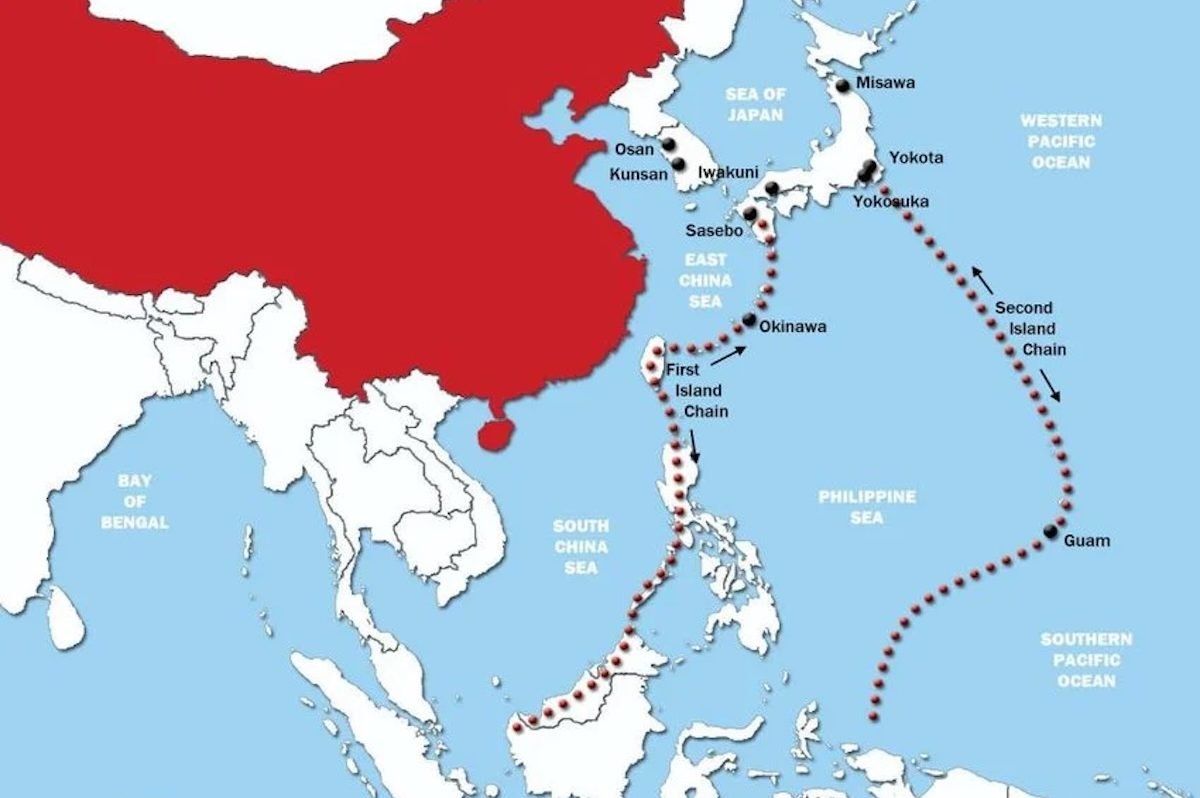
A recent report from Defense Priorities, a Washington think tank not known for mainstream influence, has drawn unusual attention for proposing a radical reversal of US strategy in the Asia-Pacific. Written by Jennifer Kavanagh, the group's military analysis director, the report titled “A Second Island Chain Strategy for Asia” argues that pulling US forces back to the second island chain and ending strategic ambiguity over Taiwan would reduce the risk of war with China.
The proposal has sparked confusion and concern across the region. Many analysts and officials in allied capitals are asking whether the report's assumptions hold up under scrutiny. The answer, on closer examination, is largely no.
What the report actually proposes
Kavanagh's central argument is that the United States should end its formal alliances with Japan, South Korea, the Philippines and Australia, withdraw most of its military presence from the western Pacific, and adopt a stated policy of non-intervention in the event of a Chinese attack on Taiwan. She suggests that such a move would reduce the risk of conflict and allow the US to focus on more pressing priorities elsewhere.
But the report's logic collapses when viewed from Beijing's perspective. For People's Liberation Army planners, the recommendations read like a wishlist. A US retreat would be interpreted not as a gesture of peace but as a green light for Chinese expansion. Within months, we would likely see intensified Chinese political warfare across the region, amplifying the message that “the Americans are unreliable, in retreat, and leaving you on your own.”
China has been explicit about its intentions. In 2008, a Chinese officer told Admiral Timothy Keating, then commander of US Pacific Command, “Why don't we reach an agreement, you and I? You take Hawaii east. We'll take Hawaii west.” He was serious. And Beijing's behavior toward the Philippines in the South China Sea, toward Japan over the Senkaku/Diaoyu islands, and toward Taiwan in recent years offers a preview of what a US withdrawal would unleash.
Vacuums get filled
The report identifies US interests in Asia as maintaining a regional balance of power that does not leave China decisively dominant, and protecting key trade routes. Yet its recommendations would achieve the opposite. Removing the only force that currently prevents Chinese domination would create a vacuum, and vacuums get filled. The idea that a token force stationed on the second island chain could protect sea lanes or deter aggression is not supported by any operational analysis.
Kavanagh suggests the US Navy could escort commercial ships if necessary. That is, to put it mildly, unrealistic. The US Navy is already stretched thin, and escorting every commercial vessel in the western Pacific would be an impossible task. As carrier shortages strain Indo-Pacific deterrence, the notion of expanding naval missions is fantasy.
Allies would panic
How would Japan, South Korea, the Philippines and Australia react to the end of mutual defense alliances? They would panic, though some might hide it better than others. None of these countries can take on China alone, and no combination of them could either. The report's suggestion that they should “arm themselves to the teeth” is vague and unworkable. It offers no explanation of how they would do so, or how that would counter an aggressive China.
Moreover, these nations would have little interest in negotiating separate security partnerships with a United States that had just abandoned Taiwan and appeared in retreat. Trust, once broken, is not easily restored. The report also ignores the human and strategic costs of leaving US territories like Guam, the Northern Mariana Islands and American Samoa exposed.
Strategic ambiguity and deterrence
The report's call to end strategic ambiguity over Taiwan is particularly dangerous. Ambiguity has long been a cornerstone of deterrence, keeping Beijing uncertain about the costs of military action. Removing that uncertainty would encourage rather than deter Chinese adventurism. As China's YJ-20 hypersonic missile reshapes Pacific naval power, the need for credible deterrence is greater than ever.
The report also misunderstands the nature of alliances. They are not just military arrangements; they are political and psychological commitments. Ending them would signal to every nation in the region that the United States is no longer a reliable partner. That would have profound consequences for regional stability and for America's standing as a global power.
Some in Washington argue that China is no longer the top defense priority, pointing to the 2026 National Defense Strategy. But that reading is debatable. The language regarding China may be less explicit, but the strategic reality remains: the Indo-Pacific is the most consequential region for US interests in the 21st century. As South Korea rethinks its reliance on the US alliance, the stakes are clear.
The Defense Priorities report is a thought experiment, not a strategy. It ignores geography, history, and the realities of military operations. It offers no credible plan for defending US interests or those of its allies. And it fundamentally misreads the intentions of Beijing. The region would be wise to treat it as such.