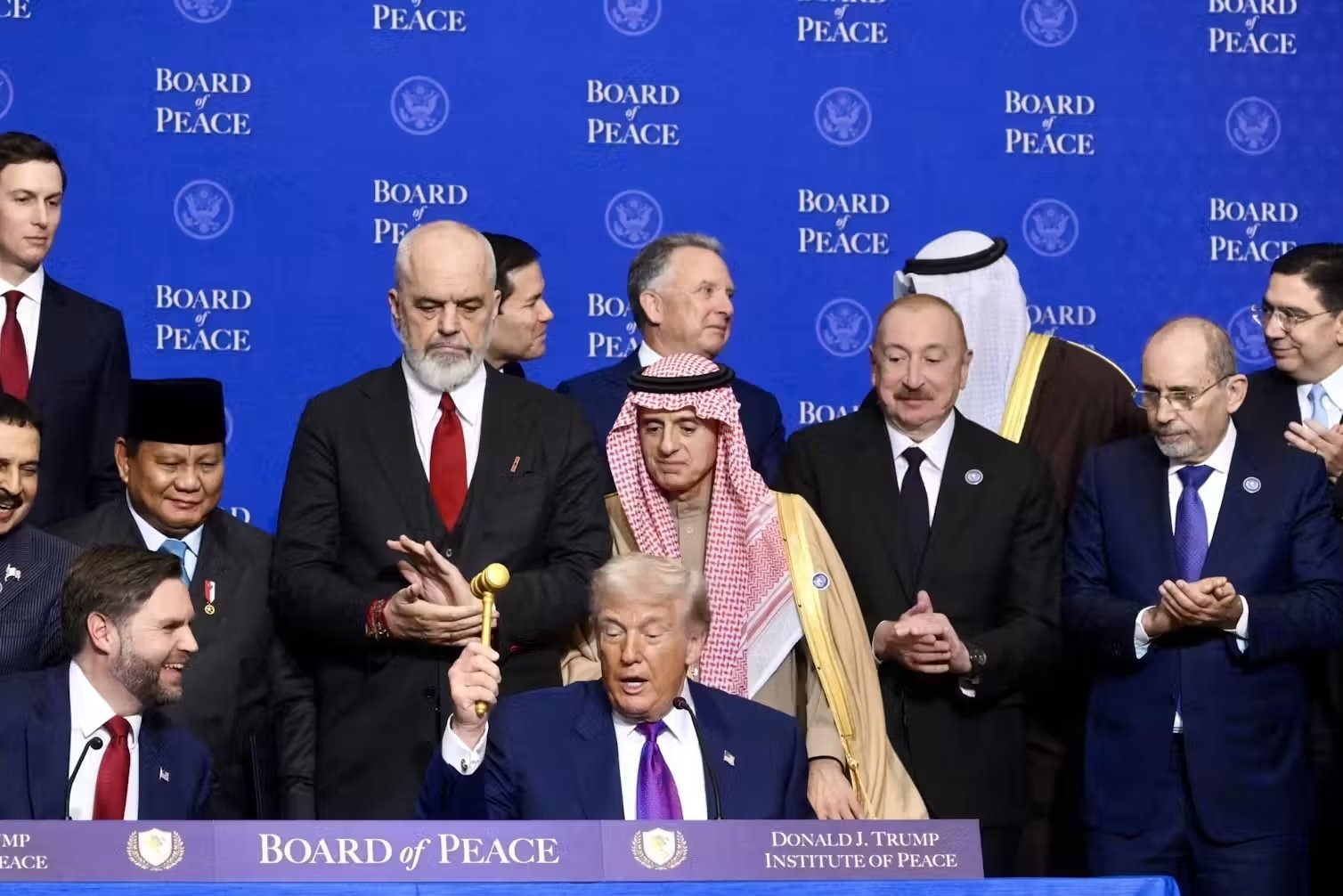
Since January 2025, four separate agreements aimed at ending the Gaza conflict have been signed, yet each has unraveled for the same fundamental reason: none established in advance who would certify compliance and adjudicate disputes. The latest proposal, a 15-point roadmap from the so-called Board of Peace, illustrates the recurring flaw.
Released in late July, the roadmap envisioned Hamas handing its weapons to a committee of Palestinian technocrats, verified by an international body, while Israel withdrew in phases. But after Israel rejected the plan on August 9, US envoy Jared Kushner met Hamas representatives on the Egyptian coast, then traveled to Jerusalem, where a revised proposal emerged: disarmament would instead be supervised by an American general. This shift, from multilateral oversight to unilateral American control, highlights the core problem—no agreement has defined the machinery for holding parties accountable.
Four agreements, one missing piece
The University of Edinburgh's Peace Agreement Database recorded four Gaza-related agreements in 2025: a January ceasefire, two October deals, and a November UN resolution. Each addressed tangible issues—hostage exchanges, prisoner releases, and the creation of a transitional authority—but none built the institutional framework to decide what constitutes a breach, who arbitrates disputes, or how to resume the process after a violation.
The January deal was the most detailed, specifying numbers of hostages and prisoners, Israeli withdrawal corridors, and the return of displaced families. Yet it left guarantors—the US, Egypt, and Qatar—with only a mandate to "work toward continued negotiation." A follow-up mechanism was announced by Qatar's prime minister, Sheikh Mohammed bin Abdulrahman bin Jassim al-Thani, but it was not written into the agreement. Guarantors could log complaints but could not enforce terms. This gap became evident when the first phase ended on March 1, the second phase stalled, and Israel resumed bombing on March 18.
The October agreements attempted to address this. The October 10 deal created a coordination center run by US Central Command to monitor the ceasefire and aid flows. Yet after two months, little changed. Aid workers and UN staff reported continued restrictions and no progress on governance or security. The so-called Trump Declaration for Enduring Peace and Prosperity, signed on October 13 by the US, Egypt, Qatar, and Turkey, committed signatories to broad principles of tolerance and human rights—but neither Israel nor Hamas signed it. Four governments cannot promise such principles on behalf of two parties that did not consent, and the text contains no enforcement provisions.
The UN resolution and the missing arbiter
The November UN resolution was the most institutionally significant, endorsing the Comprehensive Plan to End the Gaza Conflict and establishing the Board of Peace to oversee political transition. It built machinery for economic reconstruction and included a clause on Palestinian self-determination and statehood. But it repeated the same defect: statehood becomes possible only when reform of the Palestinian Authority is "faithfully carried out" and redevelopment "has advanced," with no one appointed to judge when those conditions are met.
The 15-point roadmap was an attempt to fix this by introducing an international verification committee to certify each phase before the next begins. However, the promised phased Israeli withdrawal has been reversed. On August 17, the Board of Peace assured Israeli Prime Minister Benjamin Netanyahu that Israeli forces would remain until Hamas disarmament is complete, and verification now rests with a single American general.
Any workable agreement requires an arbiter both sides can accept, agreed upon before steps begin, with a clear procedure for breaches. The regional guarantors—Egypt, Qatar, and Turkey—must be embedded in that mechanism. Beyond that, Palestinians in Gaza need a governing arrangement they have a say in, offering a political horizon and a way to address the trauma of war. Without these elements, even if the disarmament dispute is settled, the same absence will produce the same deadlock.
This pattern echoes broader regional dynamics, where external powers often broker deals without building local ownership. As seen in Trump's North Korea overture, which tests Seoul and Beijing, and in curtailed US-South Korea drills, the absence of a credible enforcement mechanism can undermine even well-intentioned initiatives. For Gaza, the lesson is clear: peace requires not just signatures, but a functioning system of accountability.