On August 14, North Korea issued its customary warning ahead of the annual US-South Korean military drills, vowing to respond to "a new level of a threat with a new level of a deterrent." The statement, carried by state media, framed the exercises as a provocation and reiterated Pyongyang's commitment to "legitimate self-defense."
Such rhetoric is routine for the Kim regime, which has long used joint exercises as a pretext for missile tests and weapons development. But this time, the response from Washington was anything but routine.
In a social media post on August 16, President Donald Trump announced that he had instructed Secretary of War Pete Hegseth to "substantially reduce" the exercises, claiming it was "too late to cancel" them entirely. He cited his "very good relationship" with North Korean leader Kim Jong Un and echoed Pyongyang's talking points, calling the drills a "signal that is totally inappropriate and hostile." Trump added that under his presidency, North Korea had been "unthreatening and respectful."
That characterization is difficult to square with the reality of North Korea's actions since 2022. Pyongyang has supplied Moscow with ballistic missiles and artillery shells for its war in Ukraine, and has deployed thousands of troops to Russia—an unprecedented foreign deployment for the isolated state. Ukrainian estimates suggest that North Korea provided roughly half of the munitions Russia used on the front lines in 2024 and 2025.
In recent days, Kyiv has reported an acceleration in North Korean deliveries. Ukrainian and Western intelligence agencies believe Pyongyang is preparing to send an additional 30,000 to 50,000 troops to Russia. On August 10, Ukraine claimed that North Korean ballistic missiles were used in an attack on the southern city of Zaporizhzhia, killing seven people and wounding at least 24.
Alliance strain and strategic signals
The decision to scale back the exercises—known as Ulchi Freedom Shield—has raised concerns in Seoul and among regional security analysts. The drills have been a cornerstone of the US-South Korea alliance for over seven decades, and their reduction sends a troubling signal about Washington's commitment to its allies.
Colonel Ryan Donald, a US military spokesman, defended the exercises as an opportunity to strengthen the alliance and incorporate "lessons from recent conflicts." He noted that North Korean soldiers have fought in Ukraine and brought back valuable combat experience, which "changes the DPRK capability and our training accounts for that threat."
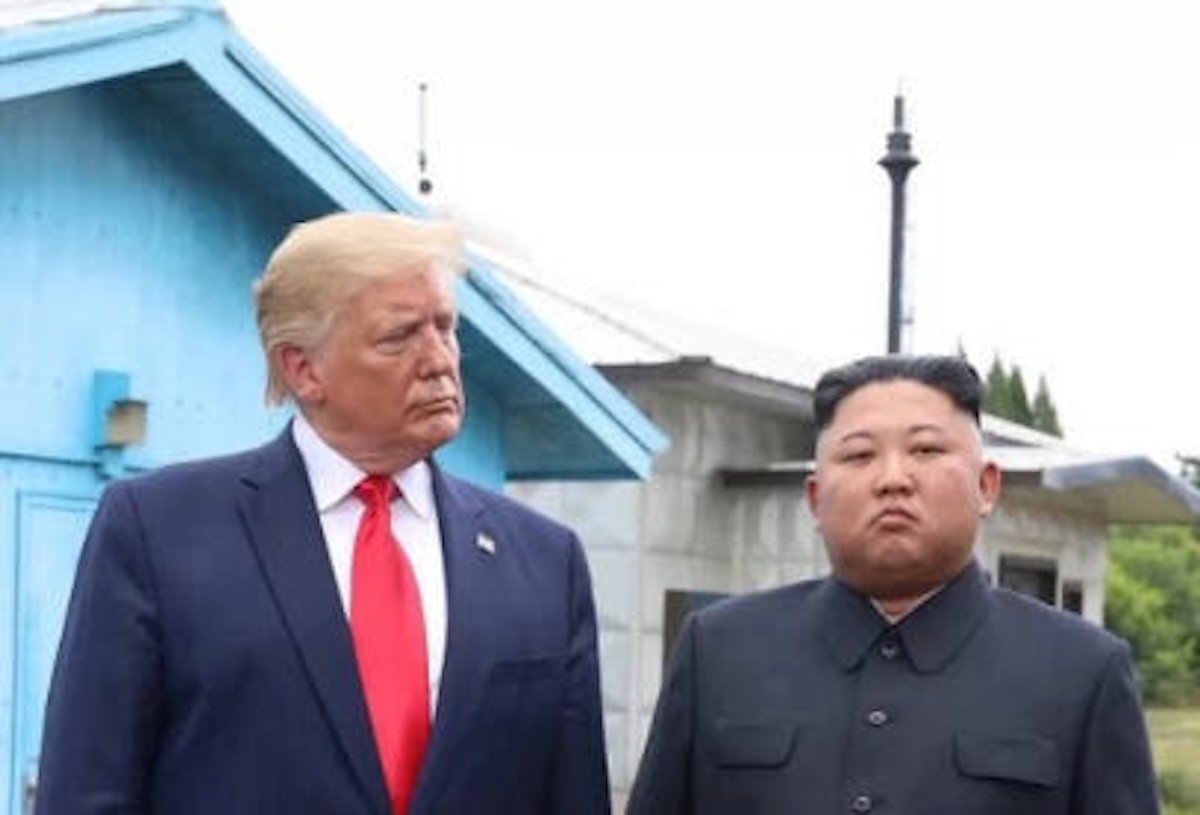
Trump's move comes just 24 hours after he posted a 2019 photo of himself with Kim, captioned with a claim that the two "get along GREAT!"—a stark contrast to the grim reality of North Korea's expanding role in Europe's largest conflict since 1945.
By appeasing Pyongyang, Trump is effectively giving Kim a green light to escalate his aggression against Ukraine and continue threatening neighbors like South Korea and Japan. The decision also undermines the credibility of US security guarantees across the Indo-Pacific, a region where North Korea's military buildup deepens as Seoul weighs US reliability.
Trump's post also included a complaint that Seoul had declined to join the "Denuclearization of the Islamic Republic of Iran"—a reference to the US-led campaign against Tehran. The South Korean government responded that it had "actively participated" in international talks on Iran and was in close consultation with Washington on "practical and military contributions."
The complaint reflects Trump's tendency to deflect blame for his war in Iran, which has consumed critical interceptor missiles that could have been used to protect Asian allies or defend Ukraine. As Patriot interceptor pledges to Ukraine follow a familiar Trump pattern, the diversion of such assets raises questions about the readiness of US forces in the region.
More broadly, by siding with nuclear-armed autocrats in Moscow, Beijing, and Pyongyang against non-nuclear democracies, Trump is signaling to traditional allies in Europe and Asia that Washington may no longer be a reliable defender. The message is clear: if you want security, you may need to acquire nuclear weapons yourself.
For now, the reduction of the exercises is a win for Kim, who has long sought to weaken the US-South Korea alliance. It also deepens the North Korea-Russia alliance despite the risks it poses to regional stability. As the war in Ukraine grinds on and tensions rise in the Indo-Pacific, the consequences of Trump's appeasement are likely to be felt for years.



