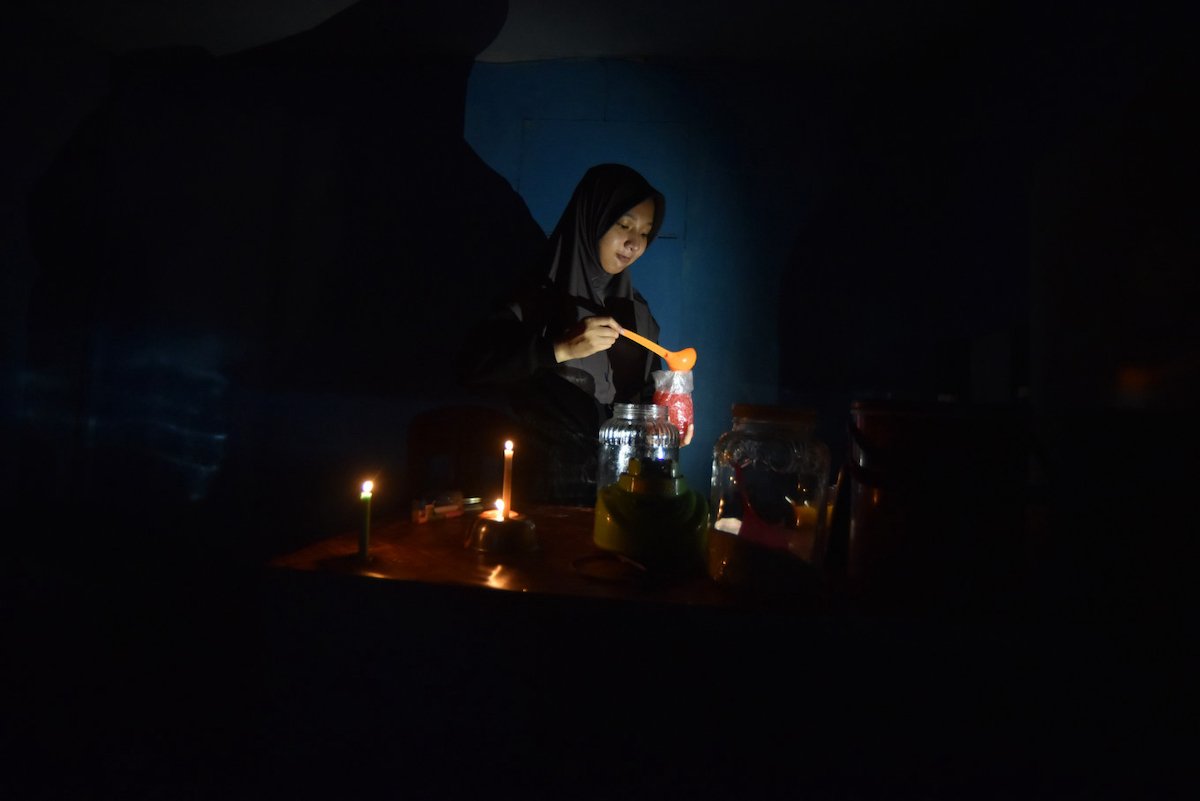
In mid-2026, rolling blackouts swept across Indonesia's Java-Bali grid, affecting cities from South Tangerang to Depok and even the University of Indonesia campus. For a country that ranks among the world's largest coal producers, the outages have laid bare a stark paradox: abundant reserves do not guarantee reliable electricity.
Government data from the Mineral and Coal Resources and Reserves Balance Sheet shows Indonesia holds 31.96 billion tons of coal reserves, including 17.54 billion tons of proven reserves. By any measure, that should power the nation for decades. Yet the blackouts reveal a structural mismatch in the output mix: production of medium- and high-calorific coal has steadily declined, while low-calorific grades have surged. Most power plants operated by state utility PLN require coal with calorific values between 4,500 and 5,200 kilocalories per kilogram—a specification increasingly hard to meet.
Fuel Mismatch and Regulatory Bottlenecks
The Java-Bali crisis stems from fuel management failures compounded by upstream regulatory bottlenecks. PLN projects it will need 154 million tons of coal in 2026 but has locked in legally binding contracts for only about 134 million tons—a gap of 18 to 20 million tons with no guaranteed alternative supply. This shortfall arises from a damaging interaction between delays in the Ministry of Energy and Mineral Resources' approval of companies' Work Plan and Budget (RKAB) and long-standing distortions in domestic coal pricing.
The Indonesian Mining Professionals Association (Perhapi) has warned that signing contracts for 134 million tons does not guarantee the coal reaches power stations, since coal-fired plants need continuous, timely deliveries. Delayed approvals and cuts to 2026 RKAB quotas create uncertainty over how much coal mining concession holders are legally allowed to produce each day, disrupting domestic supply obligations.
Meanwhile, a separate outage in East Kalimantan—Indonesia's top coal-producing province—was caused by simultaneous mechanical failures at the Handil and Tanjung Batu combined-cycle gas power plants, knocking out about 250 megawatts of capacity. This highlights a dual vulnerability: Java-Bali suffers from fuel management failures, while regions outside Java remain exposed due to aging power plants and fragile transmission lines.
Economic Incentives Favor Exports
Administrative bottlenecks are compounded by powerful export incentives. Under regulations unchanged since 2018, coal supplied to domestic power plants under the Domestic Market Obligation (DMO) scheme is capped at $70 per ton for high-calorific 6,322 GAR coal. Mining costs, however, have climbed sharply as mature concessions face stripping ratios of 8 to 12, raising diesel consumption, equipment rental costs, and labor expenses. For many producers, the cost of producing medium-calorific coal now exceeds the DMO price ceiling, leaving little or no margin on sales to PLN and, in some cases, outright losses.
Export markets remain far more lucrative. Indonesia's benchmark coal price stood at $121.83 per ton in June 2026—a gap of more than $50 per ton compared with the DMO ceiling. Combined with a weaker rupiah that boosts export earnings in dollar terms, this gap gives mining companies a financial incentive few are willing to pass up.
The government has used the RKAB process to cap national coal production at 600 million tons, aiming to tighten global supply and support export prices—but that has also reduced the flexibility of domestic supply. The requirement that every mining permit holder set aside at least 25% of production for the DMO, regardless of coal quality, has been called a fundamentally flawed regulatory approach by Publish What You Pay Indonesia. Many producers simply do not mine coal that meets PLN boiler specifications, and facing costly blending requirements, they often conclude that paying modest administrative fines is cheaper than complying with the DMO.
Against this backdrop, the government has launched one of the most ambitious overhauls in Indonesian mining history, making PT Danantara Sumberdaya Indonesia (PT DSI) the sole coal export gateway starting June 1, 2026. The goal is to curb practices such as under-invoicing, transfer pricing, and leakage of export earnings overseas. The transition will occur in three phases, with full implementation set for late 2026. However, as Indonesia's nickel boom has shown, such centralization carries risks—see China Built Indonesia's Nickel Boom. Will It Stay for the Bust? for parallels in resource governance.
The blackouts are a stark warning that Indonesia's coal wealth is not a panacea. Without addressing the regulatory mismatch and economic distortions, the country may continue to struggle to keep the lights on—even as it remains a global coal powerhouse. For more on Indonesia's broader economic challenges, see MSCI Deadline Looms Over Indonesia's Flawed Stock Exchange and Indonesia's Patriot Bonds: A Hidden Amnesty in Plain Sight.