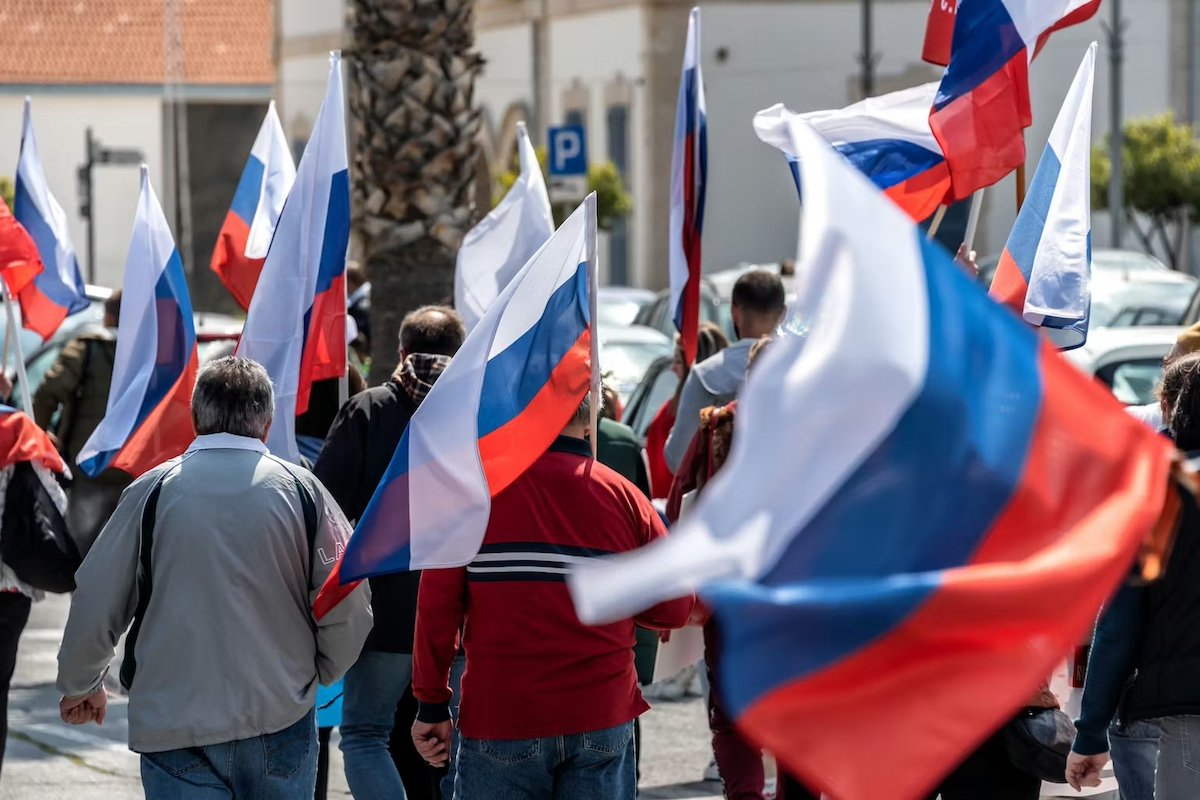
Since Russia launched its full-scale invasion of Ukraine in February 2022, European public opinion has largely rallied behind Kyiv. Yet in several European Union member states, significant minorities hold ambivalent or openly pro-Russian views. A new academic study, based on surveys of nearly 30,000 respondents across 18 countries conducted in late 2023, sheds light on what drives this sympathy for the aggressor.
Partisan Alignment as the Primary Driver
The study identifies partisan alignment as the strongest predictor of pro-Russian attitudes. Voters whose preferred political party maintains close ties to the Kremlin, as assessed by experts from the Chapel Hill Expert Survey (CHES) project, are far more likely to favor Russia over Ukraine. In Slovakia, for example, support for a Russian victory approaches 20 percent, while in Poland it is virtually absent. The researchers argue that these voters are not deeply invested in the war itself but rather align with their party's rhetoric.
This top-down dynamic is especially pronounced in countries where political leaders themselves echo pro-Kremlin narratives. In Slovakia, Prime Minister Robert Fico has publicly adopted positions that align with Moscow's framing of the conflict. Such leadership amplifies partisan cues and shapes public opinion from above.
Disinformation and Conspiracy Theories
The second-strongest correlate of pro-Russian views is exposure to disinformation. Respondents who primarily consume political news from social media and messaging apps, and who believe conspiracy theories such as the claim that the COVID-19 pandemic was orchestrated by national governments, are 40 percent less likely to wish for Ukraine's victory compared to those who rely on traditional media and reject such theories.
The study underscores that disinformation does not operate in a vacuum. It is often disseminated through alternative news channels that thrive on distrust of mainstream institutions. This finding aligns with broader concerns about information warfare, as highlighted in our coverage of exiled Russians building a transnational resistance network against the Kremlin.
Ideology and Economics: Lesser Factors
Ideology plays a weaker but still measurable role. Cultural conservatism and authoritarian tendencies—such as favoring strong leaders and questioning minority rights—are associated with greater sympathy for Moscow. However, economic factors, including hardship from the energy crisis that followed the invasion, show little to no effect. Despite fears that rising energy costs might erode support for Ukraine, the data indicate that those who suffered most from the crisis are not more likely to back Russia.
This finding challenges the notion that material self-interest drives pro-Russian sentiment. Instead, the study suggests that the information environment and political leadership are decisive.
Implications for Countering Russian Influence
The research highlights a central challenge for European governments: efforts to counter disinformation are constrained by domestic political incentives. Where political elites tolerate or amplify pro-Kremlin narratives, public attitudes tend to follow. Strengthening resilience to disinformation requires political leadership committed to defending the integrity of the information environment.
This dynamic has broader implications for the Indo-Pacific, where Russia's influence is also felt. For instance, Japan's balancing act between energy ties with Russia and defense support for Ukraine illustrates the complexity of managing such relationships. Similarly, India's purchase of Russian R-37M missiles shows how defense procurement can intersect with geopolitical alignments.
Ultimately, the study underscores that pro-Russian sentiment in Europe is not a spontaneous grassroots phenomenon but a manufactured outcome of partisan cues and disinformation. Countering it requires not just fact-checking but a political commitment to democratic norms and media integrity.