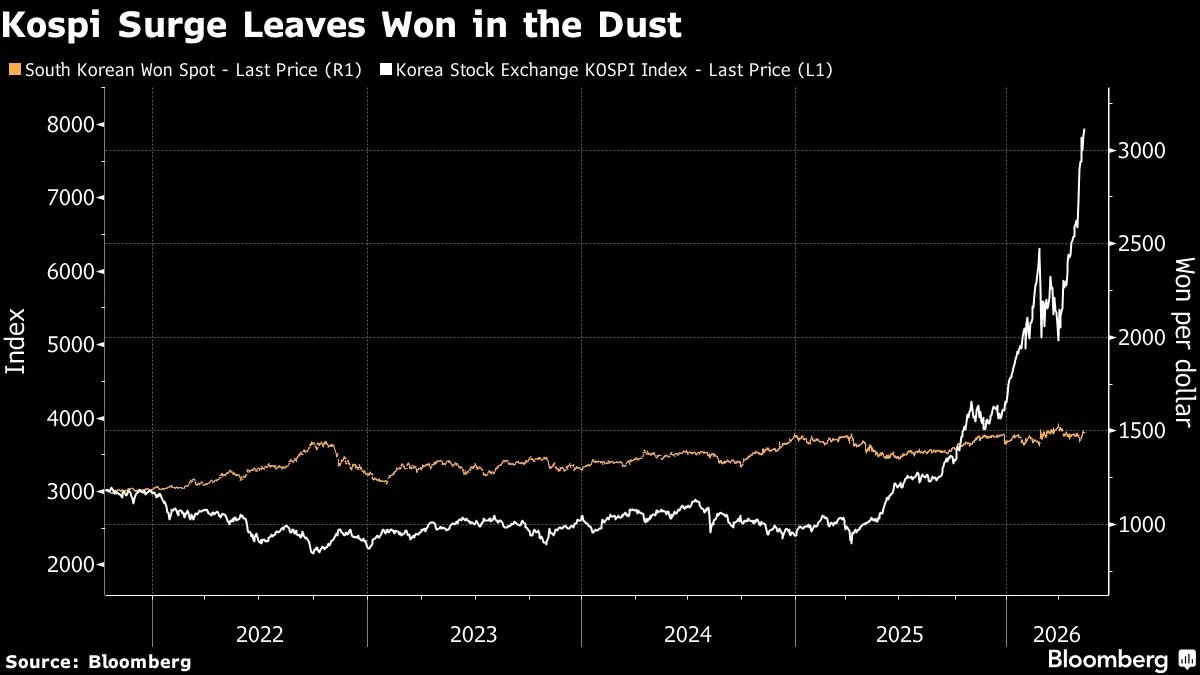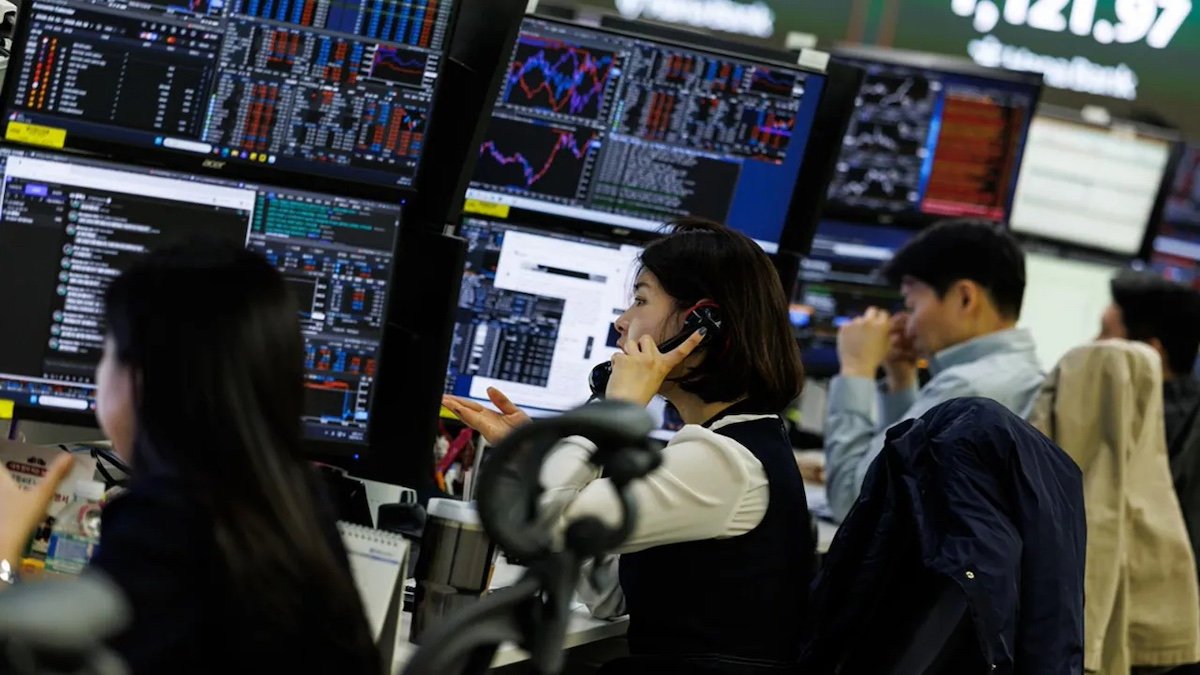
Explaining any stock market crash is a speculative exercise, and the recent plunge in South Korean equities is no exception. But the scale of the move—the KOSPI index tumbling from above 9,000 to roughly 5,500 in just over a month—demands a closer look at the forces that drove both the epic rise and the sudden fall.
The rally that preceded the crash was extraordinary. From early 2026, South Korean stocks went on a tear, with the KOSPI nearly doubling. At the heart of the boom were two companies: SK Hynix and Samsung Electronics, the world's dominant makers of high-bandwidth memory (HBM) chips used in AI data centers. SK Hynix's operating profit surged from under US$10 billion in Q1 2025 to over $35 billion in Q1 2026, according to Reuters data. Samsung's memory division also posted massive gains. Together, these two stocks accounted for as much as 50% of the entire KOSPI market capitalization at the peak.
The fundamental story was compelling. AI's insatiable demand for memory chips created a once-in-a-generation boom for a commodity industry that normally suffers from brutal competition and high capital costs. South Korea's exports rose more than 70% year-on-year, and the country's GDP growth rate accelerated noticeably, almost entirely due to memory chip exports. That narrative attracted global attention, but the most aggressive buyers were not foreign institutions—they were ordinary South Koreans.
Retail traders and the leverage trap
Domestic retail investors, many of them first-time traders, piled into the market using a new financial product: leveraged single-stock ETFs. These instruments effectively allow investors to borrow money to bet on a single stock's daily performance. In South Korea, leveraged ETFs tracking SK Hynix and Samsung became wildly popular. The strategy worked spectacularly on the way up, amplifying gains. But when sentiment turned, the same leverage accelerated the decline.
“Normal people don’t have a lot of cash sitting around,” one market analyst noted. “But earlier this year, regular Korean people got the opportunity to effectively borrow lots of money to invest it in stocks, via the introduction of leveraged single-stock ETFs.” The result was a classic feedback loop: rising prices attracted more buyers, who pushed prices higher, which attracted even more buyers. Foreign investors, meanwhile, were largely selling into the rally, taking profits. But the flood of retail money overwhelmed their selling—until it didn't.
The trigger for the reversal remains unclear. It could have been a fundamental shift—perhaps doubts about the sustainability of AI chip demand, or news that competitors were catching up. Or it could have been purely financial: the pool of eager retail borrowers simply ran dry. Whatever the spark, once prices began to fall, leveraged positions were forced to unwind, creating a cascade of selling. The KOSPI's drop from 9,000 to 5,500 wiped out trillions of won in market value.
The crash is a stark reminder of the risks inherent in retail-driven, leverage-fueled markets. It also echoes similar dynamics seen elsewhere in Asia, such as the recent plunge in Chinese chip stocks, where overvaluation overwhelmed state rescue efforts. In both cases, the underlying technology story remains intact, but the financial froth has been violently purged.
For South Korea, the implications extend beyond stock prices. The memory chip sector is a pillar of the national economy, and the government in Seoul has been keen to promote the country as a global AI hardware hub. The crash may temper some of that enthusiasm, but it does not erase the fundamental demand for HBM chips. SK Hynix and Samsung continue to report strong earnings growth. The question is whether the market can find a new equilibrium without the destabilizing influence of leveraged retail speculation.
In the meantime, the episode underscores a broader lesson for Asian markets: when retail investors armed with cheap leverage drive a rally, the subsequent crash can be just as dramatic. As one Seoul-based fund manager put it, “The same forces that made this the fastest boom in history also made it the fastest bust.”