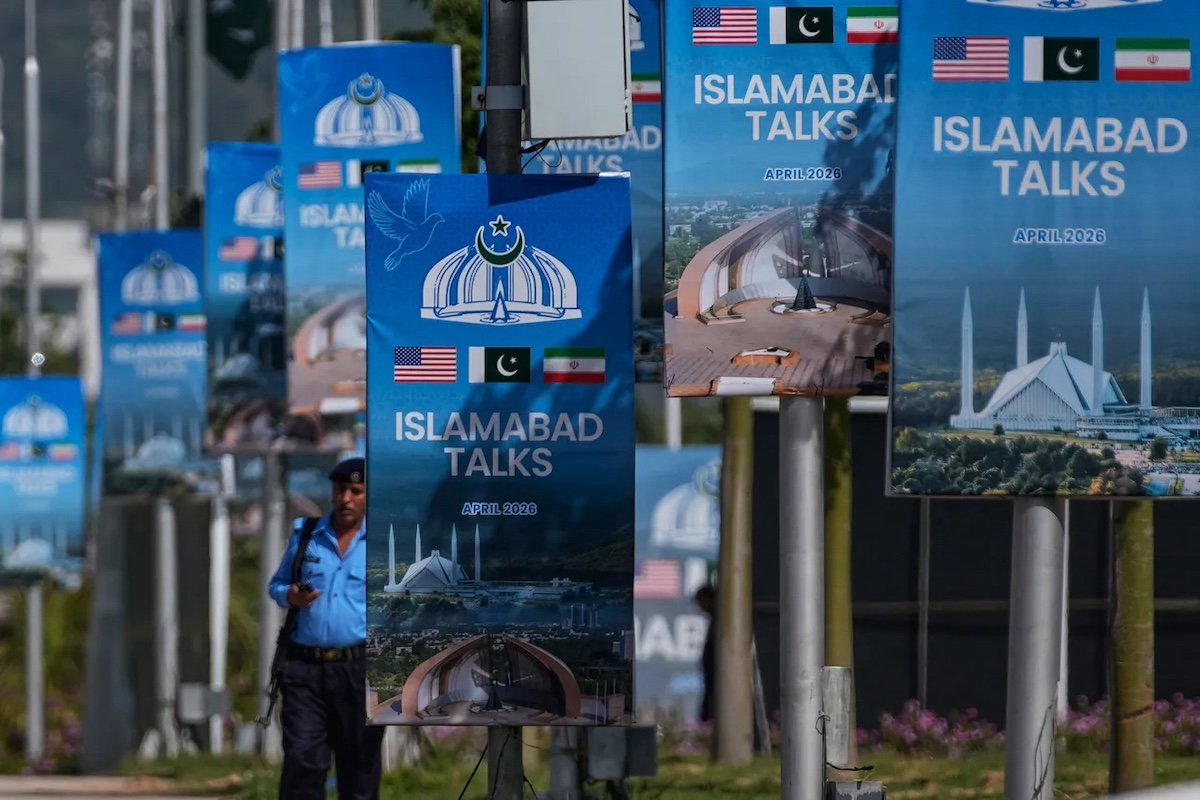
In the weeks since the collapse of the US-Iran Memorandum of Understanding, both Washington and Tehran have been maneuvering to strengthen their positions ahead of any potential resumption of talks. For the United States, this has meant a series of overt threats from President Donald Trump, hinting at an even more comprehensive bombing campaign against Iranian strategic targets. For Iran, the strategy remains familiar: keep maritime traffic through the Strait of Hormuz at a bare minimum.
US and Iranian officials continue to offer conflicting accounts of where negotiations stand. Despite Trump's repeated assertions that Tehran is desperate for a deal, Iranian leaders insist that no talks are taking place. Yet both sides seem to agree that any eventual agreement will center on the Strait of Hormuz, the strategic waterway that the Islamic Revolutionary Guard Corps has demonstrated it can shut down at will.
Various schemes have been floated between Iran and Oman, the two countries that flank the strait. While no deal is finalized, Iran will almost certainly retain more control over the strait's traffic than it had before the war began in February. The question now is whether tolls or fees will accompany any arrangement worked out between Tehran and Muscat.
The toll dilemma
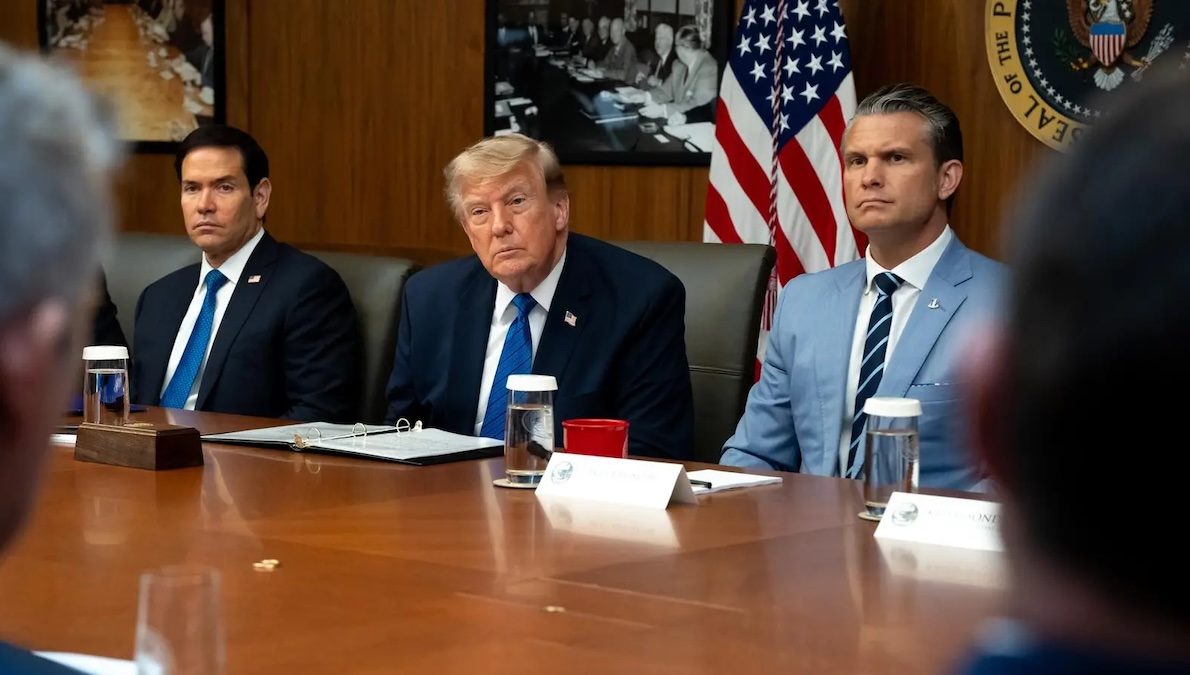
The Trump administration is adamantly opposed to any fee structure, fearing it would provide the Iranian government with additional revenue and serve as visible proof that Trump's preventive war was a strategic mistake. Secretary of State Marco Rubio reiterated the US position in July, warning that allowing a nation-state to control an international waterway and charge a toll would set a dangerous precedent for the rest of the world.
Of course, permitting an Iranian toll or fee structure isn't ideal. Before the war, the strait was free and open, with roughly 120 to 150 ships transiting daily. The United States wants to return to that status quo, but Iran has no intention of doing so. Trump's war handed Tehran the perfect excuse to leverage its geography, and the Iranians have used it to turn the strait into a strategic card they can play whenever Washington threatens to escalate.
Reopening the strait has become as important to the United States as containing Iran's nuclear program, if not more so. Trump initially tried to achieve this through military force, hoping that US strikes could degrade Iran's military capacity enough to stop attacks on shipping. But that strategy overestimated the US military's ability to force a change in Tehran's calculus and underestimated Iran's ability to manufacture and launch cheap drones and missiles at scale.
Every US strike merely reinforced the Iranian government's belief that the war was existential. Instead of capitulating, Iran fought back, targeting vessels using the southerly route near Oman's coast and making clear that heavier US bombing would trigger more attacks on Gulf energy infrastructure.
A precedent in the Malacca Strait
US military attempts to restore the pre-February status quo have failed and will likely continue to fail. If the Trump administration seeks to extricate itself from a war without end, its best option is to accept a toll or fee structure in the regional chokepoint. Hawks on Capitol Hill would no doubt scream bloody murder, and some of Trump's own allies would struggle to explain how such a scheme could be seen as appealing. But if the choice is between swallowing fees or endless conflict, the former is the better option.
This wouldn't be the first time a country adjacent to a critical trade chokepoint received compensation. The most obvious case is the Strait of Malacca in Southeast Asia, where shipowners contribute to a voluntary fund administered by Malaysia, Indonesia, and Singapore for navigational assistance, maritime safety, environmental protection, and search and rescue. A similar arrangement in the Strait of Hormuz would thus not set a precedent. In fact, shipping companies and their insurers might view such payments as in their own interest if they helped prevent costlier disasters.
Accepting Iranian tolls would be an embarrassing acknowledgment that Iran is now a principal arbiter of the strait. Moreover, depending on the fee level—Tehran is reportedly demanding 7% of the value of a ship's cargo—the Iranians would be collecting revenue they didn't have before the war. But even this scenario is not as dire as many assume. Iran's leverage dissipates with every passing month. The Gulf Arab states are not sitting still; they are increasingly adapting to Iran's new posture, and the broader region is finding ways to cope.
The Trump administration may not like paying for the privilege of using the strait, but its decision to go to war created the situation the United States now faces. Bad policies have unintended consequences. As the war drags on, Washington's options narrow. Accepting a toll may be the least bad path forward, and it could even provide a foundation for a more stable regional order. The alternative—continued conflict—serves no one's interests, least of all the United States.