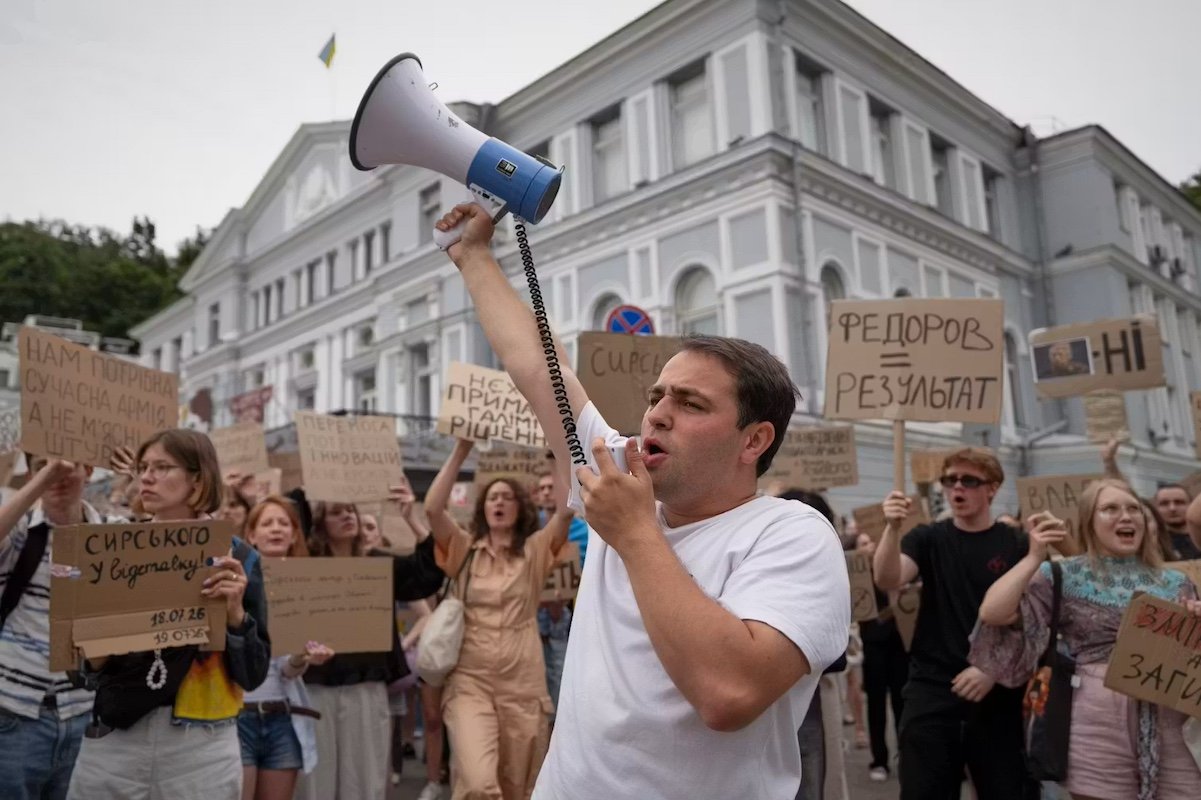
Ukrainian President Volodymyr Zelensky has made two high-profile military dismissals that have puzzled many Western observers: the removal of Defense Minister Mykhailo Fedorov, a popular figure known for driving Ukraine's drone and tech innovations, and General Oleksandr Syrskyi, the commander-in-chief of the armed forces. While Western media often frames these as internal power struggles, the real reasons lie in the brutal arithmetic of a war of attrition and the political calculus needed to sustain it.
The Hybrid Army and Its Fault Lines
Since Ukraine's independence in 1991, its military has been a hybrid of Soviet-era structures and Western training. The 2014 annexation of Crimea by Russia forced Kyiv to accelerate reforms, but the officer corps remained divided. Lower-ranked officers embraced Western tactics—decentralized command, initiative, and technology—while senior figures like Syrskyi clung to the Soviet model of centralized, attrition-focused warfare.
When Russia launched its full-scale invasion in 2022, Western training proved decisive in blunting the initial assault. General Valerii Zaluzhnyi, then commander-in-chief, encouraged these innovations. But by 2023, the conflict shifted from maneuver warfare to a grinding war of attrition. The officers who made Ukraine's early successes possible were either promoted or killed, and their replacements, though enthusiastic, lacked the same training.
Drones vs. Human Will
International media has focused heavily on Ukraine's drone technology, often portraying it as a game-changer. Zelensky himself has leveraged drone successes for diplomatic wins, including in the context of the American war in the Persian Gulf. But this narrative misses a critical point: drones cannot replace human soldiers in a war of attrition. As Asian militaries considering drone adoption have learned, technology is a supplement, not a substitute, for morale and manpower.
Zelensky understands this. He emphasizes drones because they attract global media attention, alleviate recruitment pressures, and compensate for delayed Western aid in artillery and air defense. But he also knows that in a war of attrition, the winner is the side that maintains the will to fight longest. Drones are a tool, not a solution.
Charisma and Sacrifice
Syrskyi lacked the charisma of his predecessor, Zaluzhnyi, and his strategy was often described as unimaginative. Yet he had one crucial advantage: he harbored no illusions about the war's nature. He was willing to sacrifice Ukrainian lives for long-term strategic goals. This pragmatic brutality initially made him indispensable to Zelensky, who needed a commander willing to fight a war of attrition.
But Syrskyi's approach also made him deeply unpopular with the troops. Protests against his leadership grew, and Zelensky faced a choice: keep a general who could win battles but lose the army's morale, or remove him to preserve public support. He chose the latter.
Fedorov's dismissal is more complex. As defense minister, he championed technological innovation and was admired by both troops and Western allies. But tensions emerged when Fedorov pushed to replace Syrskyi. Zelensky initially sided with Syrskyi, valuing his attrition strategy over Fedorov's tech-focused approach. Once public discontent with Syrskyi became undeniable, Zelensky sacrificed both men to maintain his own political position and the morale of the Ukrainian people.
This pattern is not new. Zelensky previously replaced Zaluzhnyi, another popular commander, for similar reasons. The Ukrainian president recognizes that war is ultimately a political act. Dissident opinions have a place, but if they undermine strategic goals, they become liabilities.
For Asian observers, the lesson is clear: military effectiveness depends not just on technology or tactics, but on the political management of morale and public trust. As Japan's defense overhaul and other regional military modernizations proceed, they must account for the human and political dimensions of conflict—something Ukraine's leadership is learning the hard way.