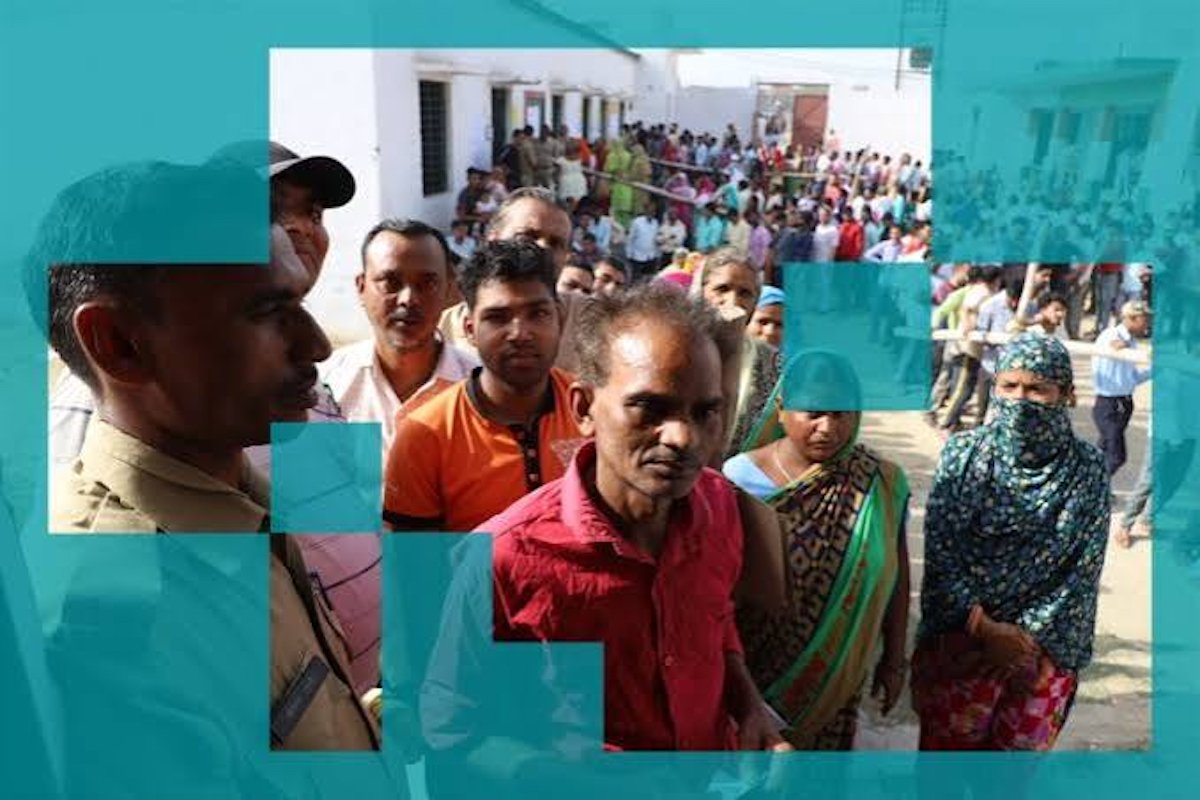
In 2027, India will undertake a statistical exercise of staggering proportions. Hundreds of millions of people will be counted in what the government calls its first fully digital census. Alongside data on education, migration, fertility, and employment, enumerators will also record something more sensitive: every individual's caste.
This will be the first national census since independence to enumerate caste across the entire population. Scheduled Castes and Scheduled Tribes—historically disadvantaged communities—have long been counted, but most other caste identities have not appeared in the census since 1931. The decision promises policymakers a clearer picture of social inequality, but it also exposes one of modern India's deepest paradoxes: to correct the inequalities produced by caste, the state must first classify every citizen by that very identity.
At the same time, India is entering the age of artificial intelligence. If automation transforms work and every citizen receives a universal basic income (UBI), could these forces finally dissolve the material foundations of caste? Or would AI simply automate one of the world's oldest systems of social classification?
Varna is not jati
Any answer must begin with a distinction that the English word "caste" often obscures. Varna refers to the fourfold order of Brahmins, Kshatriyas, Vaishyas, and Shudras, with some communities historically placed outside the scheme. It is a normative, philosophical map of society, described in classical texts and interpreted differently across time. Jati, by contrast, refers to the thousands of hereditary, localized, and usually endogamous communities that have structured actual social life. Jati has influenced marriage, occupation, kinship, status, diet, neighborhood, and access to social networks. It is far more complex than the four varnas and cannot be neatly derived from them.
Can these thousands of jatis be grouped under the four varnas? Only very loosely. Some jatis have traditionally identified themselves, or been identified by others, with a particular varna, but the fit is neither comprehensive nor consistent. A community may claim Kshatriya standing in one historical setting while occupying a different position elsewhere. Local rankings can be disputed, and many Dalit communities were historically treated as avarna—outside the fourfold order altogether.
The classical ideal was not always hereditary. The Bhagavad Gita famously explains that the fourfold order arises from guna and karma—quality and work. But in lived history, that ideal was converted into heredity: aptitude was assumed to follow birth, and difference hardened into hierarchy. A map of human diversity became a cage of inheritance.
In public discussion, varna and jati are often collapsed into "caste," making it appear as a single ancient system when it has repeatedly been reconstructed by political and administrative forces. Even the English word is a foreign import: it derives from the Portuguese casta (lineage, breed), which early European traders applied to Indian social groups, folding varna and jati into one category.
Independent India abolished untouchability and prohibited caste discrimination. It also created reservations and targeted programs for historically disadvantaged groups. Applicants for certain educational places, public positions, or benefits may therefore need certificates establishing membership in a Scheduled Caste, Scheduled Tribe, or Other Backward Class. This recognition is intended to compensate for accumulated disadvantage, not to endorse hierarchy. Nevertheless, an identity the Constitution seeks to make less consequential must remain visible to the agencies remedying its effects.
What AI and basic income could change
Caste was never only a belief system. It was embedded in inherited occupations and unequal access to land, education, credit, and social support. Leaving a caste-associated occupation could mean losing an entire network. AI and UBI could weaken some of these bonds. Automation may reduce the importance of occupations historically associated with particular communities. Digital education and remote work can connect people to skills and employers beyond caste networks. A guaranteed income could give workers greater freedom to reject degrading work or leave places where dominant groups control economic opportunity.
India's 2016–17 Economic Survey called UBI a "radical new vision," partly because targeted welfare often failed to reach its intended recipients. A universal payment would recognize the citizen before the category. But universality carries its own problems. A payment made to everyone can be used as an argument for doing nothing more for those who have been specifically wronged: if every citizen receives the same floor, why maintain reservations, scholarships, or targeted programs? Used in that spirit, UBI would not complete the work of social justice but quietly retire it. A universal floor must supplement remedial programs, not replace them.
Used well, the change could be quietly revolutionary. If survival no longer depended on accepting an inherited place in the division of labor, one of caste's practical foundations would weaken. AI might make traditional occupational boundaries obsolete, while UBI supplied the minimum economic security needed to cross them. As India's AI ambitions grow, the technology could either entrench existing biases or offer new avenues for mobility—depending on how it is deployed.
Social reformer B.R. Ambedkar understood caste not simply as a division of labor but as a division of laborers. He identified endogamy—marriage within one's group—as central to its reproduction. AI and UBI may weaken the economic bonds of caste, but they cannot by themselves dismantle the social and marital networks that sustain it. The 2027 census, by making every jati visible, will provide the data needed to measure progress—or the lack of it. The question is whether India will use that data to reinforce old hierarchies or to build a more equitable society.