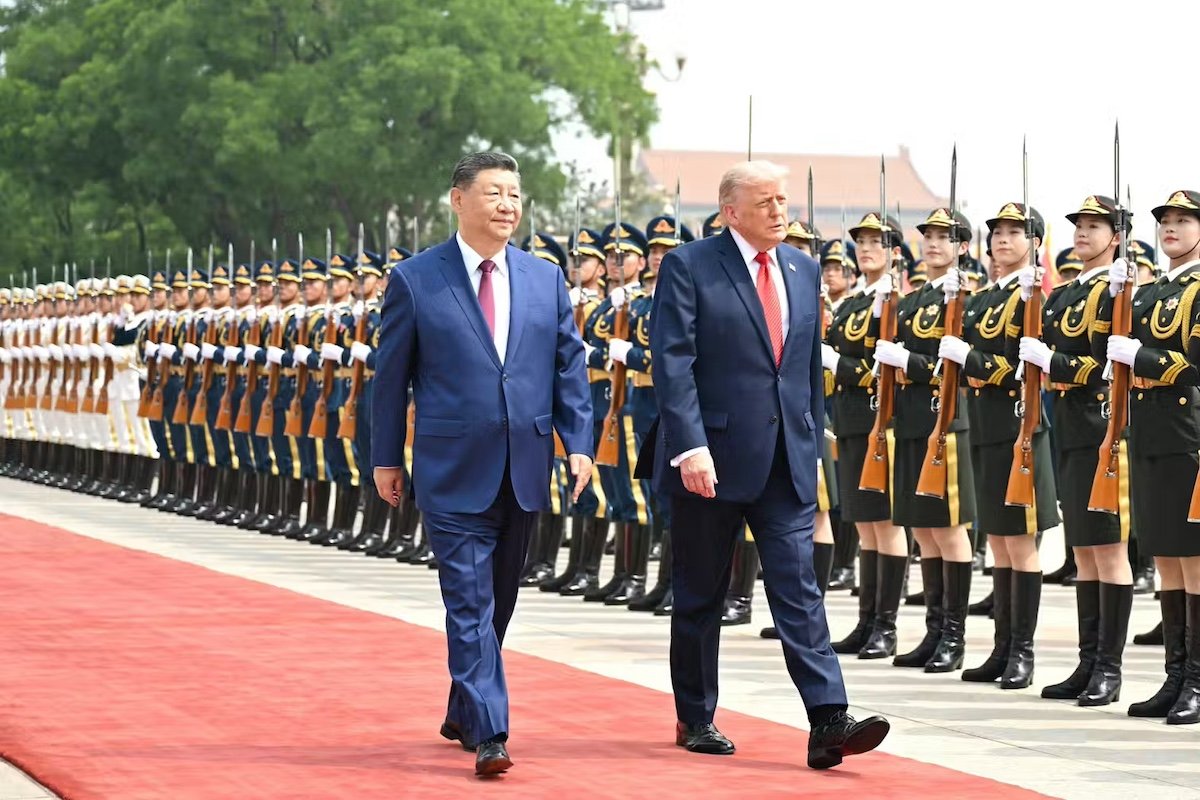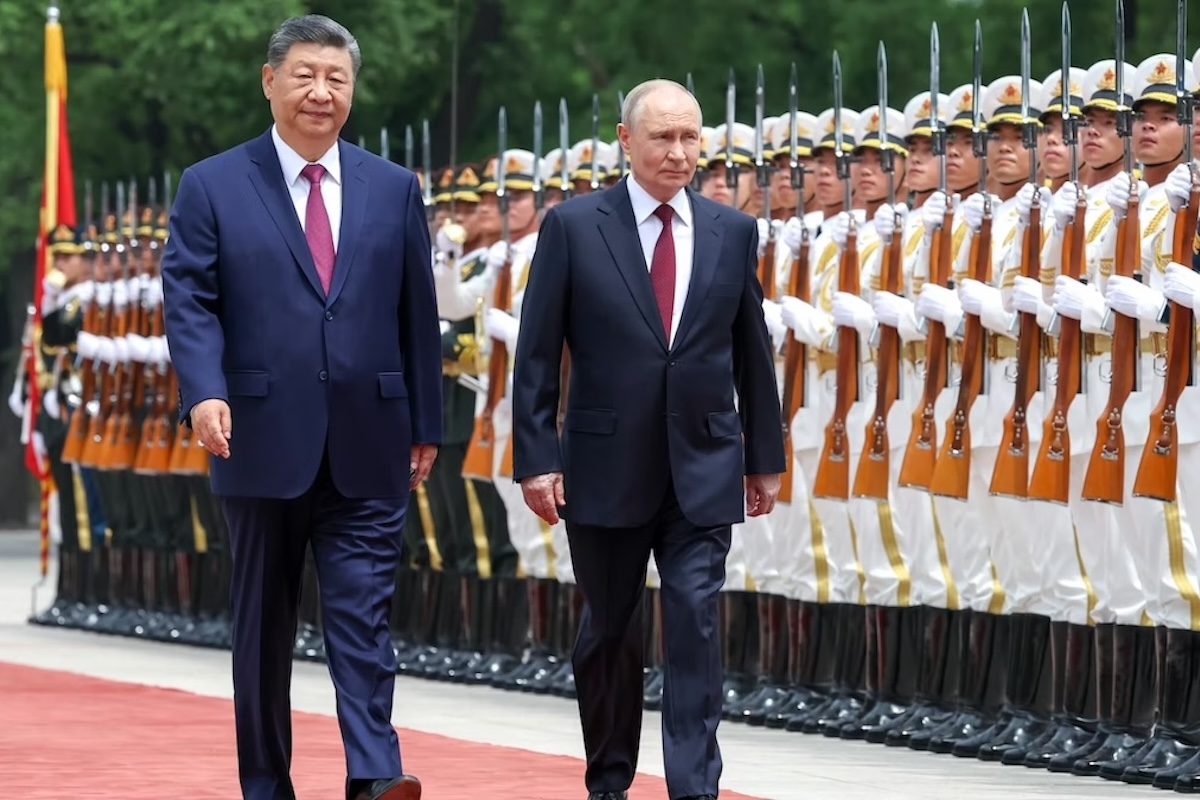
Less than a week after hosting U.S. President Donald Trump, Chinese President Xi Jinping welcomed his Russian counterpart, Vladimir Putin, to Beijing. Unlike Trump's visit, this was a routine affair: the two leaders have met over 40 times since 2013, and this marked Putin's 25th trip to China. The frequency underscores the expanding scope of shared interests between Beijing and Moscow, but it also highlights a partnership that is increasingly lopsided.
Following their talks, Xi and Putin signed a raft of documents covering energy, higher education, and media. They also adopted a joint statement vowing to build a multipolar world order and a "new type" of international relations—a direct challenge to U.S. global primacy. This rhetoric echoes a 1997 statement in which both nations condemned the "forcing of the international community to accept a uni-polar world pattern." Yet, translating this into action has proven complex.
Rhetoric vs. Reality
Moscow and Beijing have often chosen the easiest path to oppose Washington: blocking U.S.-backed initiatives through UN Security Council vetoes. But they have stopped short of launching major joint efforts to challenge American power. For instance, both countries offered muted responses to the ousting of Venezuelan leader Nicolás Maduro in January and provided limited support to Iran in its conflict with the U.S. and Israel.
One key reason is the asymmetry in their capacities to help each other. Russia lacks the economic and technological heft to support China in its rivalry with the U.S. Moscow cannot offer Beijing an alternative to American markets or relief from U.S. tariffs; the Russian market is too small and unattractive for Chinese firms, especially given the risk of secondary sanctions. Similarly, Russia is ill-equipped to help China bypass U.S. export controls on advanced technologies like semiconductor equipment and AI hardware. Western sanctions and decades of economic stagnation have left Russia trailing in the global tech race, forcing it to rely on China for everything from cars and laptops to 5G networks since 2022.
China, by contrast, has the political, financial, and economic means to support the Kremlin. Beijing's state media echoes Russian talking points on the war in Ukraine, blaming NATO expansion, and China supplies dual-use components like chips and fiber-optic cables essential to Russia's war effort. Yet China has refrained from providing lethal weapons and has not participated in Russian military exercises in Europe, despite regular joint patrols around Japan and South Korea. Beijing has also delayed its final commitment to the Power of Siberia-2 gas pipeline, which would partially compensate Russia for lost European revenue.
China Calls the Shots
It is increasingly clear that Beijing dictates the pace and areas of cooperation. Russia's leadership appears to accept this "junior partner" status, reconciling conflicting interests in Central Asia rather than challenging Beijing. For example, Moscow has remained silent on the presence of Chinese troops in Tajikistan, a former Soviet sphere of influence. China, for its part, treads carefully, creating an illusion of equality—for instance, refraining from criticizing Russia's aggression in Ukraine despite its negative impact on China-Europe railway routes.
However, some Russians view China as a threat. In recent years, several Russian scientists working on military programs have been imprisoned on suspicion of spying for China. The Kremlin itself is acutely aware of its deepening asymmetric dependence and is nurturing ties with other Asian states, including India and Vietnam, which have historically had troubled relations with Beijing. As one analyst noted, while China is an indispensable partner for Russia, Moscow appears wary of Beijing dominating East Asia and the Indo-Pacific.
This dynamic is part of a broader pattern in Sino-Russian relations, as explored in China and Russia: A Strategic Partnership Strained by Mutual Suspicion. Meanwhile, Xi's recent meetings with Trump have also raised concerns in Southeast Asia, as detailed in Trump-Xi Reset Raises Alarm in Jakarta Over Southeast Asia's Marginalization. The partnership may be touted as a new world order, but its foundations are increasingly shaky.