The argument that the US military's focus on Iran weakens deterrence in Asia and makes conflict with China more likely has become a staple among critics of Washington's Middle East policy. There is some truth to it: the US Navy is stretched, with no deployable aircraft carrier in the Western Pacific and the 31st Marine Expeditionary Unit committed to Iran operations. War stocks of precision missiles and air-defense ordnance are being drawn down. Admiral Samuel Paparo, commander of US Indo-Pacific Command, has hinted at the strain.
Does this create a window for Xi Jinping to move on Taiwan, or against the Philippines or Japan? Possibly. But the Chinese leader has ample reason to hesitate.
The PLA's Strengths and Limits
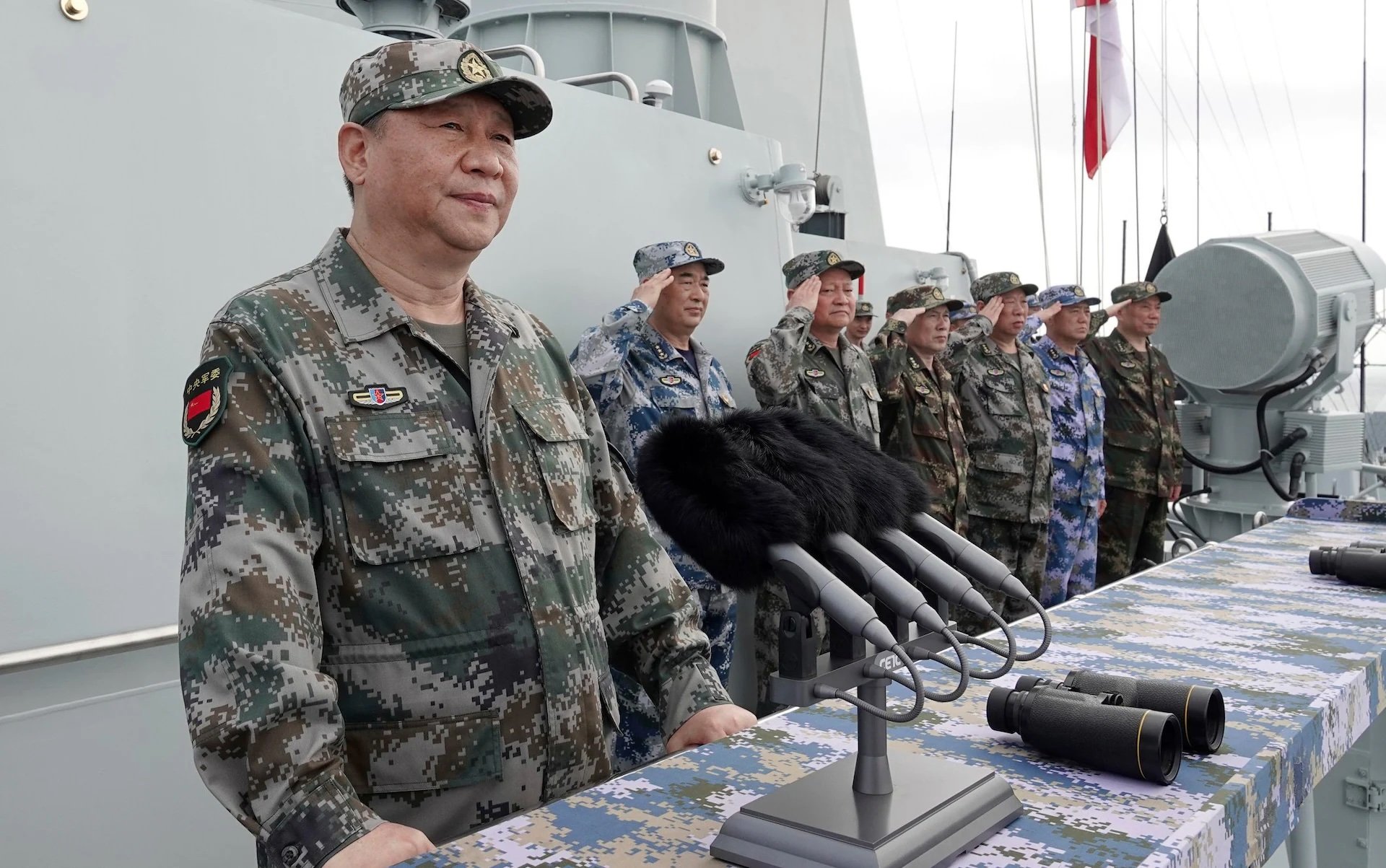
China has built the largest and fastest military expansion since World War II, as detailed in the Pentagon's annual China Power Reports. The People's Liberation Army's primary near-term mission is to seize Taiwan, a task it has rehearsed for decades. Its navy and air force can surround the island, and combined amphibious and airlift capabilities could potentially move large forces across the strait. The PLA's rocket forces can bombard Taiwan, and Beijing has long cultivated a fifth column there through subversion and cognitive warfare.
If the conflict were short and confined to the Taiwan area—say, a few weeks—Xi might like his odds. But taking Taiwan is far from certain. The US retains considerable regional capability and can reinforce from elsewhere. American forces have demonstrated combat effectiveness in Venezuela, Iran, and against Houthi missiles in the Red Sea. Meanwhile, Chinese air defenses and missiles sold to proxies have performed poorly. The PLA itself has not fought a real war in 50 years.
The Global War Scenario
If the fight expands into a global war, China's vulnerabilities become stark. Beijing admits it cannot protect its global interests. The PLA is not ready to project power beyond roughly 1,000 miles from the mainland, even if its missiles can reach farther. International trade, energy imports, and food supplies would halt. Chinese companies would lose access to components and technology, and exports earning hard currency—mainly US dollars—would cease. Being cut off from the dollar network would leave Beijing reliant on its non-convertible yuan, which few want. Without dollars, China cannot buy Australian iron ore for its steel industry or pay for overseas acquisitions.
Domestically, a prolonged conflict could erode public support. Xi has urged citizens to "eat bitterness," but the 600 million Chinese living on $5 a day or less, families of fallen soldiers, and his many enemies might blame him for the hardship. Nationalism could sour quickly.
Strategic Blowback
Starting a kinetic war might also galvanize other nations to bolster defenses and cooperate with the United States. Xi's aggressive posture has already pushed Japan to strengthen its military—something US administrations long failed to achieve. The Philippines and Indonesia are similarly energized, and even New Zealand has voiced concern. The US is clearer about the China threat than a decade ago, when such warnings were taboo in Washington and at USINDOPACOM. Europe, spurred by Putin and Trump's tough-love approach, is slowly realizing defense matters. The Global South might recoil once reports emerge of PLA violence against Taiwanese civilians and Chinese investment dries up. Russia would likely offer only pro-Beijing rhetoric, leaving China to fight alone.
Chinese-funded leftist groups in America might try to sway opinion, but attacking Taiwan or US bases in Guam, the Northern Marianas, or Hawaii would kill Americans. Striking the US mainland would ensure lasting American enmity. Even Wall Street and big business, often accommodating to Beijing, might reconsider.
Ultimately, only Xi knows his decision. He may see the US distracted by Iran as an opportunity. But a Taiwan invasion would be an enormous gamble—and Xi and the CCP elite, who have stashed wealth and family overseas, are presumably not suicidal.