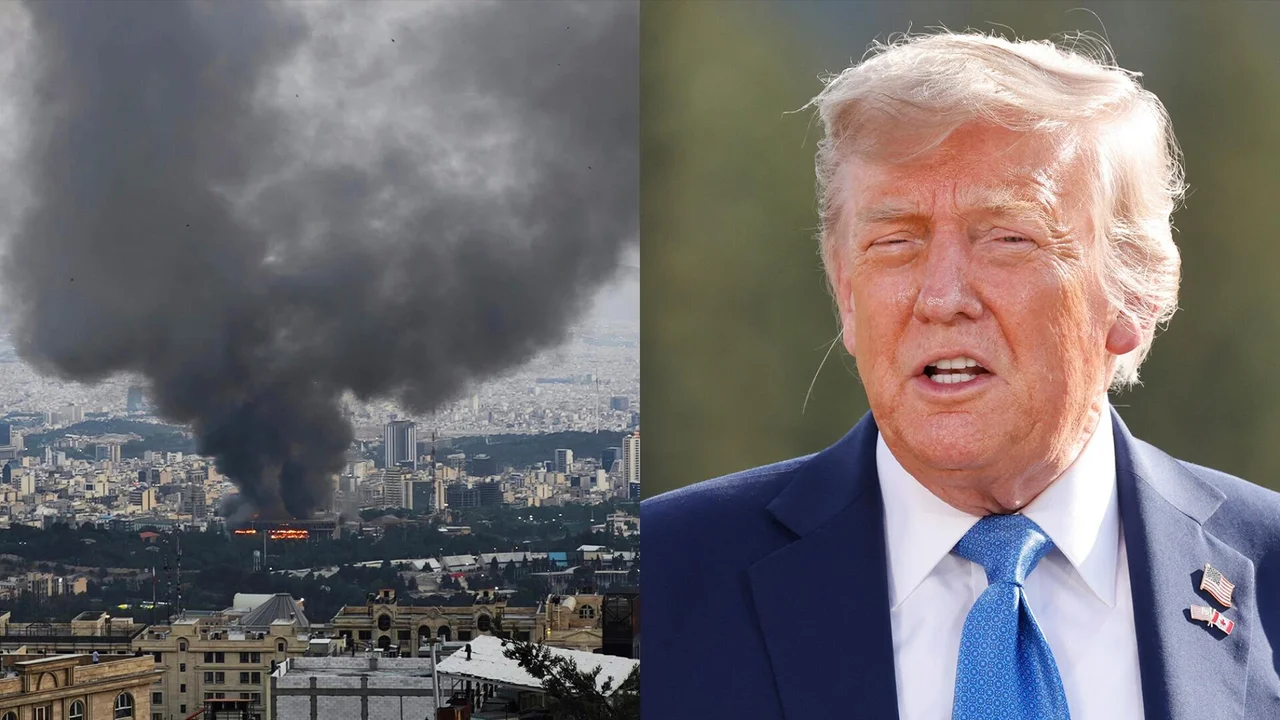
A new poll from the Washington Post, ABC News, and Ipsos has found that 61% of Americans now consider President Donald Trump's military campaign in Iran a mistake. The survey, released Friday, marks a rapid collapse in public support for a conflict that has already claimed thousands of civilian lives and sent global energy prices soaring.
The war, launched two months ago under the name Operation Epic Fury, has achieved a level of unpopularity that previous U.S. conflicts took years to reach. As CNN senior political reporter Aaron Blake noted, it took more than three years for the Iraq War to hit a 61% disapproval rate, and six years for the Vietnam War to do the same.
By contrast, Trump's Iran campaign never enjoyed a moment of broad consensus. A Reuters/Ipsos poll conducted days after the initial strikes—which killed 555 Iranians, including Supreme Leader Ayatollah Ali Khamenei—found that only 27% of Americans approved, while 43% disapproved and 30% were undecided. Since then, events have pushed the undecided firmly into the opposition camp.
From Undecided to Disillusioned
The erosion of support has been driven by a series of developments that have undercut the administration's narrative. A double-tap airstrike on a school in Iran killed at least 155 people, including 120 children, drawing international condemnation. Iran retaliated by blocking oil shipments through the Strait of Hormuz, sending U.S. gasoline prices above $4 per gallon and rattling global markets.
Trump's rhetoric has also grown increasingly erratic. Last month, he threatened that "a whole civilization will die tonight" if Iran failed to negotiate on his terms—a statement that alarmed even some of his own supporters. The poll found that 53% of Republicans viewed the threat negatively.
The war's objectives have shifted repeatedly, with the administration variously citing regime change, protecting protesters, dismantling Iran's nuclear program, eliminating its ballistic missile arsenal, securing oil supplies, defending Israel, and reopening the Strait of Hormuz. This lack of a clear mission has fueled public skepticism.
Partisan Divisions and a Fragile Ceasefire
The poll reveals deep partisan splits. Among Democrats, 91% say the war was a mistake. Among independents—many of whom were undecided at the outset—71% now disapprove, with only 24% in support. Within the GOP, the divide is stark: 86% of self-identified MAGA Republicans remain supportive, but non-MAGA Republicans are evenly split, with 50% calling the war the right decision and 49% calling it a mistake.
Defense Secretary Pete Hegseth, testifying before Congress on Thursday, appeared to dismiss the poll's findings. When Senator Kirsten Gillibrand (D-NY) pressed him on the war's unpopularity, Hegseth replied, "I believe we do have the support of the American people. I would remind you and this group that we're two months into an effort, and many congressional Democrats want to declare defeat two months in." He invoked the lengthy timelines of Iraq and Afghanistan, urging patience for a conflict Trump had initially said would last only four to five weeks.
The war's impact extends beyond U.S. borders. The blockade of the Strait of Hormuz has disrupted energy supplies to Japan, South Korea, and India, while the broader instability has complicated diplomatic efforts across the Indo-Pacific. For a deeper look at how the conflict fits into Trump's broader foreign policy strategy, see our analysis: Trump's Erratic Foreign Policy Masks a Calculated Push for Bipolar Order.
Meanwhile, a fragile ceasefire remains in place, but its durability is uncertain. For more on the current state of the truce, read: Trump Extends Iran Ceasefire, Maintains Naval Blockade Amid Regional Tensions.
The poll's findings suggest that unless the administration can demonstrate tangible progress, even Trump's most loyal supporters may eventually turn against the war. As the conflict drags on, the question is not whether public opinion will shift further, but how quickly.



