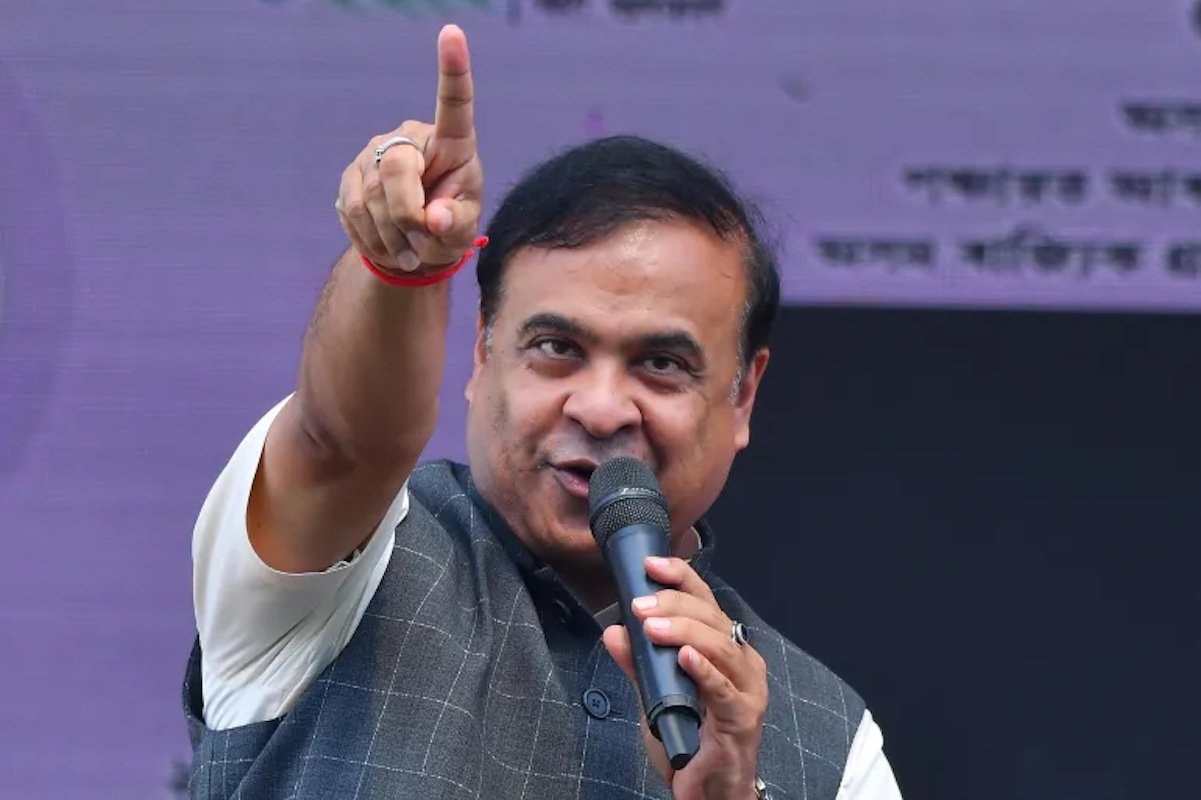
On Thursday, Bangladesh's Ministry of Foreign Affairs summoned India's acting High Commissioner, Pawan Badhe, to lodge a formal protest over remarks made by Assam Chief Minister Himanta Biswa Sarma. Director General (South Asia) Ishrat Jahan conveyed Dhaka's “strong displeasure” at what it termed “disparaging” comments, marking the first such diplomatic summons since the Bangladesh Nationalist Party-led government took office in February.
The immediate trigger was Sarma's reported statement that he “prays” for India-Bangladesh relations to deteriorate rather than improve. For a senior elected official of a neighboring country to openly wish for diplomatic decline is rare, and it underscores how quickly political rhetoric can escalate into formal state-to-state friction.
Dhaka's response was calibrated: not a theatrical escalation, but a clear signal that such language, if left unchecked, erodes the foundations of an already delicate bilateral relationship. Yet this episode is not an isolated outburst. It fits a longer pattern of rhetoric from Assam's political arena, where Bangladesh is often framed less as a partner and more as a problem.
Security Framing and Border Friction
Himanta Biswa Sarma has repeatedly cast Bangladesh in security terms—warning of “infiltration,” alleging demographic pressure, and invoking threats to India's northeast. This framing has seeped into administrative practice, most notably in periodic “push-in” operations along the border, where individuals alleged to be undocumented migrants are forced across the frontier without proper verification. Bangladeshi border authorities have reported multiple instances where those pushed in were later found to be Indian citizens or long-term residents lacking documentation. Each such incident erodes trust between border forces and reinforces a narrative in Dhaka that parts of India's state machinery view Bangladesh through a lens of suspicion and expediency.
The political utility of this rhetoric in Assam is clear: migration—real, perceived, and politicized—remains central to the state's electoral discourse. Casting Bangladesh as the source of demographic anxiety helps consolidate domestic constituencies. But what plays well in Guwahati sits uneasily with the strategic calculus in New Delhi.
New Delhi's Strategic Reset
At the national level, India appears to be moving in the opposite direction. Policymakers and think tanks increasingly recognize the need to “reset” the relationship with Bangladesh, driven by hard interests: connectivity to the northeast, access to transit routes, energy cooperation, and shared river management. Bangladesh is central to India's eastern strategy, not a peripheral partner. Recent signals from New Delhi underscore this seriousness: the appointment of a politically heavyweight envoy like Dinesh Trivedi to Dhaka indicates the relationship is being elevated, not downgraded. Engagements have focused on trade facilitation, infrastructure connectivity, and maintaining security cooperation along the border. Even amid political transitions in Dhaka, India has shown a willingness to keep channels open.
This creates a dissonance. On one track, New Delhi seeks a pragmatic reset emphasizing mutual benefit and regional stability. On another, influential leaders in border states continue to amplify narratives that cast Bangladesh as a destabilizing force. The result is mixed signaling that risks confusing policymakers and publics on both sides.
The costs of such incoherence are not abstract. Bangladesh and India share one of the most densely populated and sensitive borders in the world. Cooperation is essential to manage everything from river flows to smuggling networks. When rhetoric hardens, operational coordination becomes harder. Border incidents—whether accidental or deliberate—become more likely. And domestic audiences in both countries grow more receptive to nationalist framing, narrowing the political space for compromise.
There is also a reputational dimension. India has positioned itself as a responsible regional power that values stability and connectivity. Allowing subnational rhetoric to undercut that posture weakens its credibility. For Bangladesh, the calculus is equally clear: it cannot afford a relationship defined by episodic hostility, but nor can it ignore statements that question the very premise of cooperation.
None of this suggests disagreements should be papered over. Bangladesh and India have real differences—over trade imbalances, water sharing, and border management. But diplomacy depends on a baseline of respect. Publicly wishing for deteriorating ties crosses that baseline. Dhaka's decision to summon the envoy is best read not as escalation but as calibration—a reminder that rhetoric matters, that words spoken in one capital reverberate in another, and that managing a complex bilateral relationship requires discipline across all levels of government.
If India is serious about resetting ties, it will need to align its internal messaging with its external objectives. That means reining in narratives that reduce Bangladesh to a security trope and addressing contentious practices such as push-ins with greater transparency and coordination. For Bangladesh, the challenge will be to respond firmly without allowing such episodes to derail broader engagement. The broader context of India's regional credibility is also at stake, as seen in its handling of other strategic challenges such as the Hormuz crisis, where New Delhi's will to lead is being tested.