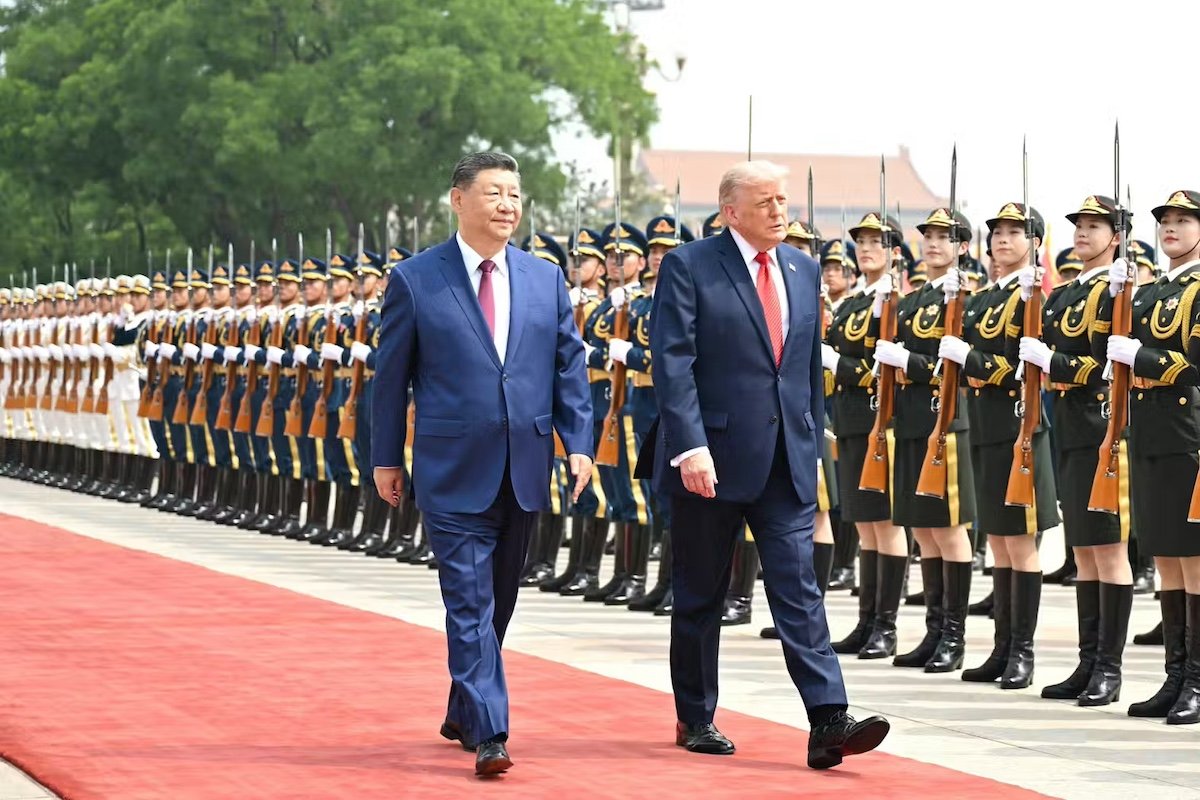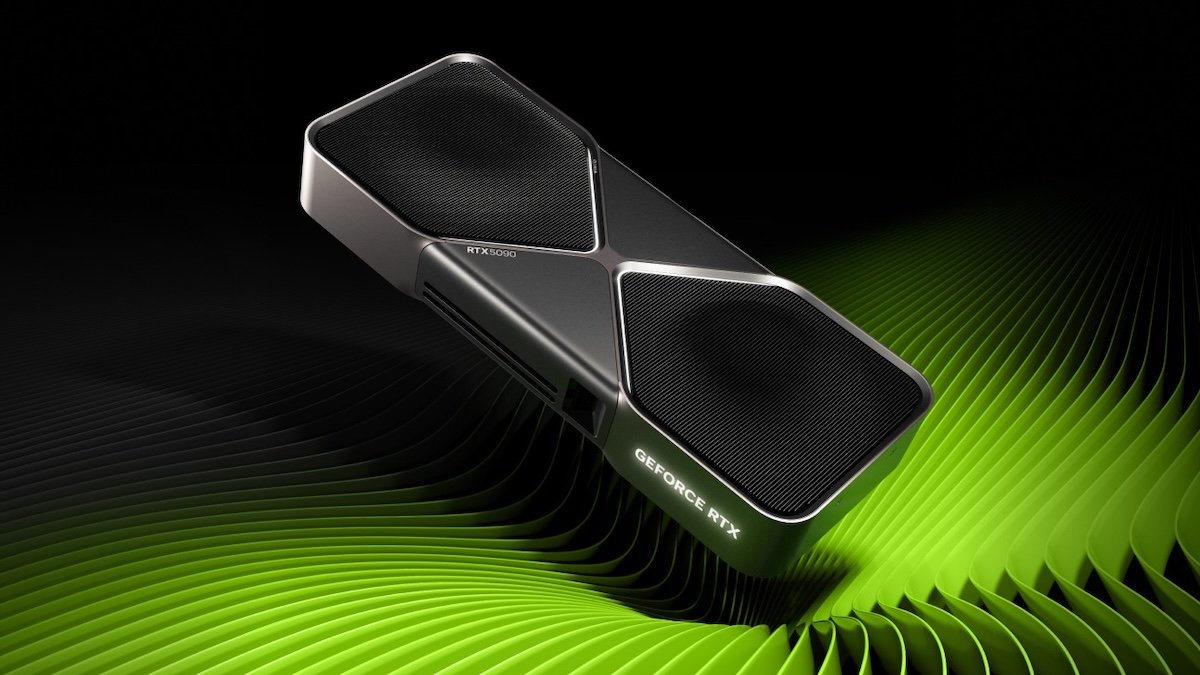
Beijing has banned imports of Nvidia's GeForce RTX 5090D V2, a graphics card specifically designed for the Chinese market to comply with US export controls. The decision, announced during last week's summit between US President Donald Trump and Chinese President Xi Jinping, deals a fresh blow to Chinese gamers and hobbyist AI developers already caught in the crossfire of the US-China chip war.
The RTX 5090D V2, built on Nvidia's Blackwell architecture, had been cleared for sale in China last August. Its addition to Beijing's banned commodities list came as a surprise, particularly after Nvidia Chief Executive Jensen Huang joined Trump's delegation to Beijing from May 13 to 15, fueling market expectations that he might secure approval for the company's H200 AI chips.
Domestic Push Intensifies
Beijing's ban is part of a broader campaign to steer Chinese technology firms toward homegrown alternatives. The government has been urging companies to prioritize local chips, such as Huawei's Ascend 910B, over Nvidia's H200 and H20 offerings. Analysts estimate the H200 alone represents more than $14 billion in potential annual revenue for the US chipmaker.
During the Trump-Xi summit, US Treasury Secretary Scott Bessent said Washington and Beijing had opened talks on establishing safety "guardrails" for AI, aiming to prevent advanced models from falling into the hands of criminal or terrorist groups while allowing continued technological development. Bessent expressed confidence in the US lead over China in AI technology.
US Trade Representative Jamieson Greer told media that chip export controls were not a major topic of discussion during the bilateral meeting. "This was not a major topic of discussion at the bilateral meeting. We did not talk about chip export controls at the meeting," Greer said, adding that US chief executives raised their own concerns. He stressed that the decision on whether to allow H200 imports was ultimately Beijing's.
While Washington expected the chip wars to de-escalate, China tightened its grip. Chinese Customs began blocking imports of the RTX 5090D V2 on May 15, the day Trump's delegation departed Beijing.
Impact on Gamers and AI Hobbyists
The ban affects not only online gamers but also hobbyist AI developers who use graphics cards to run open-source large language models (LLMs) such as Meta's Llama series, Google's Gemma, and China's DeepSeek at home. A columnist for Kdnet.net, a Hainan-based news outlet, noted: "Although the RTX 5090D V2 appears to be a gaming graphics card, its actual uses go far beyond that. Because access to Nvidia's more powerful AI GPUs has been restricted, many Chinese AI developers have been using the RTX 5090D V2 to tap into the computing power of Nvidia's Blackwell architecture for AI training and inference tasks."
He added: "In other words, banning this card is equivalent to cutting off a back channel that allowed indirect access to Blackwell computing power while circumventing export controls. What is unfolding points in one clear direction. The US is using export controls to pressure China, while China has decided it no longer wants even downgraded versions of foreign chips, turning instead to homegrown alternatives."
The columnist said the episode marked a new phase in the US-China chip contest, though its ultimate direction remained uncertain.
Local Manufacturers Gain Ground
The ban leaves greater market opportunities for local manufacturers such as Lisuan Technology, Moore Threads, and Biren Technology. A Henan-based columnist writing under the pen name "Renjian Siliang" said most online gamers would not notice a difference between the RTX 5090 and its downgraded version when running games at 4K resolution, as Nvidia only downgraded some non-core features. However, he noted that performance becomes unstable for 8K gaming or handling large volumes of three-dimensional imagery. The difference would also be noticeable when hobbyists use the downgraded card for small-scale AI training and inference at home.
Some observers doubt whether banning the RTX 5090D V2 will push Chinese consumers toward local graphics cards. Chinese consumers can still buy and deploy Nvidia products through alternative channels, though the ban signals Beijing's determination to reduce reliance on foreign technology.
The broader context includes the Biden administration's October 2022 export controls banning Nvidia's A100 and H100 chips to China, followed by Nvidia's launch of downgraded versions like the A800 and H800. Washington tightened rules in October 2023, banning those as well as the RTX 4090. Nvidia then launched further scaled-back versions, including the H20. Although the Trump administration once banned H20 exports in 2025, it later allowed exports of both the H20 and H200. Yet Beijing's push for domestic chips has resulted in zero H200 imports to date.
For more on the shifting dynamics of US-China relations, see our analysis of Trump's Beijing Visit: No Breakthroughs, but a War Averted and Soybeans on the Table in Beijing, but US Farmers Should Curb Hopes.