When Chinese Foreign Ministry spokesman Lin Jian urged “relevant parties, including Israel” to follow the “overwhelming trend of peace and stability in the region,” he was not merely offering diplomatic pleasantries. His statement, issued after the signing of the first-stage US-Iran memorandum of understanding, reflected a strategic reality: the agreement is as much about restoring global energy flows as it is about ending armed conflict in the Gulf.
The Strait of Hormuz, the world’s most critical energy corridor, is Asia’s economic lifeline. According to the International Energy Agency, nearly 15 million barrels of crude oil per day—about 34% of global seaborne crude trade—transited the strait in 2025. The waterway also carried roughly one-fifth of global liquefied natural gas (LNG) trade, predominantly from Qatar, with nearly 83% destined for Asian markets. Around one-quarter of global seaborne oil trade passes through the strait, making it indispensable to the world’s largest energy importers.
Asia's Stake in Stability
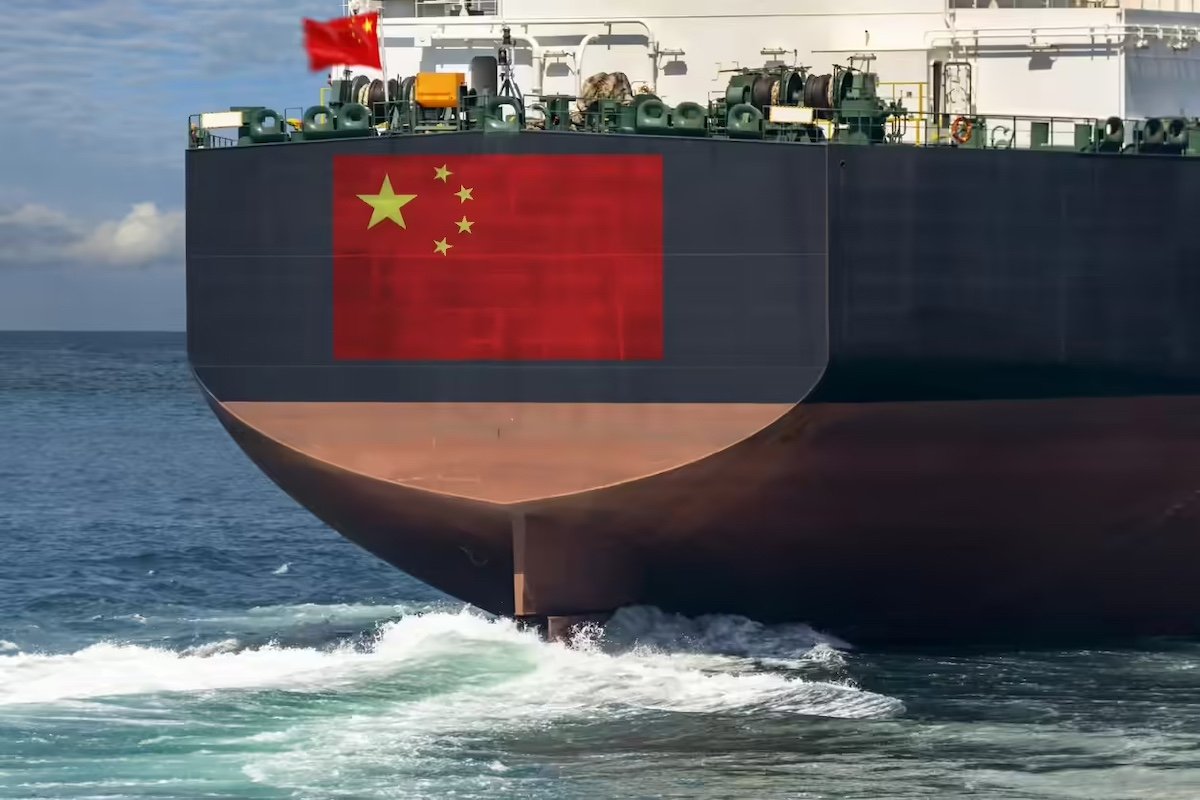
No region had more at stake than Asia. China, India, Japan, and South Korea depend heavily on Gulf crude and Qatari LNG to sustain manufacturing, transport, and electricity generation. About 50% of China’s crude oil imports passed through the Strait of Hormuz in 2025, underscoring Beijing’s exposure to disruptions. While Beijing has diversified imports through Russia and Central Asia and expanded its strategic petroleum reserves, no pipeline network can replace the volumes moving through the strait. Stable navigation remains fundamental to Asia’s energy security.
The conflict demonstrated how quickly that lifeline could be disrupted. Tanker traffic slowed, insurance premiums surged, and freight costs climbed, driving volatility across oil markets and threatening another bout of imported inflation. The effects reached far beyond the Gulf, adding pressure on central banks already struggling to restore price stability.
That explains Beijing’s measured but positive response. China has consistently viewed Middle East stability through the lens of energy security and commerce rather than military competition. Over the past decade, it has expanded strategic petroleum reserves, strengthened long-term energy partnerships across the Gulf, and invested in ports, industrial parks, and logistics corridors under the Belt and Road Initiative. Its 25-year comprehensive cooperation agreement with Iran, expanding energy and investment ties with Saudi Arabia and the United Arab Emirates, and its role in facilitating the 2023 Saudi-Iran rapprochement reflect a broader strategy centered on secure energy supplies and economic influence rather than military projection.
The memorandum advances those objectives. Sanctions waivers allowing Iranian oil exports to resume will increase global supply while reducing market volatility. More significantly, the framework reportedly envisages a $300 billion private Reconstruction and Development Fund, with more than half the proposed investment already committed by companies across the Gulf, Asia, Africa, and South America. Structured as a private investment vehicle rather than a government-funded reconstruction program, the fund is expected to channel investment into Iran’s energy, logistics, manufacturing, and transport sectors once a final agreement is reached. It creates a commercial incentive to preserve stability while negotiations continue.
For China, the implications extend well beyond access to Iranian crude. A more stable Gulf lowers freight costs, reduces shipping insurance premiums, and improves supply-chain reliability across Asia. It also strengthens the commercial environment for Chinese firms already embedded in the region’s infrastructure and energy sectors. As the US-Iran peace deal reshapes China's energy calculus, Beijing's position is further solidified.
Washington, too, had compelling economic reasons to reach an agreement. However ambitious the initial military objectives may have been, prolonged disruption in Hormuz threatened one of the world’s most critical energy corridors. Another sustained oil shock risked delaying interest-rate cuts, reviving inflation, and weakening global growth. The prospect of renewed private investment into Iran’s energy and transport sectors reinforces the economic logic behind the deal. Financial markets recognized the shift almost immediately: oil prices retreated as traders anticipated additional Iranian supply, lower shipping risks, and a gradual normalization of regional commerce.
China is hardly the only beneficiary. India stands to gain from lower import costs and easing inflation. Japan and South Korea secure more reliable LNG supplies, while European manufacturers would welcome lower energy costs after years of volatility. Gulf exporters regain access to global markets, and international shipping companies benefit from safer navigation through one of the world’s busiest maritime corridors.
To be sure, the memorandum remains an interim political understanding rather than a comprehensive peace settlement. Future nuclear negotiations could falter, sanctions could return, and regional rivalries remain unresolved. Commercial incentives alone cannot eliminate longstanding geopolitical tensions. Even so, one conclusion is difficult to ignore: the contest in the Gulf was never solely about military power or nuclear diplomacy. It was equally about protecting the energy corridor underpinning the global economy. Washington may have signed the agreement, and Tehran may receive immediate economic relief through renewed oil exports and the prospect of large-scale private investment. Yet if the Strait of Hormuz returns to stable operations, the greatest long-term strategic gain belongs to Beijing.