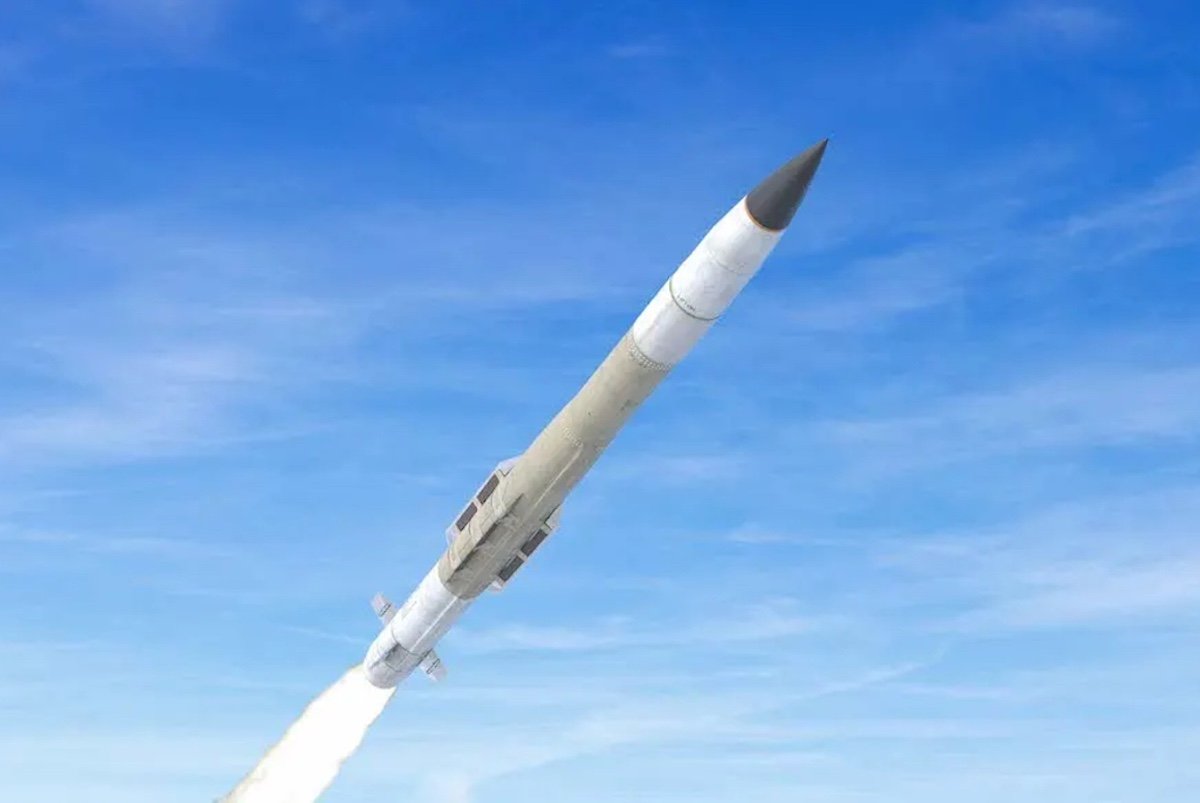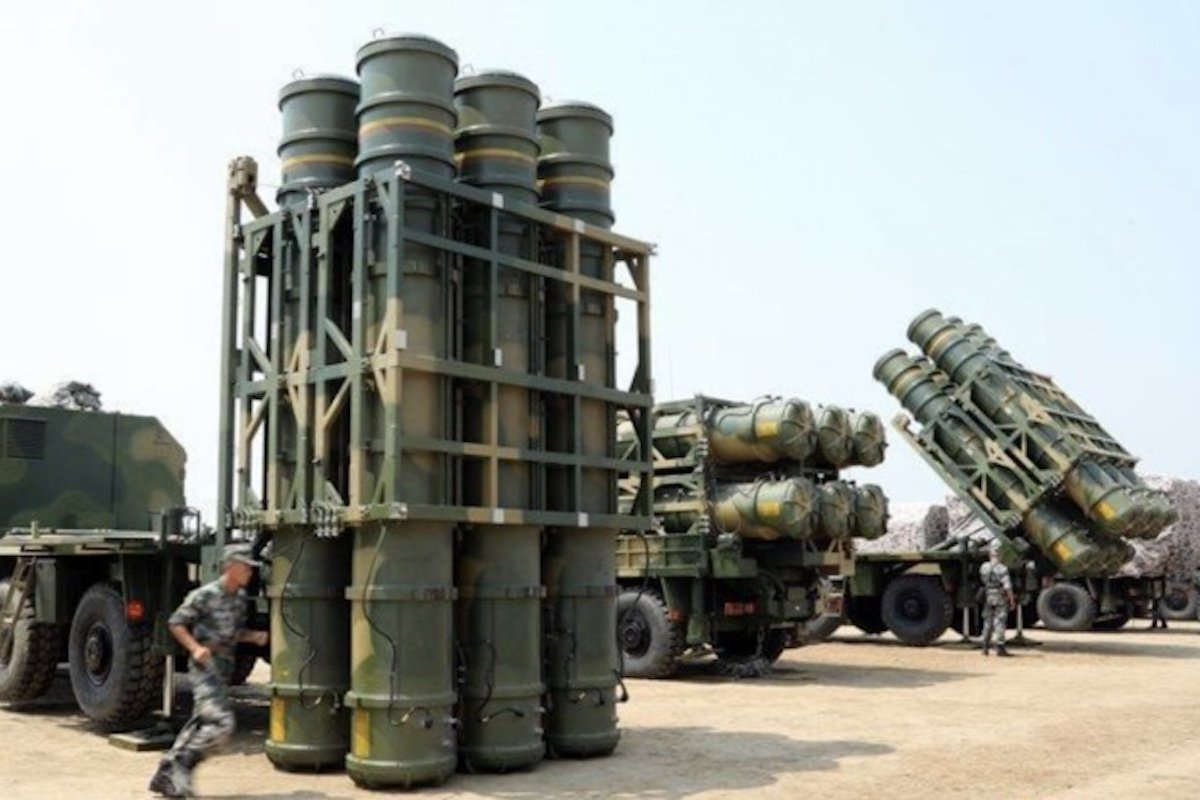
China's deployment of the HQ-16F medium-range surface-to-air missile system to frontline units opposite Taiwan marks a significant evolution in Beijing's military posture. The system, shown in state broadcaster CCTV footage on June 5, was tested by the 73rd Group Army, headquartered in Xiamen, Fujian province, after traveling thousands of kilometers to the Gobi Desert for live-fire drills. During the exercise, a mobile-launched missile intercepted a target 50 kilometers away, according to the South China Morning Post.
The HQ-16F is designed to enhance the People's Liberation Army's Eastern Theater Command capabilities against highly evasive, low-altitude, or supersonic threats. Its wingless design, four tail fins, integrated motor, and advanced thrust vectoring enable it to engage targets with precision. While official specifications remain classified, the system's export variant, the HQ-16FE, features an active electronically scanned array (AESA) radar with a tracking range exceeding 250 kilometers, matching or surpassing US-made Patriot PAC-2 and PAC-3 systems protecting Taiwan.
Responding to Taiwan's Emerging Strike Capabilities
The HQ-16F's deployment appears driven by Taiwan's growing precision-strike arsenal. Analysts Brennan Deveraux and Kyle Marcrum, writing for the US Army 75th Reserve Innovation Command in February 2026, note that Taiwan's US-supplied Army Tactical Missile System (ATACMS) can strike targets in China from a 300-kilometer ring around the island. The Taiwan Strait is just 180 kilometers wide, and ATACMS missiles, with their Mach 3 terminal-phase speed, are notoriously difficult to intercept, leaving air defense systems little reaction time.
Beyond ATACMS, Taiwan has fielded cruise missiles like the Hsiung Feng IIE, whose extended-range variants can reach 1,200 kilometers—enough to hit deep mainland targets. These missiles employ low-altitude flight, terrain masking, and indirect flight paths to evade defenses, tactics similar to the US Tomahawk. China's vast landmass, often seen as strategic depth, may become a liability in an era of long-range precision strikes, as Russia's experience in Ukraine shows that comprehensive air defense over large territories is impractical.
China's concerns extend to advanced US conventional strike systems. The June 2025 US strikes on Iran's nuclear facilities, using B-2 bombers with Massive Ordnance Penetrator bombs, likely underscored the threat to China's nuclear arsenal and leadership. The HQ-16F may be deployed to defend sites like the Hami nuclear silo field, which Reuters reported in May 2026 appears protected by camouflaged air defense positions.
Taiwan's long-range missiles could target invasion staging areas and strategic rear, exploiting gaps in China's air defenses to inflict economic and psychological damage. While such strikes might raise public opposition to an invasion, they could also harden sentiment against Taiwan, potentially reinforcing military operations. For more on Taiwan's missile buildup, see Taiwan Accelerates Indigenous Missile Buildup as US Arms Reliability Falters.
The HQ-16F deployment reflects a broader shift in Chinese defense planning, from focusing solely on cross-strait scenarios to preparing for conflicts that could involve deep strikes on the mainland. This aligns with trends in regional security, as discussed in US-China Summit Drives South Korea's Strategic Autonomy Push. The system's integration into the 73rd Group Army, a key unit for potential Taiwan operations, signals Beijing's intent to protect critical military and political assets from emerging threats.