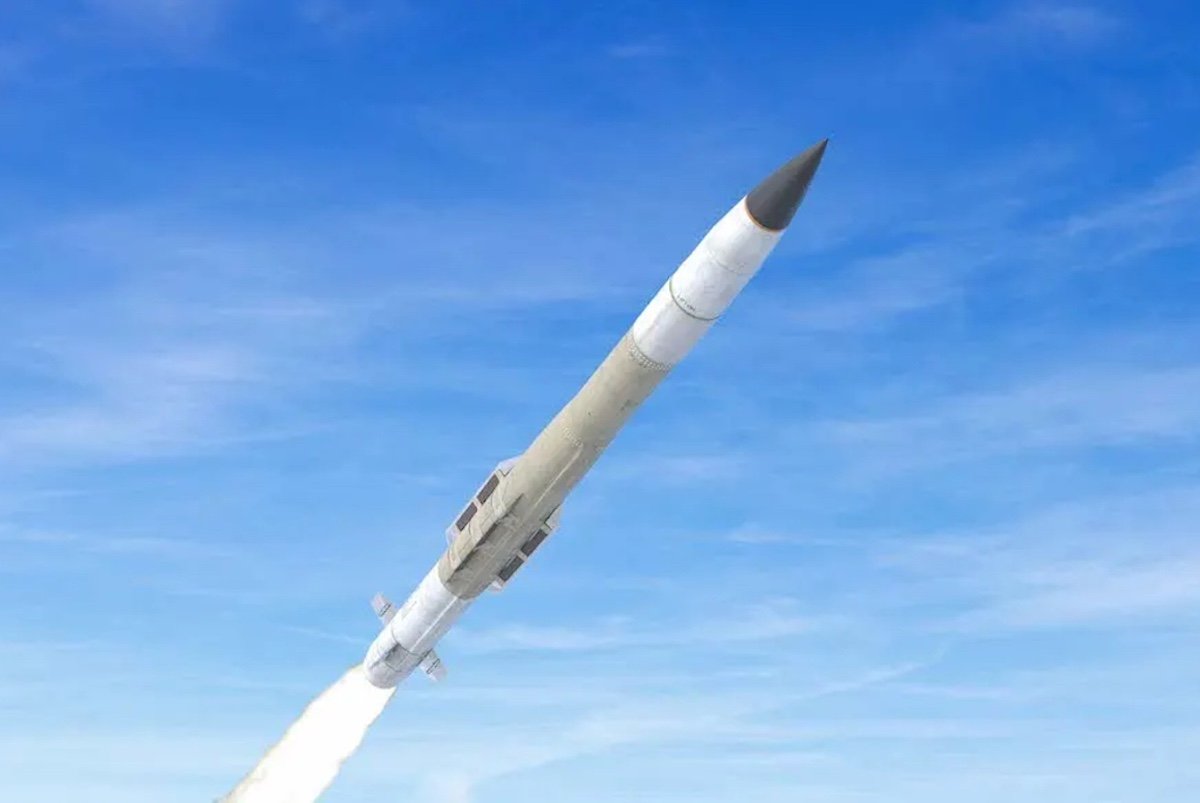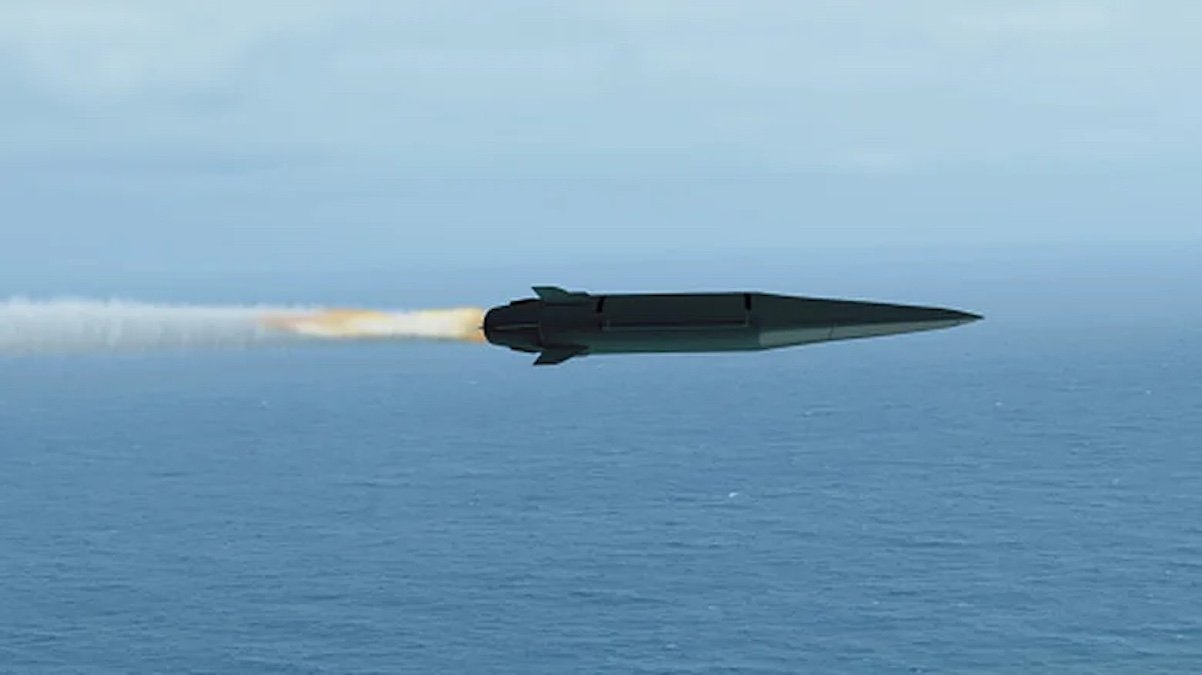
Beijing is pushing the boundaries of naval warfare with a new research program aimed at developing a sea-skimming hypersonic missile. The Chinese Academy of Sciences (CAS) has initiated a low-altitude hypersonic flight research project, as reported by the South China Morning Post, to create foundational technologies for a weapon that could fly at speeds exceeding Mach 5 just above the ocean surface. If successful, such a missile would dramatically reduce radar detection ranges and shorten defensive warning times for US Navy carrier strike groups in the Pacific.
The program, funded by a CAS basic research grant for youth teams, is led by the Institute of Mechanics in partnership with the University of Science and Technology of China and the Ningbo Institute of Materials Technology and Engineering. It focuses on detonation combustion technology, which uses supersonic shock waves for propulsion rather than conventional subsonic flame propagation. This approach aims to maximize engine thrust at low altitudes, where dense air creates intense drag and aerodynamic heating.
Engineering Hurdles and Strategic Ambitions
China already fields high-altitude hypersonic weapons, such as the YJ-19 submarine-launched missile on Type 039 Yuan-class submarines and the YJ-20 on Type 055 cruisers. However, flying at sea level presents severe challenges. David Wright and Cameron Tracy noted in a March 2024 article in the Bulletin of the Atomic Scientists that low-altitude flight forces hypersonic vehicles through dense atmospheric air, generating immense drag that slows them down. They added that aerodynamic heating scales with the cube of velocity: traveling at Mach 5 produces 100 times the heat of Mach 1, and vehicles must endure these temperatures for up to 30 minutes.
This friction could make sea-skimming hypersonic missiles no faster—and potentially slower—to reach targets than traditional ballistic missiles. The cost is also a factor. According to a leaked 2025 US military assessment reported by the Wall Street Journal, China is estimated to have 600 hypersonic weapons total, a relatively small number compared to its overall missile inventory. In an April 2026 testimony to the US Congress, Lieutenant General James Adams stated that the People's Liberation Army Rocket Force has fielded approximately 3,450 missiles, including 1,300 medium-range ballistic missiles and 900 short-range ballistic missiles. Hypersonic weapons would likely be reserved for high-value targets like aircraft carriers.
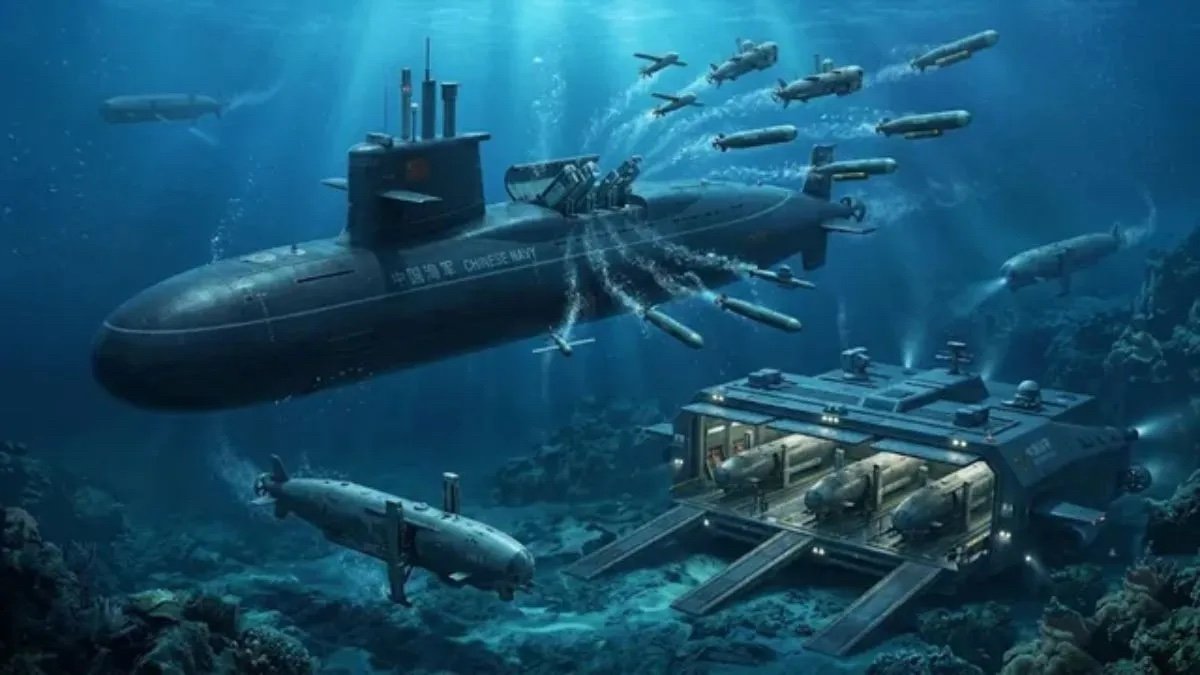
China's approach contrasts with the US strategy of developing stealth anti-ship missiles, such as the AGM-158C LRASM, which relies on information dominance and low observability to penetrate defenses. Beijing appears to be attempting to combine high speed and stealth in one weapon, building on its earlier supersonic cruise missile philosophy seen in the YJ-12. This could be part of a broader multilayered missile-swarm strategy, as reported by SCMP, involving submerged submarines launching hypersonic missiles to destroy forward-deployed Aegis destroyers, followed by coordinated swarms of decoy drones, low-cost cruise missiles, and terminal hypersonic weapons.
The concept underscores that hypersonic missiles are only as effective as the kill chains that support them. Yet turning that concept into a workable weapon may prove easier said than done. The US Air Force is also exploring alternative approaches, such as robot wingmen to counter China's missile threat in the Pacific. Meanwhile, China's broader economic and technological ambitions, including its AI model development, continue to reshape the strategic landscape.
Finding and targeting a carrier remains a formidable challenge. Even with advanced sensors and satellite networks, locating a mobile carrier strike group in the vast Pacific requires real-time intelligence and robust command-and-control systems. China's research into sea-skimming hypersonic missiles is a clear signal of its intent to challenge US naval dominance, but the path from laboratory to operational weapon is fraught with technical and operational obstacles.