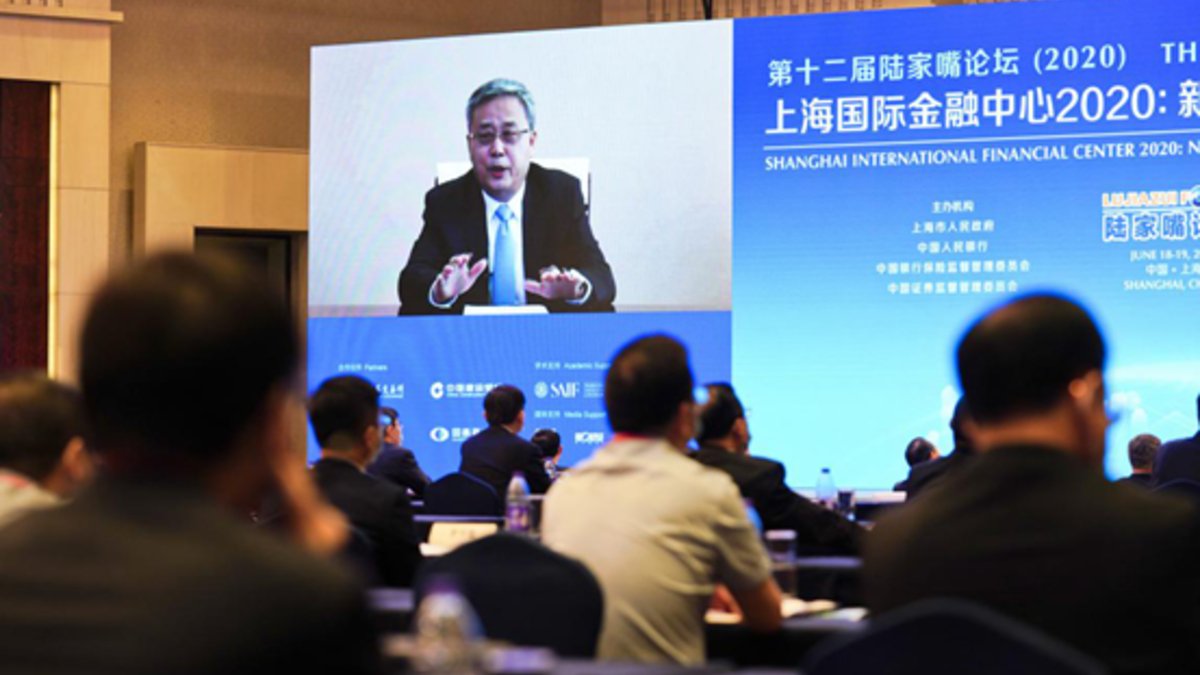
China's top financial regulator is set to implement a significant tightening of its enforcement regime, introducing stricter penalties for violations within the banking and insurance sectors. The new regulation, issued by the China Banking and Insurance Regulatory Commission (CBIRC), will take effect on August 1. It consolidates and refines administrative punishment procedures, establishing clearer foundational principles for disciplinary action.
Enhanced Enforcement and Accountability
The updated rules notably increase the severity of punishments, with a particular focus on repeat offenders, entities that fail to cooperate with regulatory investigations, and violations that lead to serious consequences. A key provision stipulates that penalties will target not only the institutions involved but also hold accountable the specific individuals responsible for the transgressions. This move toward greater personal liability signals a more aggressive stance from Beijing in managing financial risk and enforcing compliance.
This regulatory shift comes as global economic institutions reassess state-led growth models amid China's growing influence. The stricter financial oversight aligns with a broader pattern of Beijing asserting greater control over key economic sectors to ensure stability.
Foreign Investment and Economic Indicators
Amid these regulatory changes, China's Ministry of Commerce released a survey indicating robust foreign business confidence. Some 99.1% of respondent companies stated their operations in China would continue. Ministry spokesperson Gao Feng pledged that China would "provide more quality services to foreign firms and create a more law-based, internationalized and convenient business environment." This assurance follows data showing foreign direct investment into the Chinese mainland fell by 1.3% year-on-year to 472.18 billion yuan (approximately $67 billion) in the first half of 2020, though the second quarter alone saw an 8.4% increase.
Other economic data for July presented a mixed but generally positive picture. The official manufacturing Purchasing Managers' Index (PMI) rose to 51.1 from 50.9 in June, indicating expansion. National Bureau of Statistics senior statistician Zhao Qinghe noted that policies balancing epidemic control and economic development were "further yield[ing] tangible fruit," with sub-indices for production and new orders showing sustained improvement. New export orders, while still below the expansion threshold, saw a significant 5.8-point gain to 48.4.
Digital and Consumer Sectors Show Strength
China's consumer and digital economies demonstrated notable resilience. Online retail sales climbed 7.3% year-on-year in the first half of 2020, reaching 5.15 trillion yuan. The number of e-commerce users grew by 100 million compared to the previous year.
The mobile gaming sector was a standout performer, with actual sales revenue surging 35.81% year-on-year to 104.67 billion yuan in the first six months, according to a report from the 2020 China Digital Entertainment Congress in Shanghai. This figure represents 75% of the country's total gaming industry revenue, up from 68.5% in 2019. Niche sectors like cloud gaming and e-sports saw explosive growth, with revenue increases of 79.35% and 54.69%, respectively.
Corporate Developments in Tech and Telecom
Major Chinese technology firms announced new international and industry partnerships. Tech giant Tencent has teamed up with the International Council for Philosophy and Human Sciences (CIPSH), a UNESCO-affiliated NGO, to explore China's experience in digital cultural production. The collaboration, formalized via a strategic memorandum, aims to strengthen the integration of technology with human sciences and promote the global digital cultural industry.
At the Huawei Better World Summit 2020, the telecommunications leader announced its continued work with global carriers to build new ICT infrastructure powered by 5G, cloud, and AI technologies to enable intelligent transformation across industries. At the same event, state-owned carrier China Telecom detailed its development of differentiated "5G + cloud + AI" service capabilities based on cloud-network synergy, showcasing its latest application practices. These corporate strides in foundational technologies occur as the US and China compete to build next-generation energy supply chains, forcing strategic choices worldwide.
The confluence of stricter financial regulation, sustained foreign business presence, and strong performance in digital sectors paints a picture of an economy navigating post-pandemic recovery while its government reinforces systemic controls. These domestic policy moves have regional implications, as China's industrial policies continue to reshape global trade and pressure other Asian economies.