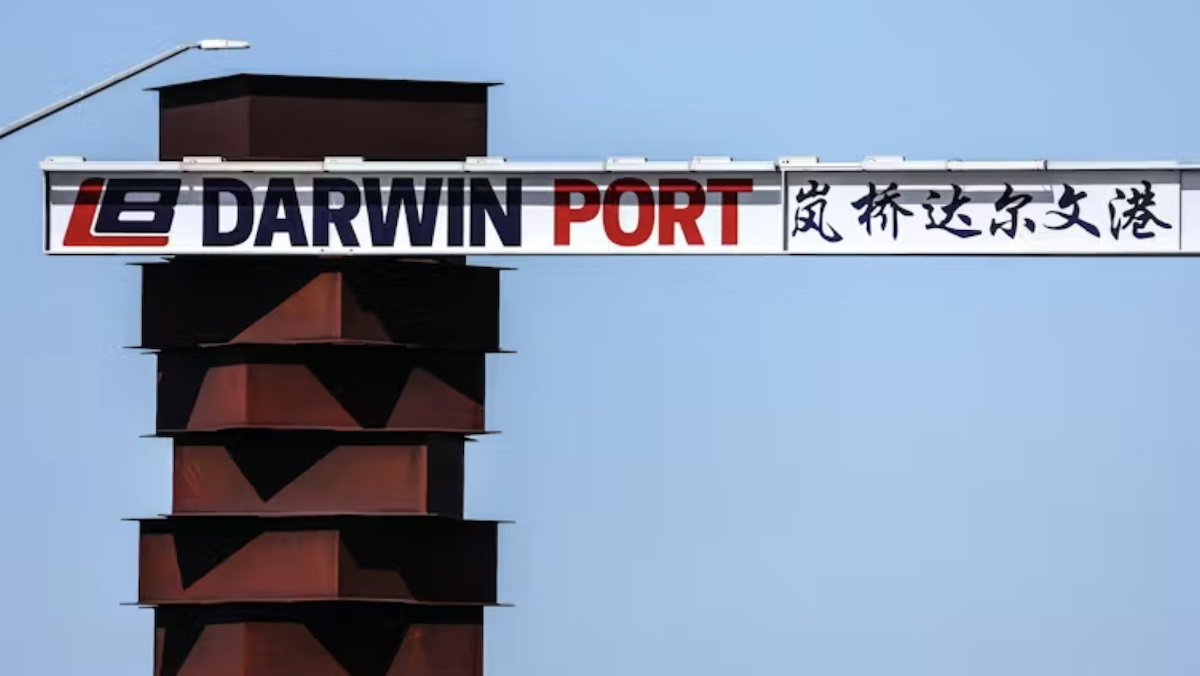
Chinese-owned companies are increasingly resorting to international arbitration to challenge government decisions that they claim unfairly target them, with the Port of Darwin dispute in Australia emerging as a prominent test case. The trend signals a growing willingness among Chinese firms to leverage global legal mechanisms to protect their investments, even as governments cite national security concerns.
In late April, Landbridge Group, whose parent company is based in Shandong province, China, filed proceedings against Australia at the International Centre for Settlement of Investment Disputes (ICSID), a World Bank tribunal. The move comes after the Australian government, led by Prime Minister Anthony Albanese, sought to force the sale of the Port of Darwin—operated by Landbridge under a 99-year lease signed in 2015—back to an Australian owner, fulfilling an election promise. The lease, valued at A$506 million (US$362.8 million), was initially approved by the Northern Territory government without opposition from the then-federal Turnbull administration, though former US President Barack Obama raised concerns given the port's use by US Marines.
Rising Use of International Arbitration
Since 2021, Chinese companies have brought at least 11 cases against governments worldwide, with eight still pending. These disputes often center on claims of unfair treatment, such as a Chinese-owned lithium firm seeking compensation after Mexico nationalized its lithium industry and expropriated a planned mine. However, cases like Landbridge's highlight a more contentious dimension: challenges to government actions justified by national security.
One of the most high-profile examples is Huawei's 2022 case against Sweden, after Stockholm banned the Chinese telecom giant and ZTE from its 5G rollout on security grounds. Huawei is seeking US$569 million in compensation for projected market losses. If the tribunal rules in Huawei's favor, it could embolden similar actions against other countries, including Australia, where Huawei was also excluded from 5G networks. This could have significant financial implications for governments that impose such bans.
Landbridge argues that its lease was won through a "fair, open and competitive process" and that Australian government reviews found no national security risk. The company contends that the forced sale is "discriminatory" and violates the China-Australia Free Trade Agreement. Australian Transport Minister Catherine King expressed disappointment, stating the government had engaged in "good faith discussions" to reach a "mutually acceptable deal" and intended to continue talks.
The ICSID, established in 1966 and headquartered in Washington, provides an independent arbitration panel for disputes under bilateral investment treaties. If the tribunal finds unfair treatment, it can order governments to halt or reverse actions or pay compensation, which may include not only the current value of assets but also lost future earnings.
This legal strategy reflects Chinese companies' commitment to the rules-based international trading system, a system originally championed by the US and Australia. While these disputes may not prevent governments from acting on national security, they could force them to weigh the financial costs more carefully. For Australia, the case also echoes historical patterns of Chinese investment in the region, as seen in Jay Chou's music video reviving Chinese Australian gold rush history, underscoring the deep ties between Chinese capital and Australian infrastructure.
The outcome of the Landbridge case, which may take years to resolve, will be closely watched by governments and investors across the Indo-Pacific. It could set a precedent for how Chinese firms navigate geopolitical tensions, particularly as similar disputes emerge in sectors like technology and resources. For now, the case highlights the growing intersection of international law, investment, and security in the region.