The most telling number on American campuses this semester is the one that didn’t show up. New international enrollment at US universities fell 20% this past spring compared with a year earlier, according to a survey of 149 institutions co-published by NAFSA, the association of international educators. Graduate programs fared even worse, with an average decline of 24%.
That slide began well before spring. In August 2025, the month when most students arrive, international student travel to the US was down 19% from the previous year, a figure that includes returning students. The trend is unmistakable: the US is losing its appeal as the default destination for global talent.
A shift in the global education map
The instinctive reading is a transfer of wealth: America’s loss, Asia’s gain. There is evidence for that. Some 82% of surveyed Asia-Pacific institutions outside Australia reported growing international undergraduate numbers, against 47% in Europe. Germany, Ireland, the Netherlands, Singapore and Hong Kong now compete openly on price, program flexibility and the odds of a job at the end. But the sums don’t work. That’s the interesting part.
For four decades, global higher education ran like a hub-and-spoke network. Talent flowed along familiar routes to a few English-speaking capitals, collected credentials and dispersed. Those spokes are now coming loose, and quite a few aren’t reattaching anywhere.
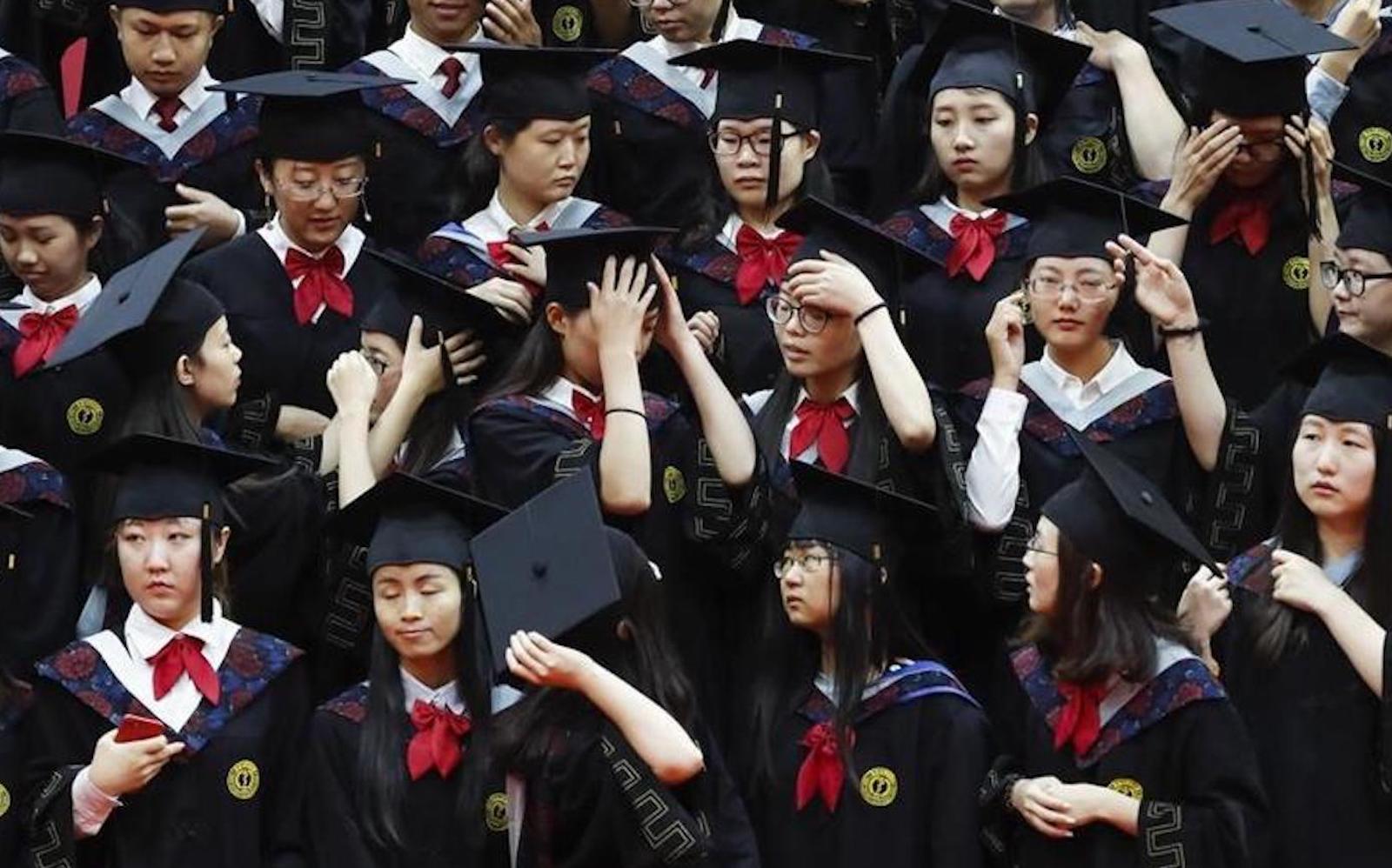
Consider the two nationalities that supplied nearly half of America’s international enrollment before the pandemic. Indian students are diversifying: flows to Ireland and Germany have grown roughly 215% and 204% compared with 2019. Chinese students, the largest cohort, are staying home in growing numbers, a trend that predates the pandemic but has accelerated amid geopolitical tensions and a domestic push to strengthen Chinese universities.
The decline is not just about politics. The cost of a US degree has soared, while visa processes remain cumbersome. Meanwhile, China’s own universities have climbed global rankings, and its government has invested heavily in research. For many Chinese families, the return on investment of a US education no longer justifies the expense or the uncertainty.
This shift has deep implications. American universities have long relied on international students to subsidize research and fill STEM programs. Losing Chinese students, who often pay full tuition, hits budgets hard. But the ripple effects extend beyond campuses. As China's uneasy calculus plays out, the educational pipeline that once fostered mutual understanding is narrowing.
Other Asian destinations are stepping up. Singapore and Hong Kong are actively recruiting, offering English-taught programs and proximity to home. Japan and South Korea are also seeing more international students, though from different source countries. The competition is no longer just among Western nations; it’s a regional race.
For the US, the challenge is structural. As America's malaise deepens, its ability to attract global talent may be a casualty. The students who stay home are not just a statistic; they represent a lost generation of future leaders who might have brought their skills and perspectives to American shores.
The numbers are clear, but the consequences are still unfolding. The hub-and-spoke model is giving way to a more fragmented, multipolar system. Whether that benefits Asia or simply leaves everyone poorer remains to be seen. What is certain is that the era of American dominance in higher education is over.