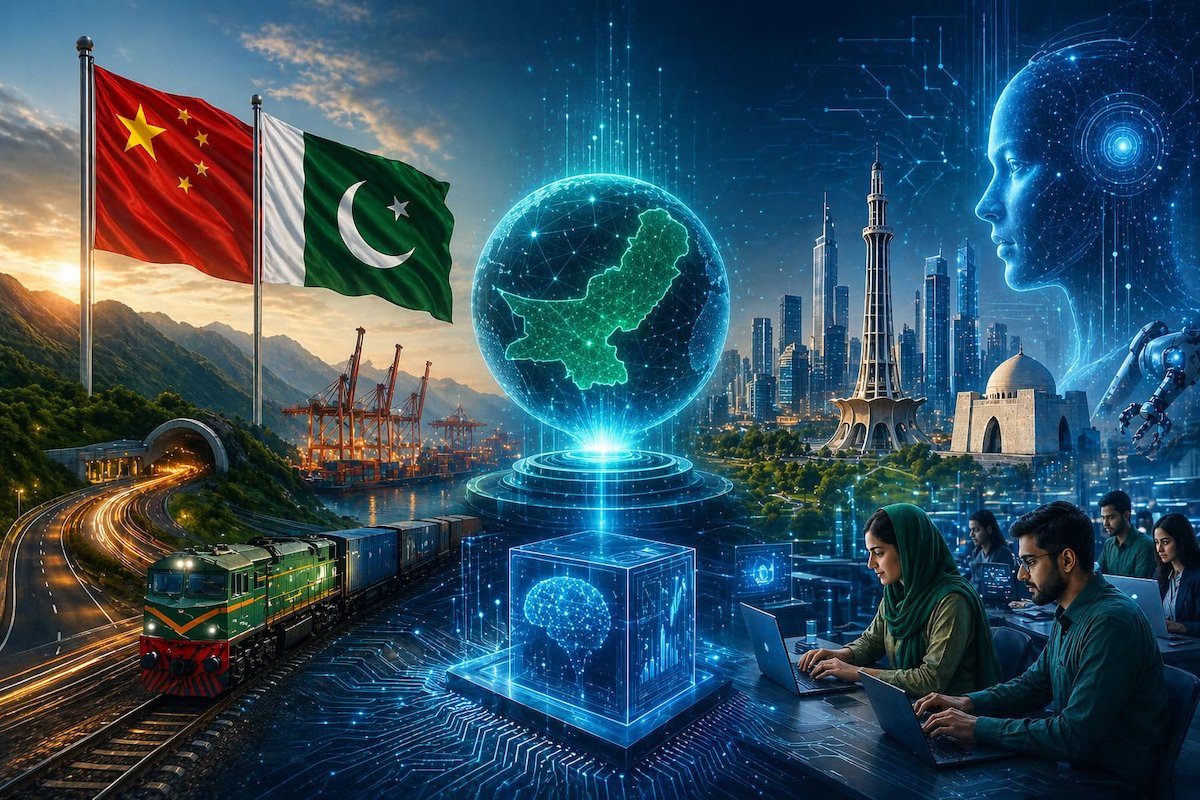
For nearly a decade, the China-Pakistan Economic Corridor (CPEC) was synonymous with concrete, coal-fired power plants, and the asphalt of the Karakoram Highway. That phase addressed Pakistan's acute energy shortages while expanding Beijing's strategic footprint in South Asia. Today, however, the partnership is undergoing a profound digital mutation.
As Beijing and Islamabad transition into what officials call "CPEC 2.0"—formalized through frameworks such as the Beijing Compact and reaffirmed during Prime Minister Shehbaz Sharif's bilateral summits in the Chinese capital—the strategic focus is shifting from physical connectivity to artificial intelligence, cloud computing, and digital governance. The emerging reality is what analysts term "AI on the Indus": a systematic transfer of Chinese AI frameworks, surveillance hardware, and digital tools to Pakistan.
This digital integration unfolds against the backdrop of an intensifying tech cold war between Washington and Beijing. For Pakistan, the allure of Chinese AI architecture stems from structural necessity. Squeezed by stringent International Monetary Fund stabilization programs and lacking sovereign capital, the Pakistani state cannot independently build next-generation digital infrastructure. China offers a highly integrated, subsidized solution combining hardware and cloud architecture—but it comes with the long-term caveat of technological path dependence.
Safe Cities and Algorithmic Governance
The most tangible manifestation of this tech transfer is visible in urban governance and internal security through "Safe City" initiatives. Chinese AI-powered facial recognition, automated license plate readers, and predictive policing algorithms are being deployed across Pakistani cities. Publicly framed as modernization efforts to combat urban crime and militant threats, these networks represent the literal export of China's domestic algorithmic governance model.
By embedding these capabilities within Pakistan's security apparatus, Beijing helps shape a digital panopticon along the Indus while simultaneously gaining a massive, live-fire testing ground for its AI models in a volatile South Asian security environment. For Islamabad, the system provides an efficient mechanism for state control; for Beijing, it is an invaluable source of real-world operational data.
This deep digital integration poses a severe dilemma for Pakistan's nascent but ambitious IT and software export sector. On paper, Islamabad's official development framework champions an "E-Pakistan" powered by domestic digital growth. In reality, however, Pakistan's private tech industry relies heavily on North American and European markets, with IT export volumes approaching $3.8 billion through Western corporate contracts and European outsourcing corridors.
As Washington tightens data security regulations, restricts entity lists, and scrutinizes global supply chains for Chinese vulnerabilities, Pakistani IT firms integrated with Chinese AI frameworks may face systemic vetting hurdles. Islamabad risks locking out its most dynamic economic sector from lucrative Western tech ecosystems in exchange for subsidized sovereign tech infrastructure from Beijing.
Every technology transfer comes with an invisible invoice paid in digital sovereignty. As Chinese firms embed themselves deeper in Pakistan's critical infrastructure—from smart grids to automated agricultural monitoring in the Indus Basin—the Pakistani state is compromising its data autonomy. If data is the primary commodity of the modern economy, Pakistan is rapidly surrendering the drilling rights of its domestic digital landscape to a singular external power.
In a geopolitical crisis, this dependency could shift from standard economic vulnerability to a compromise of sovereignty, dictating who holds the encryption keys to the state's digital nervous system. Beijing's leadership has made clear that political trust between China and Pakistan must now be validated by the delivery of strict economic and technological outcomes. The "All-Weather Friendship" is being re-engineered for a far more demanding global environment.
If managed purely as a series of short-term financial bailouts, Pakistan risks degenerating into a digital satrapy enclosed in a techno-authoritarian sphere. To maintain strategic autonomy, Islamabad must ensure that the transfer of Chinese AI is accompanied by genuine domestic code ownership, rigid data localization policies, and a fiercely protected space for independent technological development. Without these safeguards, the digital transformation of the Indus will not be a leap into a brave new future, but a sophisticated, algorithmic anchoring to Beijing's strategic imperatives.
This dynamic echoes broader regional trends. As India's Great Nicobar Base Challenges China's Malacca Strait Dependence shows, New Delhi is actively countering Beijing's strategic reach. Meanwhile, China's Deflation Exit Hinges on Housing and Reforms, Japan's Experience Shows highlights the economic challenges Beijing faces at home, even as it expands influence abroad.