In Lahore's industrial districts, the drone of diesel generators is a constant backdrop. Factory owners in Pakistan's second-largest city fire up backup power whenever the national grid fails—a daily occurrence that eats into profits and productivity. This irony defines the legacy of the China-Pakistan Economic Corridor (CPEC): a decade of borrowing and building has added thousands of megawatts of capacity, yet the lights still flicker.
Pakistan's power sector circular debt reached 1.89 trillion rupees (US$6.7 billion) by February 2025, with 543 billion rupees directly tied to CPEC power projects—an all-time high. The International Monetary Fund has flagged this as a serious threat to economic stability. Under take-or-pay contracts, Islamabad must pay Chinese independent power producers (IPPs) regardless of whether the electricity is consumed. Capacity charges have surged from 384 billion rupees annually before CPEC to 2.1 trillion rupees now.
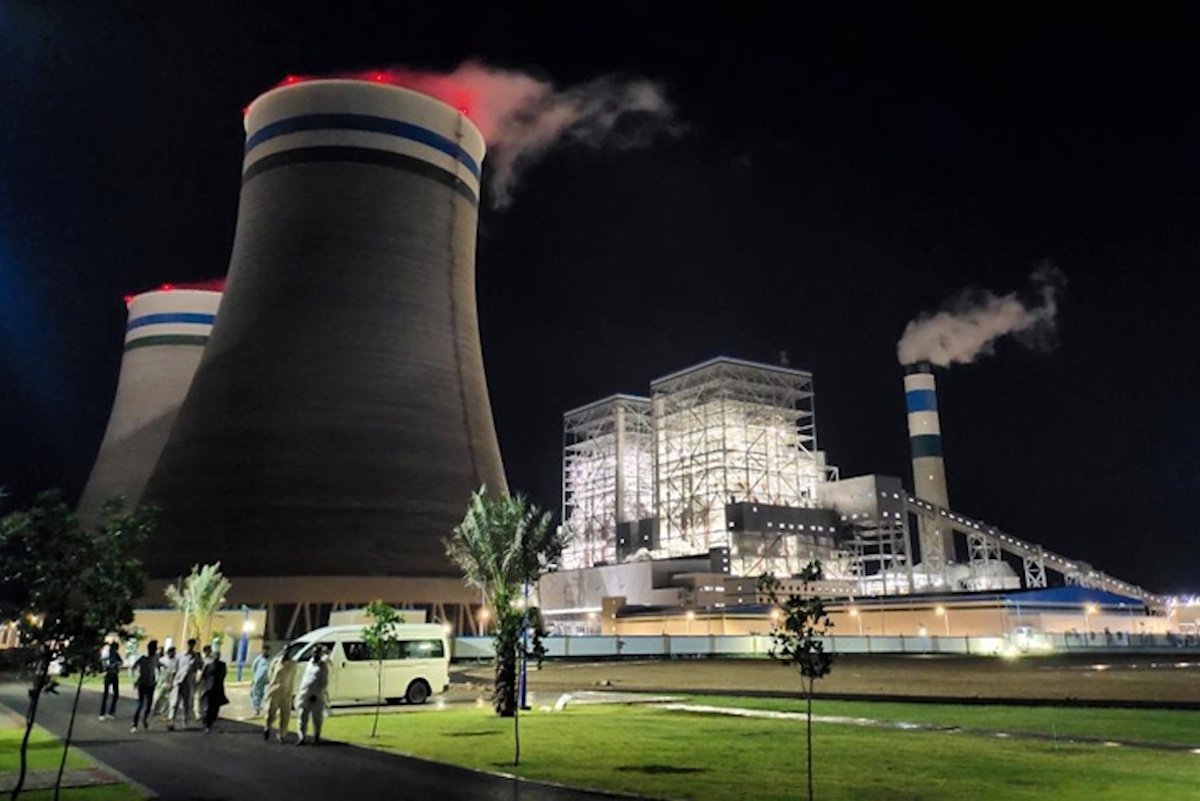
Three flagship coal plants—at Sahiwal, Port Qasim, and Hub—burn imported coal from Indonesia, South Africa, and Australia, exposing Pakistan to global price volatility. When coal prices spike, so do tariffs, pushing consumers to default and deepening the circular debt cycle. The government has tried to negotiate relief, raising 1.23 trillion rupees to clear overdue payments to Chinese plants and 49 renewable projects. It asked Chinese operators to waive 170 billion rupees in late-payment charges, mirroring concessions domestic producers made by writing off 377 billion rupees. But Chinese IPPs refused, fearing that any concession would set a precedent for renegotiations across the entire Belt and Road network.
Islamabad is caught between Beijing and the IMF. The Fund objected when Pakistan attempted to quietly funnel 50 billion rupees to Chinese producers without renegotiating terms. Meanwhile, a US$23.5 billion trade deficit in the first nine months of the fiscal year leaves Pakistan with little leverage.
Phase 2: Green Shift or More Debt?
CPEC 2.0 promises a pivot from coal to solar, wind, hydropower, and storage. Completed projects have added 9,504 megawatts to the grid, and BYD plans to assemble electric vehicles in Pakistan by mid-2026. But credibility is thin. Pakistan sidelined domestic hydropower projects like Diamer-Bhasha, Dasu, and Bunji—which could have delivered over 15,000 megawatts of cheap energy—in favor of imported coal. Two new Special Economic Zones under CPEC 2.0 sit in documented flood-risk areas, including a Sindh district devastated by the 2022 floods. If infrastructure is repeatedly washed out, returns will never materialize.
Security in Balochistan remains a critical obstacle. Since 2021, at least 20 Chinese nationals have been killed and 34 injured in attacks by the Baloch Liberation Army (BLA) and allied groups. The BLA openly demands China's exit from the province and the shutdown of CPEC. In January 2026, its operations killed 48 people in a single month. Days before Prime Minister Shehbaz Sharif visited Beijing in May 2025 to mark 75 years of diplomatic ties, a suicide car bomb struck a train in Quetta—a message Beijing noted.
By September 2025, China had stepped back from solely financing the Ml-1 railway upgrade, forcing Pakistan to seek a consortium including the Asian Development Bank and Asian Infrastructure Investment Bank. The fixes are clear: independent audits of CPEC power contracts, not political negotiations, must underpin any renegotiation. Coal plant retirements need a formal bilateral timeline before Phase 2 embeds more stranded assets. Balochistan requires jobs and revenue, not just army deployments to protect projects imposed without local consultation. The BLA recruits from communities negatively affected by Chinese investments.
Pakistan must also break the cycle of financing past debt with new debt—a pattern that has consumed the fiscal bounty industrialization was meant to generate. CPEC 2.0 carries real ambition, but without addressing these structural flaws, it risks repeating the mistakes of its predecessor.