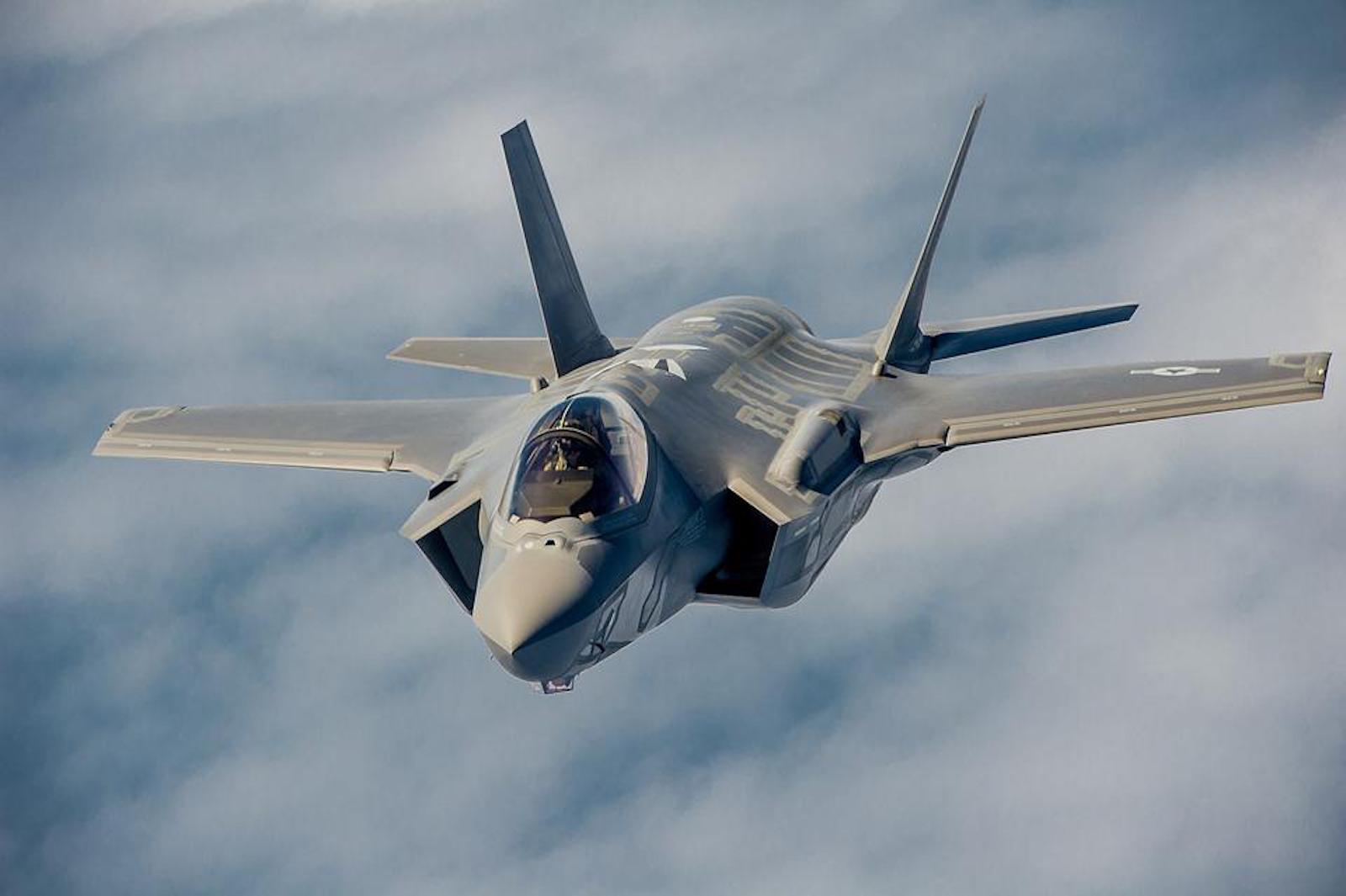
The United States faces a deepening paradox in its airpower strategy for the Indo-Pacific: the F-35 Lightning II is considered essential for any conflict over Taiwan, yet it is becoming less available for exactly that mission. A new report from the US Government Accountability Office (GAO) reveals that the F-35's full mission capable rate has plummeted to just 25% in fiscal year 2025, down from 38% in 2021. The broader mission-capable rate—which includes aircraft that can fly but not perform all combat tasks—has fallen from 67% to 44% over the same period.
The GAO attributes this decline to persistent supply chain bottlenecks and flawed oversight of prime contractor Lockheed Martin. The F-35 Joint Program Office (JPO) has responded with the Global Support Solution (GSS) Reset, a sustainment overhaul requiring an additional US$13.7 billion through 2031. However, investigators warn that achieving readiness targets is threatened by private-sector capacity limits on key components and an annual funding gap exceeding US$1 billion by the mid-2030s. The JPO also mismanaged performance incentives, paying Lockheed Martin millions in fees for metrics that did not align with military service readiness requirements. The US Department of Defense has concurred with the GAO's recommendations to implement formal risk mitigation plans and restructure future sustainment contracts.
Strategic Implications for Taiwan
The readiness crisis directly affects US deterrence and warfighting capability in a potential Taiwan scenario. In an August 2025 report, the US Department of the Air Force emphasized that the F-35 is the foundation of the future fighter force, with its suppression of enemy defenses (SEAD) capability being critical for combat success. While the US operates the F-22 Raptor, that aircraft is optimized for air superiority and production ended in 2011, leaving only 187 irreplaceable airframes. The F-35 remains in production and combines stealth, versatility, and scalability that no other US fighter offers.
These challenges are becoming more acute as China rapidly expands its fighter production capacity. J. Michael Dahm reported in an April 2026 Air & Space Forces Magazine article that the state-owned Aviation Industry Corporation of China (AVIC) is expanding infrastructure to build 300 fourth- and fifth-generation fighters annually. Chengdu Aircraft Corporation (CAC) operates five J-20 production lines, producing 100–120 stealth jets per year after adding 4.3 million square feet of space. Shenyang Aircraft Corporation (SAC) added 500,000 square feet for J-15, J-16, and initial J-35 batches, while building a new 4-million-square-foot facility with a 12,000-foot runway north of Shenyang. These expansions total over 8 million square feet, eclipsing Lockheed Martin's entire F-35 complex in Fort Worth, Texas. Dahm projects that the People's Liberation Army (PLA) will outpace combined US Air Force, Navy, and Marine Corps fighter inventories by 2028, securing the world's largest fighter force by 2029.
The problem for Washington is that the aircraft best suited to penetrate China's defenses is also the one increasingly unavailable to do so. China's integrated coastal air defense umbrella, as detailed in a March 2023 China Maritime Studies Institute (CMSI) report by Lonnie Henley, employs Russian-built S-400 systems with a 400-kilometer range and S-300PMU variants with a 200-kilometer range. These are paired with advanced domestically built HQ-9B systems reaching 300 kilometers, providing overlapping coverage that allows Chinese forces to isolate contested airspace, attack incoming allied aircraft, and bombard potential landing strips across Taiwan. Only stealth platforms such as the F-35, F-22, B-21, B-2, and stealthy drones like the RQ-170 and RQ-180 could operate inside that umbrella to perform SEAD missions. Older fourth-generation fighters such as the F-15, F-16, and F-18 would be restricted to the edges of denied airspace, launching long-range missiles cued by stealth platforms.
Emerging drone wingmen are unlikely to solve the problem soon. Brian Moscioni noted in a June 2025 Belfer Center report that while advanced AI software can manage low-level flight maneuvers, high-level cognitive functions—including final target prioritization and engagement strategy—still require human reasoning. Widespread adoption remains constrained by computational latency, software hallucinations, ethical concerns, and a fundamental human trust gap.
The F-35's struggles reflect a broader readiness crisis affecting the US tactical air fleet. John Venable and Joshua Baker pointed out in a September 2025 Mitchell Institute for Aerospace Studies report that chronic underfunding of spare parts and maintenance has degraded overall fleet availability. This comes as China continues to modernize its forces, including deploying new naval guns with extended range aimed at Taiwan's defenses, as covered in our analysis of China's new naval gun targeting Taiwan. The cost asymmetry of modern warfare, where inexpensive drones can challenge superpower platforms, further complicates the picture, as explored in our piece on the $20,000 drone vs. the superpower.
For US planners, the F-35 readiness crisis is not merely a maintenance issue—it is a strategic vulnerability that China is actively exploiting through industrial expansion. Without a reliable fleet of stealth fighters, Washington's ability to project power over Taiwan and deter Beijing will continue to erode.