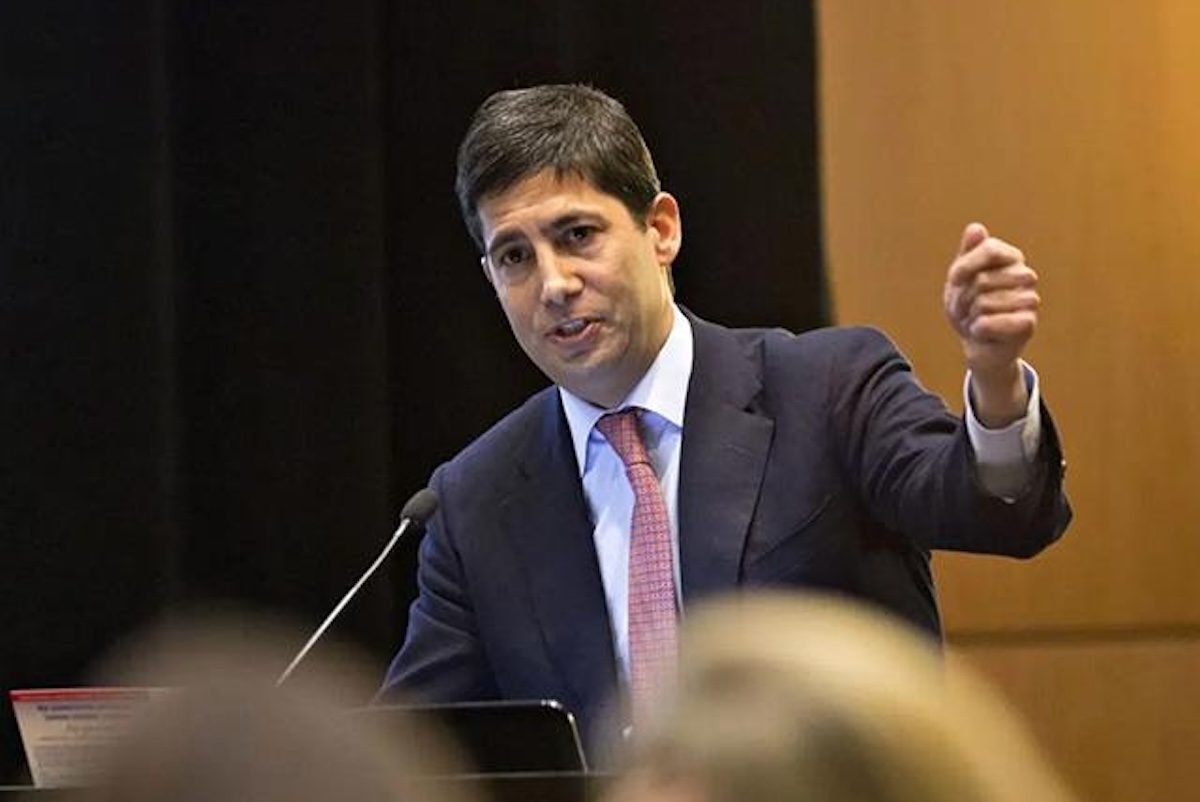
Kevin Warsh, President Donald Trump's nominee to chair the Federal Reserve, faced a skeptical Senate Banking Committee on Tuesday, where he vowed to maintain the central bank's independence despite the president's public demands for lower interest rates. The hearing, however, was overshadowed by a political standoff over an ongoing criminal investigation into current Fed Chair Jerome Powell, which threatens to derail Warsh's confirmation.
A Nomination Held Hostage
The committee is narrowly divided, with 13 Republicans and 11 Democrats. While all Democrats plan to oppose Warsh, Republican Senator Thom Tillis of North Carolina has also declared he will vote against the nomination until President Trump directs federal prosecutors to halt their investigation into Powell. The probe centers on cost overruns in a $2.5 billion renovation of the Fed's Washington, D.C., headquarters. With Tillis's opposition, the committee vote would be tied, preventing the nomination from advancing to the full Senate.
"If we put everybody in prison in federal government that had had a budget go over, we'd have to reserve an area roughly the size of Texas for a penal colony," Tillis said during the hearing. "Let's get rid of this investigation so that I can support your nomination."
U.S. District Court Judge James Boasberg last month blocked administration subpoenas related to the probe, citing "a mountain of evidence" that Trump is using the investigation to pressure Powell on interest rates. Despite this, investigators reportedly visited the Fed construction site unannounced just last week.
Questions of Political Pressure
Democrats on the committee expressed deep skepticism about Warsh's ability to remain independent. Senator Elizabeth Warren of Massachusetts, the committee's top Democrat, alleged Trump wants to install a "sock puppet" to "use monetary policies to artificially juice the economy in the short term" before the November elections.
Senator Andy Kim, a Democrat from New Jersey, pressed Warsh on economic affordability for American families, a key issue as the U.S. continues its military engagement in Iran and maintains tariffs. Warsh largely blamed post-pandemic monetary policy under the previous administration for inflation, calling it "the biggest economic policy error in 40 or 50 years." When asked if the Fed should be concerned about spiking fuel and fertilizer costs linked to the Iran conflict, Warsh deflected, stating his reform agenda was for the Fed "to stay in its lane."
The ongoing war and its economic fallout are prompting nations across the Indo-Pacific to reassess their own energy and security strategies, highlighting how U.S. monetary and foreign policy decisions have direct regional consequences.
Past Conflicts and Future Tests
Democrats also invoked President Trump's contested 2025 firing of Fed Governor Lisa Cook, a case currently before the Supreme Court. Senator Angela Alsobrooks of Maryland asked if Warsh would defend Cook's tenure as Powell has. Warsh again retreated to his "stay in its lane" mantra, noting the matter was pending before the court.
In his opening statement, Warsh defended a president's right to opine on interest rates but stated Trump had not asked him for any specific commitments. Republicans largely praised Warsh's experience, with Senate Banking Chair Tim Scott of South Carolina calling him "battle-tested" for his role during the 2008 financial crisis.
The political clash over the Fed comes at a time of global economic uncertainty, where U.S. policy shifts can significantly impact Asian economies. For instance, the intense competition between the U.S. and China to build next-generation energy supply chains is partly driven by long-term economic and technological strategy, areas where central bank stability is a critical foundation. Furthermore, a volatile U.S. counterterrorism strategy amid global tensions adds another layer of risk for Asian partners.
Current Chair Jerome Powell's term expires on May 15. He has stated he will stay on as chair pro tempore until a successor is confirmed. President Trump told Fox Business on April 15 that if Powell stays on, "well, then, I'll have to fire him." The confrontation sets the stage for continued instability at the world's most influential central bank, with direct implications for capital flows, currency stability, and economic planning from Tokyo and Seoul to New Delhi and Jakarta.