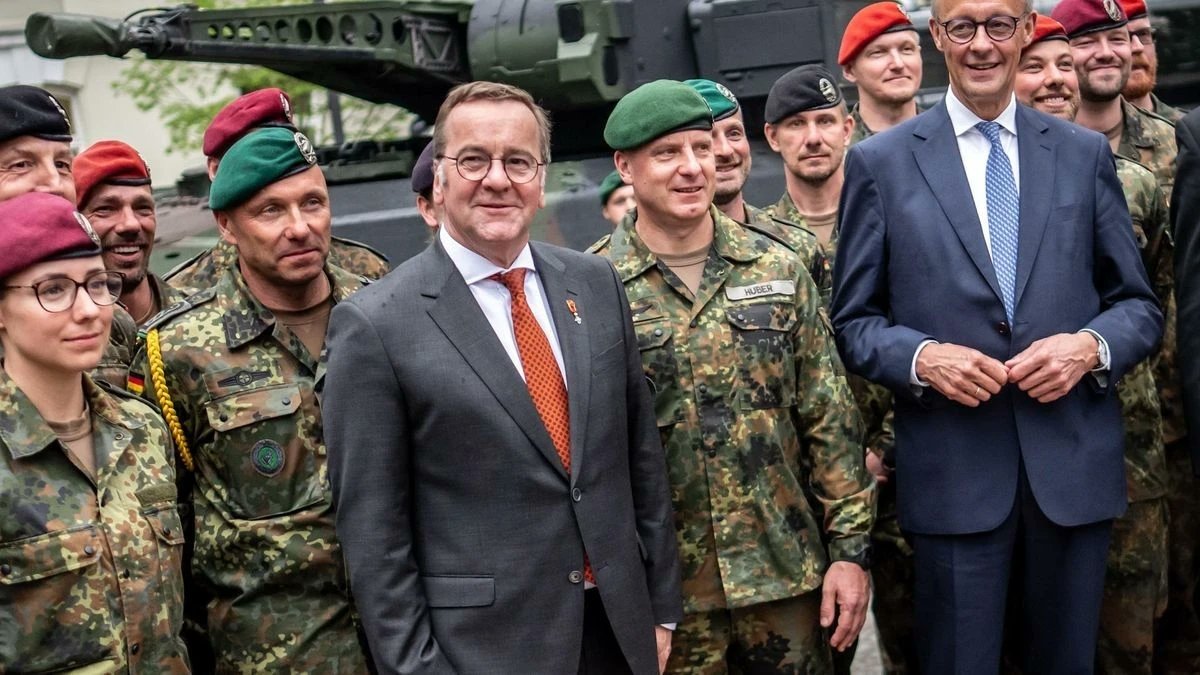
Berlin has unveiled its most ambitious military buildup since the Cold War, a $1 trillion rearmament plan designed to free Europe from reliance on the United States and counter perceived threats from Russia and China. The initiative, announced by German Defense Minister Boris Pistorius on Wednesday, aims to transform the Bundeswehr into Europe's strongest conventional army by 2035.
"We are transforming the Bundeswehr into Europe's strongest conventional army," Pistorius said, outlining a three-phase strategy: short-term defensive enhancements, medium-term capacity buildup, and long-term technological superiority. The plan includes developing new offensive weaponry, such as long-range missiles and armed drones, and increasing combat manpower from 200,000 to 460,000, combining active troops and reservists.
Merz's Hawkish Vision
Chancellor Friedrich Merz has driven this shift, citing Russia's war on Ukraine and US President Donald Trump's hostility toward NATO as catalysts for European self-reliance. At the Munich Security Conference in February, Merz warned of a dangerous environment: "First and foremost, there is Russia's violent revisionism, a brutal war against Ukraine, against our political order, with the most severe war crimes being committed on a daily basis." He added that the US claim to leadership is "being challenged, perhaps even forfeited."
Merz also highlighted China's growing military ambitions, stating that Beijing "could draw level with the US in terms of military might" and reinterpret the international order on its own terms. This dual threat perception marks a departure from the policies of previous chancellors Gerhard Schroeder and Angela Merkel, who downplayed military needs and pursued economic engagement with Moscow.
The plan's priorities include air defense, deep-strike rockets, cruise missiles, and data-driven warfare using artificial intelligence. Pistorius emphasized that some innovations will remain classified: "Otherwise, we might as well add Vladimir Putin to our email distribution list."
This rearmament is part of a broader European trend, with France increasing its nuclear deterrent and Italy developing joint defense projects. However, Germany's scale is unmatched, reflecting its role as Europe's logistical hub. The move also has implications for Asia, where China's military expansion and Russia's strategic partnerships are reshaping power dynamics. As Europe's strategic autonomy ambitions face deep structural hurdles, Germany's plan signals a decisive break from past dependencies.
Pistorius acknowledged the challenges, calling the strategies "living documents" that will be periodically updated. The plan also aims to reduce bureaucratic logjams through digital processing and AI shortcuts to speed decision-making. With this buildup, Berlin is positioning itself as the cornerstone of European defense, a role that will inevitably influence security calculations from the Baltic to the South China Sea.