The outcome of Hungary's general election on April 12 carries geopolitical weight far beyond its borders, serving as a critical test for an informal alliance challenging Western democratic cohesion. At its center is Prime Minister Viktor Orban, whose "illiberal democracy" has drawn explicit support from both former U.S. President Donald Trump and Russian President Vladimir Putin.
This alignment underscores a significant shift in global politics, where traditional ideological divides are being redrawn. Orban's Hungary, a member of the European Union and NATO, has consistently acted to obstruct EU consensus, particularly regarding support for Ukraine against Russia's invasion. The election will reveal whether his domestic political model retains enough popular support to continue this disruptive role.
A Conduit for Kremlin Interests
Since Russia's full-scale invasion of Ukraine in 2022, Budapest has functioned as Moscow's most reliable voice within the EU. Orban's government has delayed, diluted, and outright blocked financial and military aid packages destined for Kyiv. Most recently, it single-handedly held up a €90 billion EU loan for Ukraine, agreed upon last December.
This obstruction occurs despite Ukraine's recent battlefield gains, achieved through domestic drone and missile production. Maintaining this momentum requires sustained Western support, making Hungary's veto power a strategic asset for the Kremlin. Orban's stance is particularly notable given his own political origins in opposing Soviet control over Hungary.
The prime minister has also deepened Hungary's energy dependence on Russia since the war began, contrary to the EU's broader decoupling efforts. This commercial relationship, alongside the political coordination, highlights the pragmatic foundations of the Budapest-Moscow axis.
Transatlantic Dimensions of Disruption
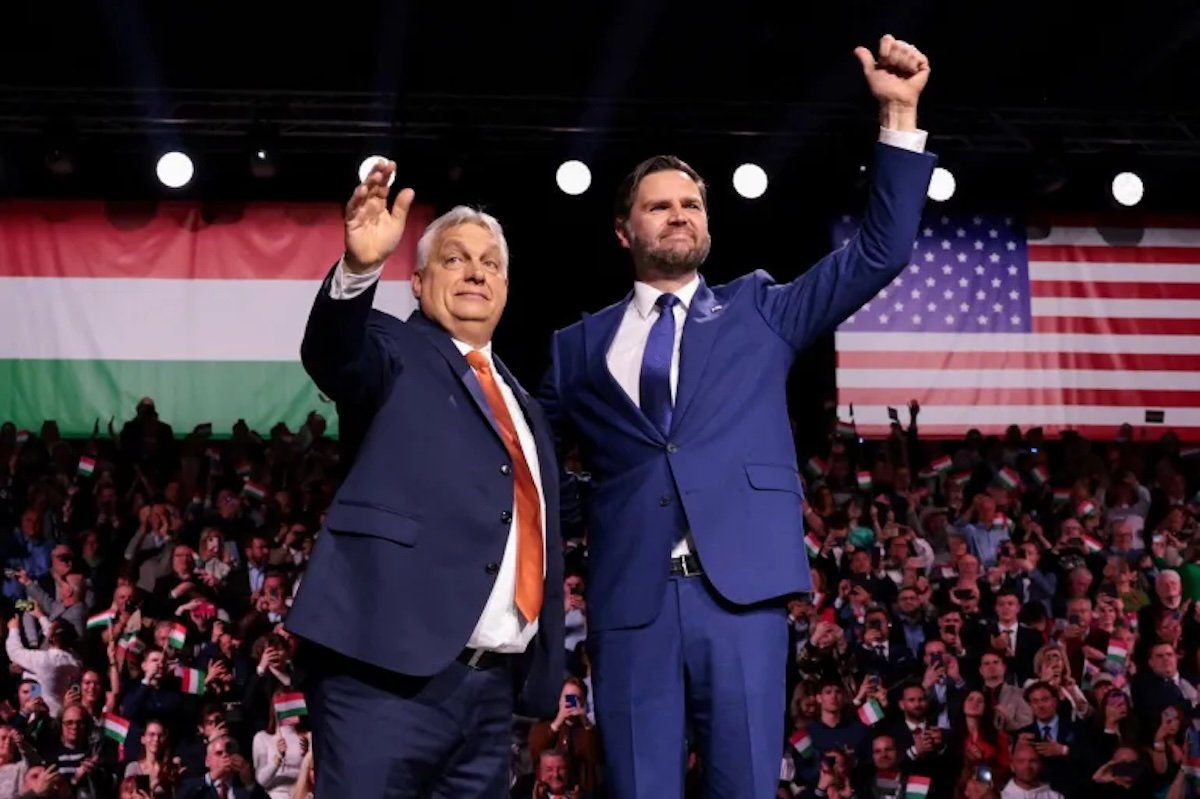
The alliance gained a transatlantic dimension with the active campaigning of Trump and Vice President JD Vance for Orban's reelection. Vance's recent trip to Budapest, where he accused the EU and Ukraine of election interference—a charge without evidence—signaled a clear alignment. This support comes as the Trump administration pursues a major defense buildup while navigating complex global crises.
Analysts note a paradox in this alignment: the Trump administration appears indifferent to how Russian and Chinese support bolsters regimes adversarial to U.S. interests, such as in Iran. This dynamic is evident as Tehran rejects diplomacy citing Washington's posture, while regional tensions simmer. The situation creates a complex security landscape where Asian economies are particularly vulnerable to energy shocks stemming from conflicts like a potential Hormuz blockade.
For the European Union, the election is a pivotal moment. Brussels hopes for an Orban defeat to remove a persistent internal obstacle. Under his leadership, Hungary has not only hampered aid to Ukraine but also stalled common policies on migration and asylum. Its democratic backsliding on judicial independence, media freedom, and corruption is so severe that, were it applying today, it would likely fail to meet the EU's membership criteria.
The bloc's primary tool—withholding funds—has proven a weak deterrent, allowing Orban to frame the EU itself as an enemy threatening Hungarian sovereignty. The election will measure the effectiveness of this narrative.
Ultimately, the contest in Hungary is a referendum on a political vision that positions the European Union as a threat to Western civilization—a view shared by Orban, Putin, and Trump. The result will immediately affect the flow of aid to Ukraine and signal the durability of this disruptive coalition within the heart of Europe. A shift in power could deliver a significant blow to Putin and Trump's network of populist alliances, reshaping the political landscape ahead of other key global elections.