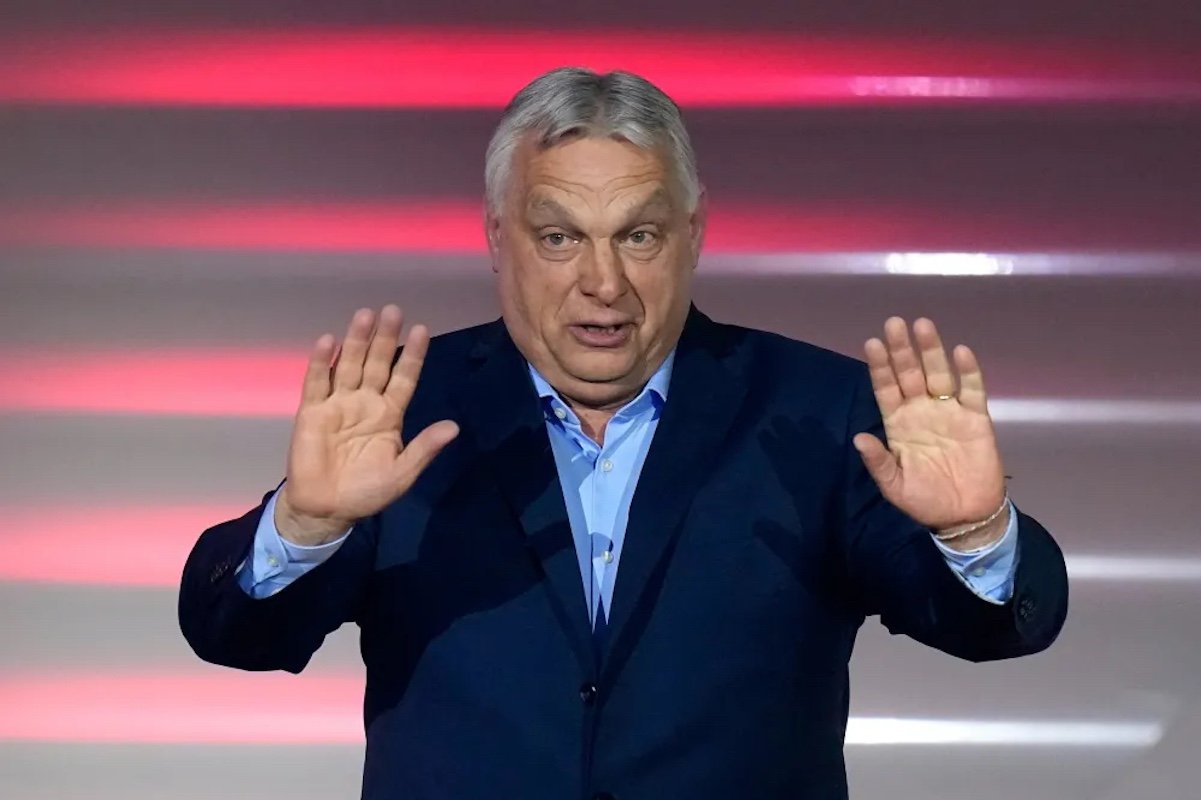
Hungary has undergone a profound political transformation with opposition leader Peter Magyar's emphatic victory over Prime Minister Viktor Orban, ending sixteen years of rule by the Fidesz party. The election, characterized by record turnout exceeding 74%, delivered a two-thirds parliamentary supermajority to Magyar's Tisza party, enabling constitutional changes to dismantle Orban's political architecture.
A Setback for Transnational Populism
The implications of Orban's defeat extend far beyond Budapest, striking at the heart of a transnational network of right-wing populism. The most immediate loser is Russian President Vladimir Putin, whose government had invested significant political capital in maintaining Orban as the European Union's strongest pro-Kremlin voice. Under Orban, Hungary systematically obstructed EU aid to Ukraine, leaked confidential discussions to Moscow, and served as a hub for ultraconservative voices aligned with Russian interests.
Recent revelations, including a leaked 2025 phone call where Orban compared himself to "a mouse helping free the caged Russian lion," illustrated the depth of this alignment. With Magyar's victory, Moscow loses a critical ally within EU decision-making bodies, potentially easing consensus on support for Kyiv and sanctions enforcement.
The Trump administration represents another significant casualty. Washington's overt interference in the election—including Vice President JD Vance's Budapest visit and Donald Trump's promise to deploy "the full Economic Might of the United States" to aid Orban—has now placed the White House publicly on the losing side. This failure exposes the vulnerability of foreign interference campaigns, even as the administration's 2025 National Security Strategy advocates cultivating resistance to what it terms Europe's "civilizational erasure."
Domestic Drivers and Regional Implications
Orban's vulnerability stemmed from tangible domestic failures: Hungary consistently ranked as Europe's most corrupt nation, suffered from economic stagnation and rampant inflation following Russia's invasion of Ukraine, and placed last in the EU on relative household wealth in 2025. Public outrage crystallized around images of elite extravagance, symbolized by country estates with roaming zebras, contrasting sharply with widespread economic hardship.
Magyar, a former Orban ally, now faces the delicate task of implementing change without alienating former Fidesz voters. His immediate request for the resignation of President Tamas Sulyok and other Orban loyalists signals a clean break, while the parliamentary supermajority provides the necessary tools for substantive institutional reform.
For the Indo-Pacific, Hungary's political reorientation carries subtle but important consequences. A more cohesive EU foreign policy, less susceptible to Russian-aligned obstruction, could strengthen Europe's strategic engagement in Asia. This is particularly relevant as tensions persist in the South China Sea and across the Taiwan Strait, where unified Western responses carry greater weight. Furthermore, the repudiation of the "Putinisation of global politics," as termed by Russian journalist Mikhail Zygar, challenges a model of governance that has found admirers among some Asian populists.
The election also demonstrates that electorates, when presented with a credible alternative, will eventually reject governments that rely on blame and victimhood to mask governance failures. This lesson resonates in Asian democracies where similar populist narratives have gained traction.
Notably, the Trump administration's foreign policy focus on conflicts like the Hormuz blockade and its broader defense budget surge now unfolds against a backdrop of diminished influence in Central Europe. The administration's confrontational approach, exemplified by the breakdown in talks with Iran, may face additional scrutiny as its political alliances fracture elsewhere.
Ultimately, Hungary's election delivers a powerful message: the appeal of authoritarian-tinged populism is not inexhaustible. For Asian observers, it underscores the enduring importance of economic performance, institutional accountability, and the possibility of democratic renewal—factors that will continue to shape political trajectories from New Delhi to Seoul to Jakarta.