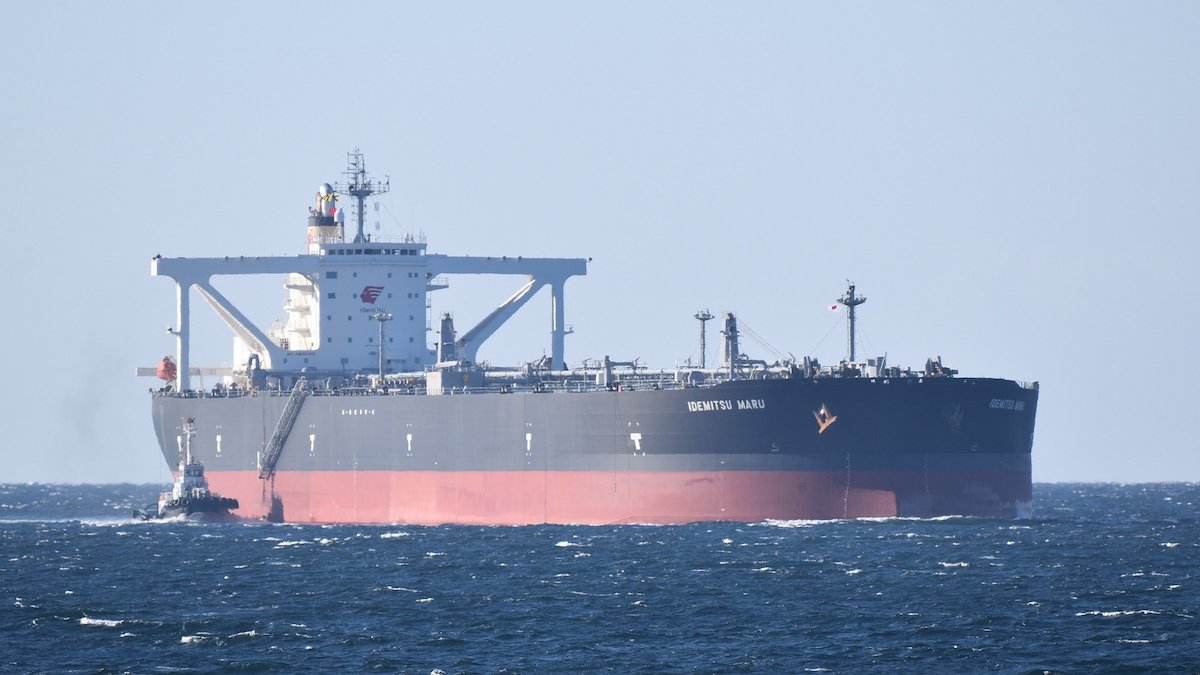
The Panama-flagged, Japanese-owned Very Large Crude Carrier (VLCC) Idemitsu Maru has successfully transited the Strait of Hormuz, carrying 2 million barrels of Saudi Arabian crude oil bound for Nagoya. The vessel's passage, confirmed by maritime analytics firm Marine Traffic, marks the first transit of a Japanese oil tanker through the strategic waterway since the onset of hostilities between the United States and Iran. The ship is now in the Gulf of Oman and expected to arrive in Japan on May 18.
The Idemitsu Maru carries more than oil: its name deliberately invokes a pivotal moment in Japanese energy history. In 1953, the Japanese refiner Idemitsu Kosan dispatched the tanker Nissho Maru to the Iranian port of Abadan, then under a British naval blockade imposed after Prime Minister Mohammad Mosaddegh nationalized British oil interests. The Nissho Maru evaded the blockade, loaded crude, and returned to Japan, a feat that became the subject of a best-selling novel and a popular film. The British, wary of international backlash, allowed the ship to pass.
Today's transit reflects sustained Japanese diplomacy. Prime Minister Sanae Takaichi held a telephone conference with Iranian President Pezeshkian on April 8, while Foreign Minister Toshimitsu Motegi met Iran's ambassador to Tokyo on March 2 and spoke with Iranian Foreign Minister Seyyed Abbas Araghchi on April 15. These efforts, part of a broader push to de-escalate tensions in the Strait, have yielded results. As Japanese parties push PM Takaichi for stronger action on the Hormuz energy crisis, the government has maintained a low-profile but persistent dialogue with Tehran since the 1979 Islamic Revolution.
Historical Echoes and Strategic Implications
The Idemitsu Maru's passage comes as more than 40 Japanese vessels remain stuck in the Persian Gulf, according to industry sources. The ship's name—Maru, meaning circle or ring, is a traditional suffix for Japanese vessels—is no coincidence. Idemitsu Kosan has not commented on the transit, but the symbolism is clear: the company that once broke a British blockade is now navigating a modern geopolitical crisis.
Earlier in April, two other Japanese-owned vessels—the LNG tanker Sohar LNG and the LPG tanker Green Sanvi, both operated by Mitsui O.S.K.—exited the Persian Gulf. These movements suggest a gradual easing of restrictions, though the broader crisis continues to threaten energy supplies across Asia. The Strait of Hormuz is a chokepoint for nearly a third of the world's seaborne oil, and disruptions there have already raised concerns about fertilizer and food prices in the region, as Strait of Hormuz disruptions threaten Asia's fertilizer supply and food prices.
Japan's reliance on Middle Eastern oil—roughly 80% of its crude imports—makes the Strait's security a national priority. The Idemitsu Maru's successful transit may signal a temporary diplomatic opening, but the underlying tensions between Washington and Tehran remain unresolved. As the US-Iran stalemate in Hormuz strains alliances and reshapes Asian energy security, Tokyo's quiet diplomacy offers a model for de-escalation, but its limits are clear: one tanker does not guarantee safe passage for the dozens still waiting.
The Nissho Maru incident of 1953 was a gamble that paid off, cementing Idemitsu Kosan's reputation and Japan's post-war energy independence. Today's Idemitsu Maru carries that legacy, but the stakes are higher. With the Strait of Hormuz still a flashpoint, Japan's ability to secure energy flows will depend on sustained engagement with all parties—a task that grows more urgent as the crisis deepens.