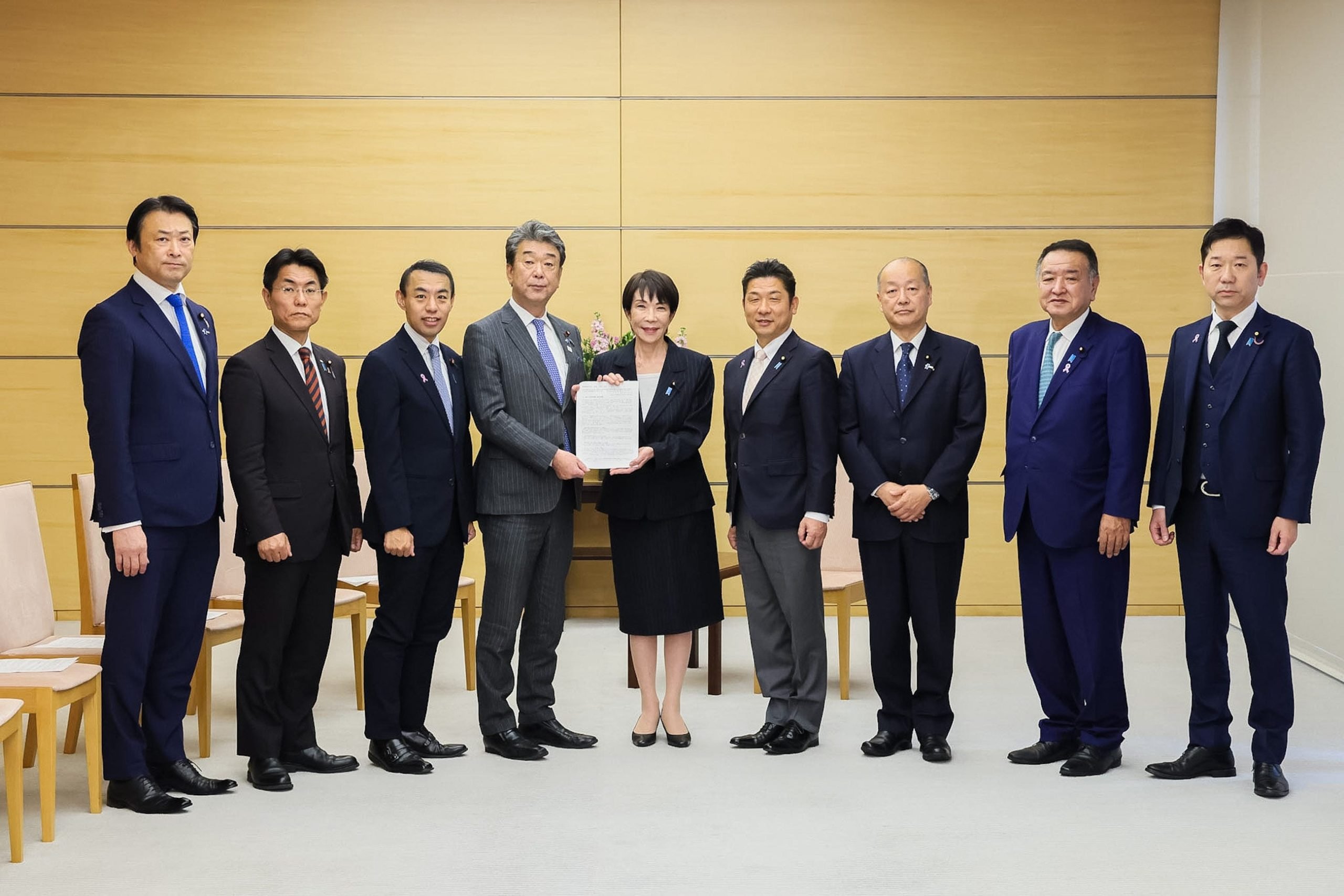
On Friday, April 24, Japan's Liberal Democratic Party (LDP) policy chief Takayuki Kobayashi met with Prime Minister Sanae Takaichi to present a series of proposals addressing the ongoing Hormuz crisis. The recommendations include a call to consider dispatching minesweepers after the conflict ends, but the bulk of the proposals focus on immediate measures to contain price increases and ensure stable energy supplies as the crisis shows no signs of easing.
Supply Management vs. Demand-Side Measures
Prime Minister Takaichi has continued to emphasize that the situation is under control. In the Diet on Friday, she stated that the government is working to resolve bottlenecks in Japan's distribution of naphtha, even as producers warn that shortages could force them to scale back production. At a cabinet committee meeting on the Middle East, Takaichi announced that the government had secured oil supplies for May from alternative sources, totaling roughly 60% of Japan's May 2025 usage. She instructed her team to aim for a higher figure for June.
However, the Takaichi administration's focus on managing supplies rather than implementing demand-side measures has drawn criticism. The Centrist Reform Alliance (CRA) and its affiliated parties are calling for an early supplemental budget to address the crisis. Yet, as Toyo Keizai columnist Kanbee warns, the lessons from the oil shocks of the 1970s should caution the government against relying on fiscal stimulus to aid consumers, especially as leading indicators point to slowing demand.
Meanwhile, a Nikkei panel of economists favors both conservation measures and reducing or phasing out gasoline subsidies. The debate highlights a broader tension in Tokyo over how to balance short-term relief with long-term energy security.
Regional Implications and Security Dimensions
The Hormuz crisis has far-reaching implications for Asia, given the region's heavy reliance on Middle Eastern oil. Japan's response is being closely watched by neighbors such as South Korea and China, which face similar supply vulnerabilities. The proposal to deploy minesweepers, while post-conflict, signals Tokyo's willingness to play a more active security role in the region, a shift that aligns with recent defense policy changes. For context, Japan's defense posture has been evolving, as seen in the new arms export rules that prioritize preparation over pacifism.
The crisis also threatens to disrupt fertilizer supplies and food prices across Asia, as noted in the Strait of Hormuz disruptions. For Japan, securing alternative energy sources is critical, but the government's approach has been criticized as reactive. The broader US-Iran stalemate in the Strait of Hormuz is reshaping Asian energy security, as explored in this analysis.
Political Pressure Mounts
The LDP's proposals reflect growing unease within the ruling party about the government's handling of the crisis. Kobayashi's meeting with Takaichi underscores the pressure from within her own party to take more decisive action. The opposition's call for a supplemental budget adds to the political heat, though economists warn that such measures could be counterproductive if they fuel inflation without addressing supply constraints.
As Japan navigates this crisis, the government's ability to balance supply security, price stability, and fiscal discipline will be tested. The outcome will have implications not only for Japan's economy but also for its role in regional energy security and diplomatic relations with key partners like Australia, as seen in the Japan-Australia frigate deal that signals a shift in Pacific security dynamics.