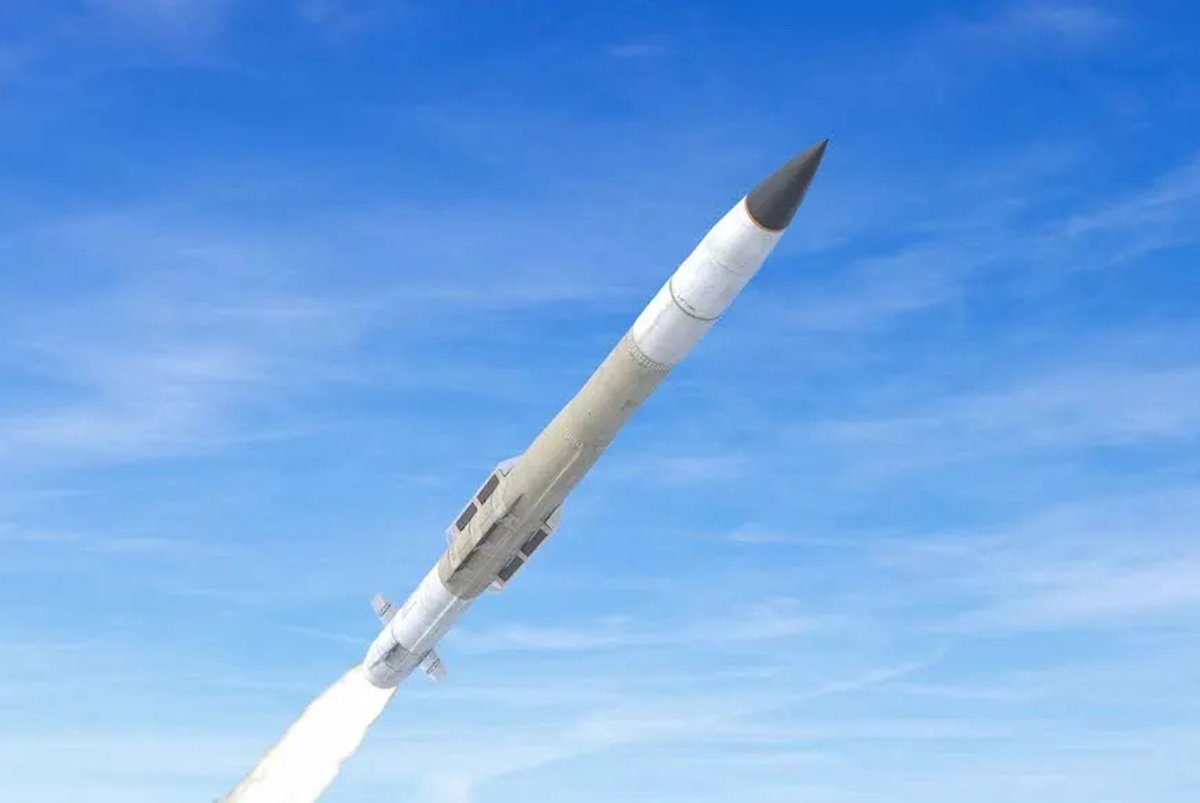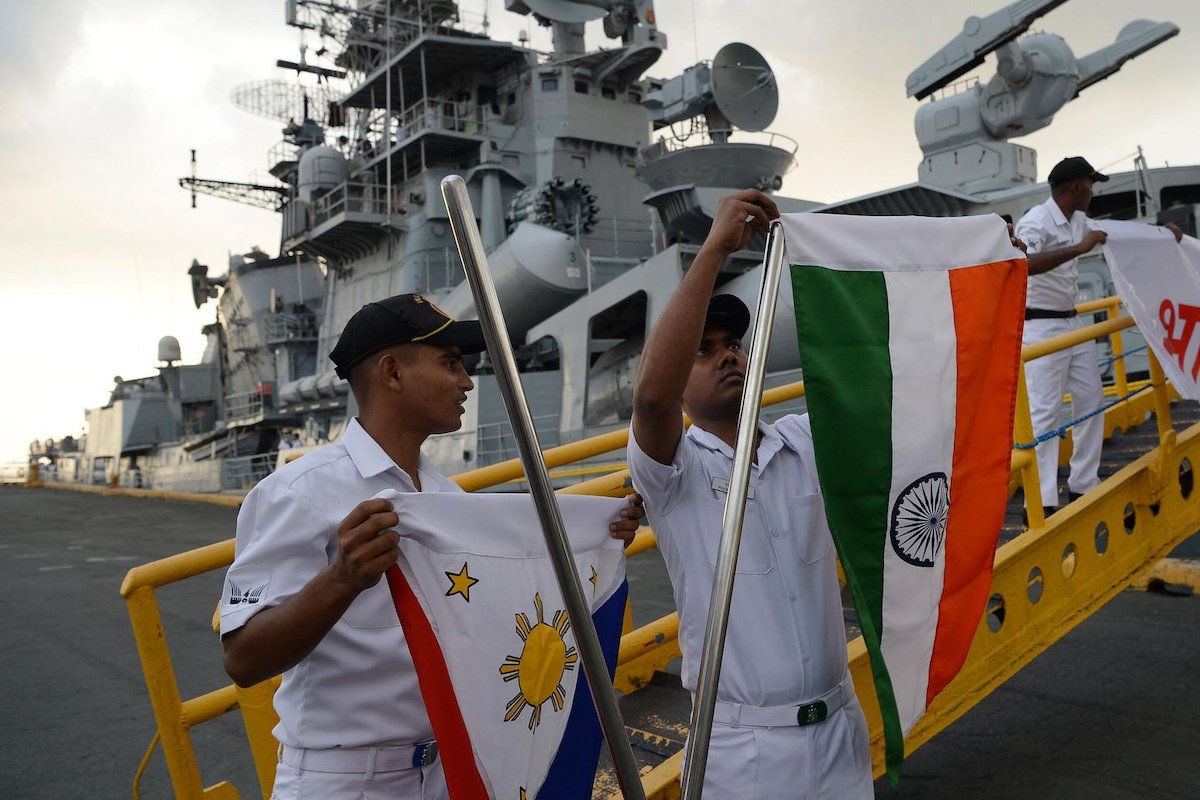
While global attention has been consumed by the war in Iran, a quieter but significant strategic development has been unfolding in the Indo-Pacific. In April, Filipino marines conducted one of the largest iterations of Balikatan, the annual US-Philippines military exercise, which included simulated firing of the BrahMos anti-ship missile. The BrahMos is an Indian weapon, and although India was not a formal participant, it sent observers. This image—a US-Philippine drill featuring an Indian missile—captures India's evolving role in the South China Sea.
India is not a claimant in the South China Sea and is unlikely to deploy troops there. Yet its influence is felt through hardware sales, intelligence sharing, and strategic diversification that strengthen the deterrence capabilities of Southeast Asian partners like the Philippines. This is not a case of formal policy alignment but of strategic convergence: India's pursuit of its own interests—expanding defense exports, deepening its Act East Policy, and hedging against China—produces outcomes that complement Washington's regional objectives.
Burden-sharing and the first island chain
The Trump administration's strategy in the first island chain rests on a concept of denial: making it too costly for China to strike a partner nation. This approach emphasizes burden-sharing, with allies and partners expected to invest in their own defense. Elbridge Colby, Under Secretary of War for Policy, articulated this clearly in a recent speech in Manila. He stressed the importance of maintaining a favorable balance of power in the Indo-Pacific and noted that partners must do their part.
“When we ask our allies and partners to step up, to invest more in their own defense,” Colby said, “we are not signaling abandonment.” He argued that deterrence along the first island chain cannot rest on American power alone but must rely on capable partners able to defend their own territory.
The Philippines has been responsive, despite a modest defense budget of approximately $6.12 billion in 2024 and a proposed $6.7 billion for 2027—among its highest figures to date. Manila adopted the Comprehensive Archipelagic Defense Concept in 2024, focusing on territorial and maritime defense, and passed the Self Reliant Defense Posture Law to build indigenous capabilities, reinforced by the Horizon I, II, and III plans.
India's three levers
India is contributing to this effort through three levers: hardware, intelligence sharing, and enabling strategic diversification. On hardware, India sold the Philippines three shore-based BrahMos batteries for $375 million in 2022, offering a $100 million line of credit, though Manila chose to finance the purchase from its own defense appropriations. The batteries arrived on time in April 2024, and the first became operational in November in Zambales, West Luzon, under the Marine Corps Coastal Defense Regiment. With a strike range of 290 kilometers, it can reach Scarborough Shoal. India has since offered extended-range variants of 400 kilometers, which, when deployed from Palawan, could reach the Spratlys.
Philippine Ambassador to India Josel F. Ignacio called the BrahMos missiles a “game changer” that provides the Philippines with “real credible deterrence” amid rising territorial challenges in the South China Sea. India has also offered Akash surface-to-air missiles, Tejas LCA fighter jets, helicopters, submarines, and naval vessels. These sales are commercially beneficial to India, but their second-order effect is to strengthen the same maritime denial architecture Washington is pursuing.
On intelligence, India invited the Philippines to the Information Fusion Center for the Indian Ocean Region (IFC-IOR) in 2025. The IFC-IOR is India's maritime domain awareness hub, tracking activity in the Indian Ocean. This builds on a 2023 coast guard agreement and a white shipping arrangement, under which the two navies already collaborate on information sharing, maritime training, exchanges, and joint search and rescue operations. Greater maritime domain awareness improves Manila's ability to identify, track, and respond to Chinese activity, complementing the strike capabilities India is helping provide.
Last year, Indian and Philippine warships conducted their first joint maritime activity inside the Philippine Exclusive Economic Zone and the South China Sea, with Chinese vessels shadowing them during the sail. India has also publicly backed Manila's position in the South China Sea, including the 2016 arbitral award in the Philippines' favor, which China has ignored by continuing to extend its territorial claims through artificial islands and the nine-dash line.
There are limitations. India is highly unlikely to ever put boots on the ground for the Philippines, but this may matter less. By providing strategic diversification, India strengthens the Philippines' deterrence, making regional balancing look less like simply joining an American bloc. And that is the paradox: the same strategic autonomy that limits how far India will pursue formal alliances also enables it to contribute to a more resilient regional order.
As the US and its partners continue to navigate the complexities of the Indo-Pacific, India's role as a de facto force multiplier is becoming increasingly significant. For more on regional dynamics, see ASEAN's neutrality strategy and China's naval fleet expansion.