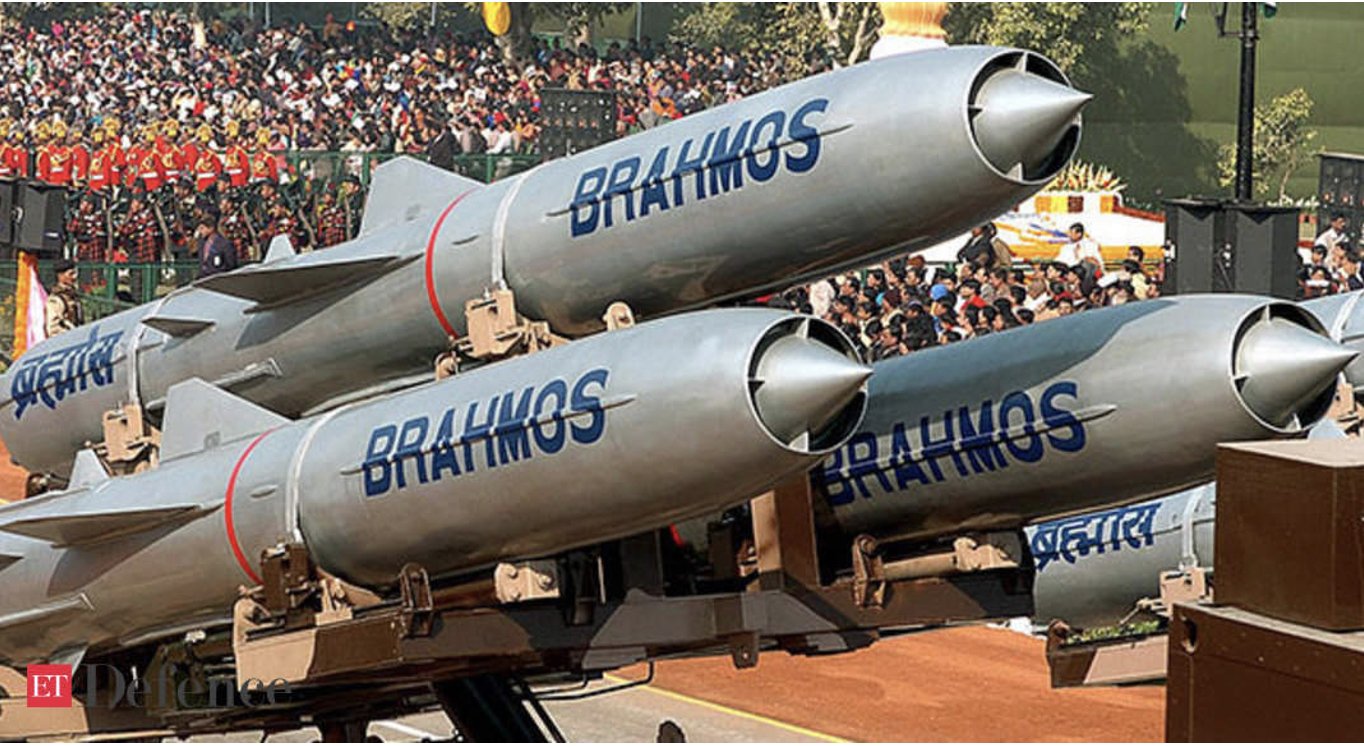
Vietnam's interest in acquiring India's BrahMos supersonic cruise missile is reshaping what might otherwise be a routine arms transaction into a strategic gambit with implications for deterrence and influence across the Indo-Pacific. Reports this month indicate that Hanoi is moving closer to finalizing a deal for the Indo-Russian-developed missile system, as both countries deepen defense ties amid heightened tensions in the South China Sea and broader competition with China.
Discussions accelerated during Vietnamese President To Lam's visit to New Delhi in August, where he met Prime Minister Narendra Modi and Defense Minister Rajnath Singh. Officials from both sides confirmed that the BrahMos—a joint venture between India's Defence Research and Development Organisation and Russia's NPO Mashinostroyeniya—was among the platforms under negotiation. The proposed contract, estimated at between US$629 million and $700 million, would make Vietnam the third foreign buyer after the Philippines and Indonesia, and could include training and logistical support.
No final agreement has been signed, but India's foreign ministry acknowledged the missile was part of broader discussions. Vietnam seeks the BrahMos to strengthen coastal and maritime deterrence alongside its existing Russian-made Bastion-P systems. For India, the sale fits squarely within its Act East policy and a push to expand defense exports. Negotiations also cover Indian-built offshore patrol vessels, patrol boats, submarine batteries, ship upgrades, and maintenance support for Vietnam's Su-30 fighters and Kilo-class submarines—underscoring a rapidly expanding strategic partnership.
A Layered Defense in the Gulf of Tonkin
The BrahMos, with a 290-kilometer range, supersonic speed, and a 200-kilogram warhead, is designed to strike large warships such as destroyers and amphibious assault ships. Vietnam could pair it with its domestically produced VSM-01A Truong Son missile, which has a shorter 80-kilometer range, high subsonic flight, and a smaller warhead suited for frigates and corvettes. This high-low mix would create a layered anti-ship defense in the Gulf of Tonkin, particularly if based in northern Vietnam, threatening Chinese warships sailing from Hainan.
These systems could be integrated into Vietnam's broader anti-access/area-denial (A2/AD) strategy—a layered asymmetric approach designed to counter China's superior naval power. Alongside Kilo-class submarines, Su-30 fighters, and incremental island-building in the South China Sea, the missiles help entrench Vietnam's territorial claims while raising the costs of coercion against it.
The deal also carries deeper strategic implications. Vietnam has long relied on Russia as its primary defense partner, but Western sanctions on Russian arms exports, heavy losses of Russian equipment in Ukraine, and Moscow's need to replenish its own stocks have pushed Hanoi to diversify. The BrahMos sale reinforces Vietnam's partnership with India, creating long-term dependencies on spares, maintenance, software updates, and training. Both countries share a non-aligned foreign policy that emphasizes strategic autonomy while avoiding formal alliances with any great power.
For Russia, India may be serving as a broker to facilitate arms sales that would otherwise be politically sensitive due to sanctions. Russia holds a 49.5% stake in BrahMos Aerospace, the joint venture that manufactures the missile, keeping its arms exports afloat and generating revenue despite the Ukraine war.
India's push to sell BrahMos to Southeast Asian partners signals a broader defense diplomacy effort. By enabling states like Vietnam to implement their own A2/AD strategies, New Delhi complicates China's ability to project power into the Indian Ocean. China's maritime footprint there—integrated into its Belt and Road Initiative (BRI)—includes dual-use port infrastructure in Gwadar (Pakistan), Hambantota (Sri Lanka), and a military foothold in Djibouti, alongside undersea scientific research that may support submarine operations. These assets provide Beijing with potential logistics hubs for sustaining naval operations during crises, threatening India's nuclear ballistic missile submarines in the Bay of Bengal.
China's critical interest in the Indian Ocean is securing sea lanes of communication (SLOCs) through which 80% of its oil shipments from the Middle East pass. The March 2026 sinking of an Iranian frigate by the US underscored the vulnerability of maritime trade and naval operations, reinforcing Chinese concerns that its SLOCs could be disrupted in a major regional conflict involving India, the US, or Taiwan.
India's sale of BrahMos to Vietnam thus creates a direct strategic linkage between Southeast Asian security and New Delhi's regional interests. As India's defense push transforms into industrial statecraft across Asia, the missile deal exemplifies how arms sales can serve as instruments of influence. Meanwhile, US-Japan missile drills turning the Philippines into a forward base highlight the broader trend of regional powers building layered deterrence. For Vietnam, the BrahMos is not just a weapon—it is a statement of intent in a contested maritime domain.



