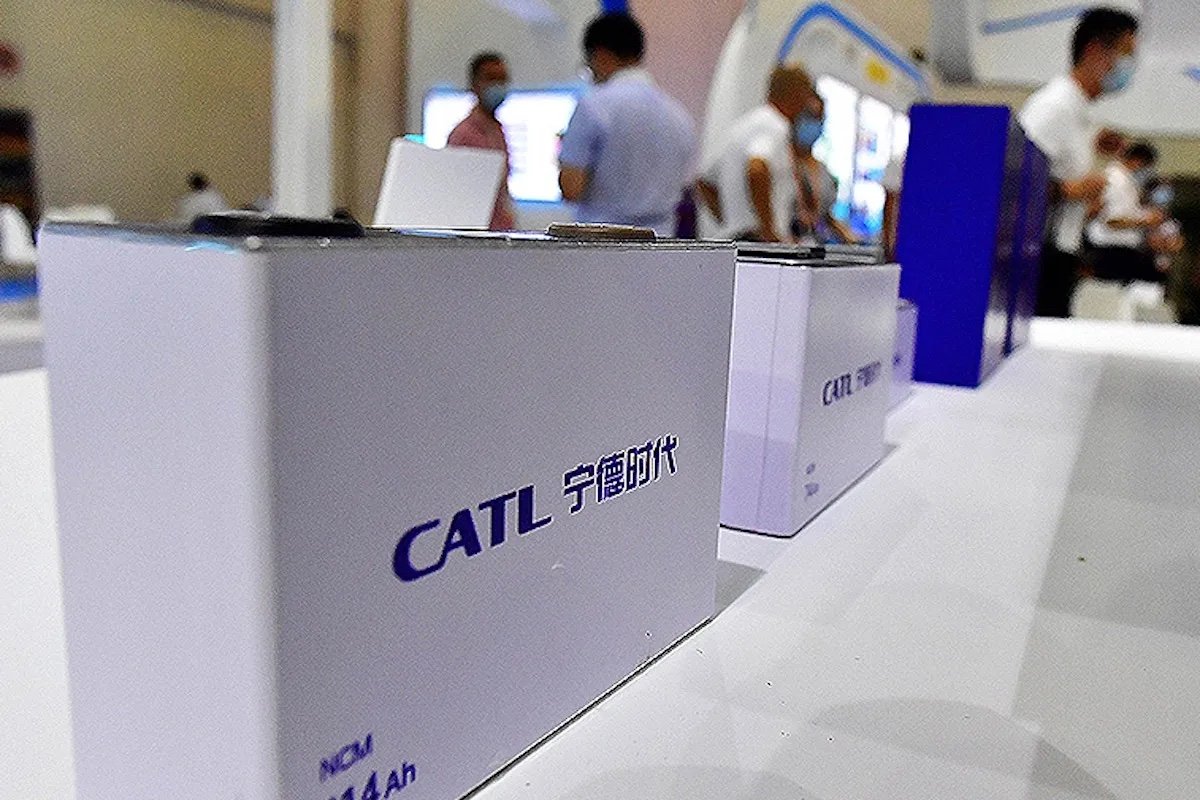
For over a decade, Indonesia has measured its economic partnership with China in dollars and cents. The numbers are indeed impressive: Chinese companies have poured billions into nickel processing, industrial estates, power plants, and more recently, electric vehicle batteries. In late June, Indonesia and China’s CATL broke ground on a lithium-ion battery plant in West Java, expected to start operations by the end of 2026. It is part of a $6 billion supply chain stretching from nickel mining to battery recycling.
By those measures, Indonesia has done well. But there is another way to judge whether an industrial strategy is working, and it receives far less attention. After years of Chinese investment, what technologies can Indonesian companies develop today that they could not develop ten years ago? That question matters because investment and technological progress are not the same thing.
The Nickel Industry as a Case Study
Indonesia’s nickel industry illustrates why. The government’s downstream policy has fundamentally changed the industry. Instead of exporting raw ore, Indonesia now produces intermediate products such as mixed hydroxide precipitate (MHP), an important ingredient for battery production. Yet much of the higher-value processing still takes place elsewhere. Battery materials such as lithium iron phosphate (LFP), which has become the dominant battery chemistry in China, are largely produced outside Indonesia before batteries are assembled domestically.
There is nothing unusual about participating in global supply chains — every manufacturing economy does. The more important question is whether Indonesia is gradually moving into the parts of the supply chain where products are designed, manufacturing processes are improved, and intellectual property is created. Those are the activities that generate lasting industrial strength, and China understood this long before it became the world’s manufacturing powerhouse.
When Beijing welcomed foreign manufacturers in the 1980s and 1990s, the objective was never simply to create jobs or increase exports. Investment became one way of acquiring knowledge. Chinese firms learned through joint ventures, supplier networks, research institutes, and deliberate industrial policies. Over time, they stopped assembling products designed elsewhere and began competing with the companies that had once taught them.
Technology Transfer: More Than a Buzzword
Indonesia has successfully attracted Chinese capital. Whether it has built equally strong institutions for absorbing Chinese technology, however, is much less obvious. One reason is that technology transfer is still discussed as though it happens automatically, but in reality technology has to be successfully absorbed. Engineers need opportunities to master production processes. Local suppliers need incentives to move beyond manufacturing components and into designing them. Universities need stronger links with industry so that research finds its way onto factory floors instead of remaining in academic journals.
Indonesia’s debate often feels incomplete on this point. Investment figures are announced with great enthusiasm. Export values are carefully tracked. New factories become symbols of success. Yet there is remarkably little discussion about how to measure technology transfer itself. How many Indonesian engineers have moved into senior technical positions? Which investment projects have generated patents owned by Indonesian firms? So far, there is little public data to answer either question, and without answers, technology transfer remains more an aspiration than a policy.
The structure of investment also deserves closer attention. Indonesia generally treats foreign investors as though they all contribute knowledge in similar ways, but that assumption deserves closer scrutiny. Partnerships with Chinese state-owned enterprises may create different opportunities for technological learning than projects led by private companies with primarily commercial priorities. That difference should not be assumed — it should be studied.
The same thinking applies beyond industry. Some Chinese academics have questioned why many Indonesian universities appear more interested in establishing commercial companies than strengthening the links between research laboratories and manufacturers. The criticism may be overstated, but it points to a genuine issue: strong industrial economies depend on effective “lab-to-fab” systems that move ideas from research into production. Indonesia has spent years building factories; it now needs to devote equal attention to building those connections.
China’s own economic transition may create new opportunities. Years of fierce competition have left much of China’s solar industry struggling with falling prices and shrinking profits. Some of the country’s biggest solar manufacturers are responding by expanding aggressively into battery storage, where margins are stronger and demand is growing faster. For Indonesia, this changing landscape is worth watching. China itself accelerated its technological rise in the years following the 2008 global financial crisis by acquiring distressed foreign companies, particularly in Germany, to gain access to patents, engineering talent, and advanced manufacturing expertise. Indonesia has rarely, if ever, discussed pursuing a similar strategy.
This is where Danantara, Indonesia’s new sovereign investment fund, could eventually play a larger role. Instead of looking only at financial returns or domestic infrastructure projects, it could identify opportunities to acquire technology, intellectual property, and engineering capabilities while valuations in parts of China’s clean-tech sector remain under pressure. None of this would replace foreign investment, nor should it. Indonesia still needs foreign investment, just as it needs strong economic ties with China. But the next phase of that relationship should be judged differently. The first decade was about bringing factories to Indonesia. The next should be about ensuring that those factories leave behind more than just buildings.
For a broader perspective on how power dynamics shape regional stability, see our analysis: Power Prevails but Law Still Matters in the South China Sea. And for insights into China’s technological ambitions, read Compasses Over Maps: China's AI Focuses on Navigating Change.