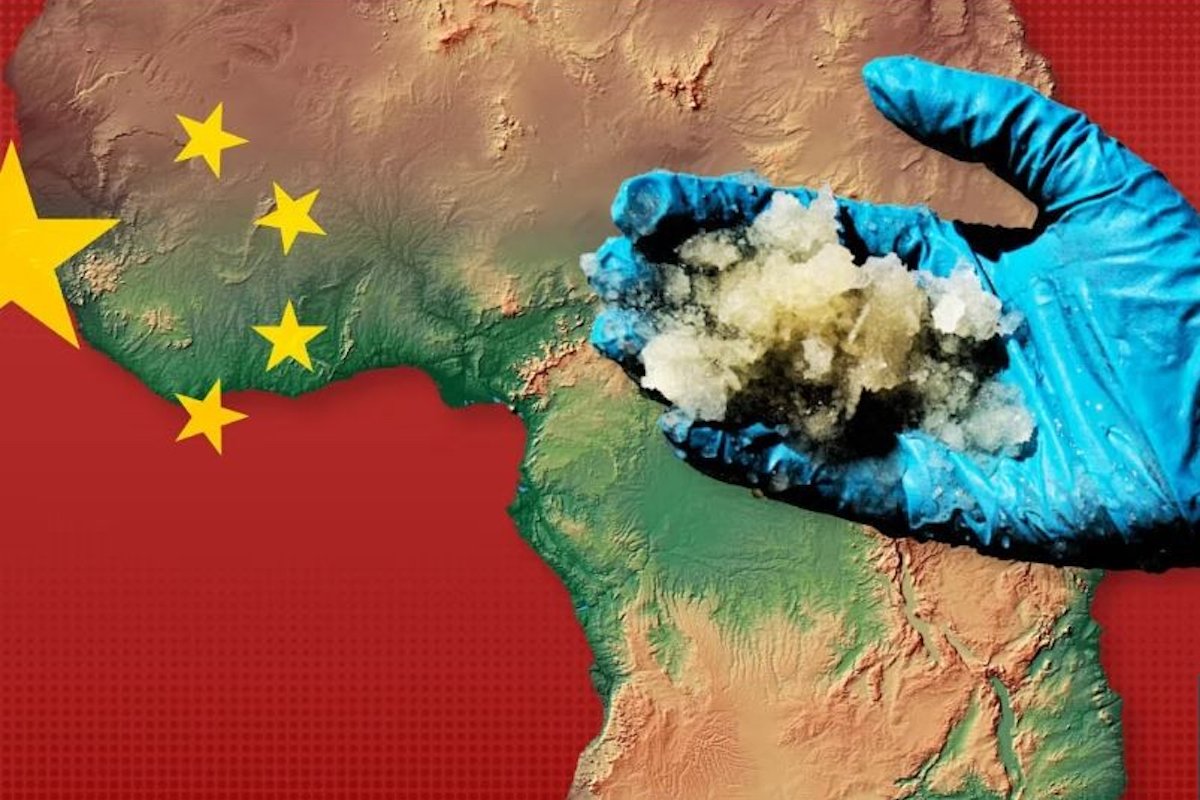
The escalating conflict in the Middle East, combined with the trade disruptions of the second Donald Trump presidency, is reshaping China's economic engagement with Africa. Beijing's strategy, centered on Hunan Province, is moving beyond the old resource-for-infrastructure model toward deeper industrial integration and renewable energy cooperation.
China's Africa pivot began shifting in 2019, when the limitations of the so-called 'Angola Model'—building infrastructure in exchange for oil and minerals—became apparent. African nations struggled with debt sustainability amid global shocks, while China's own domestic needs evolved. In response, Beijing designated Hunan Province as the lead 'project implementation unit' for a new era of China-Africa trade and development.
The Hunan Model: A New Framework for China-Africa Relations
At the heart of this strategy are two national initiatives: the China-Africa Economic and Trade Exhibition and the China-Africa Economic and Trade Deep Cooperation Pilot Zone, formally approved in early 2024. The pilot zone is a logistics, trade, and investment system designed to integrate Chinese and African supply chains, addressing three key barriers to African development: shortages of capital, skilled labor, and infrastructure.
Hunan's capital, Changsha, hosts China's third-largest wholesale market, the Gaoqiao Grand Market, which serves as the primary distribution hub for non-commodity African imports. African goods enter through 'green lanes' that fast-track exports into China. The market includes a permanent trade facilitation hall where African countries market their products directly.
The model also relies on three functional areas to connect landlocked Hunan to global markets: the Changsha Free Trade Airport Zone, a national airfreight hub with routes like the Changsha-Addis Ababa cargo line launched in 2022; the Yueyang Chenglingji Port, linking Hunan's heavy industries to the sea via the Yangtze River; and the Changsha Jinxia Economic Zone, which handles non-rail sea trade to Guangdong and beyond.
Five 'functional clusters' drive trade and investment in sectors where Hunan excels—construction machinery, mining equipment, and precious metals processing—matching Africa's industrialization potential. The China-Africa Economic and Trade Exhibition has also expanded to African countries, including Kenya and Nigeria, as detailed in recent academic research.
Middle East Conflict Accelerates Green Transition
The Iran conflict and broader Middle East tensions are now turbocharging this pivot. As Western markets become more restrictive, China has turned to the Global South with remarkable speed. In 2025, while China's total foreign trade grew by 3.8%, China-Africa trade surged by 17.7%.
The energy supply shocks from the Middle East are intensifying China's push toward renewables and electrification. Hunan Province is home to BYD, the electric vehicle giant, and CRRC, a leader in electric railway technology. In 2025, the 'new three items'—lithium batteries, electric vehicles, and photovoltaic products—became the standout exports from Changsha to Africa, with year-on-year growth of 160.4%, 840.4%, and 62.1%, respectively. These have become a 'new calling card' for Hunan's exports to Africa.
Moreover, in the wake of the Iran conflict, China has announced a new rare minerals research and innovation hub to be established in Changsha, further cementing Hunan's role in the green transition. This aligns with broader trends: as the US chases an AGI mirage, China is building practical infrastructure for a renewable-powered economy.
However, risks remain. The sheer scale of Chinese exports to Africa—up 17.7% in 2025—raises concerns about trade imbalances and the potential for a new 'Africa last' dynamic. The Hunan Model aims to surmount non-tariff barriers and offer an industrial-focused alternative to past extraction-heavy policies, but its success will depend on whether African nations can build their own manufacturing capacity alongside Chinese investment.
As the global order fragments, China's Africa pivot—turbocharged by Middle East turmoil—represents a strategic bet on a multipolar world. For Beijing, the stakes are high: securing resources, building new markets, and demonstrating that its model of development can work beyond its borders.