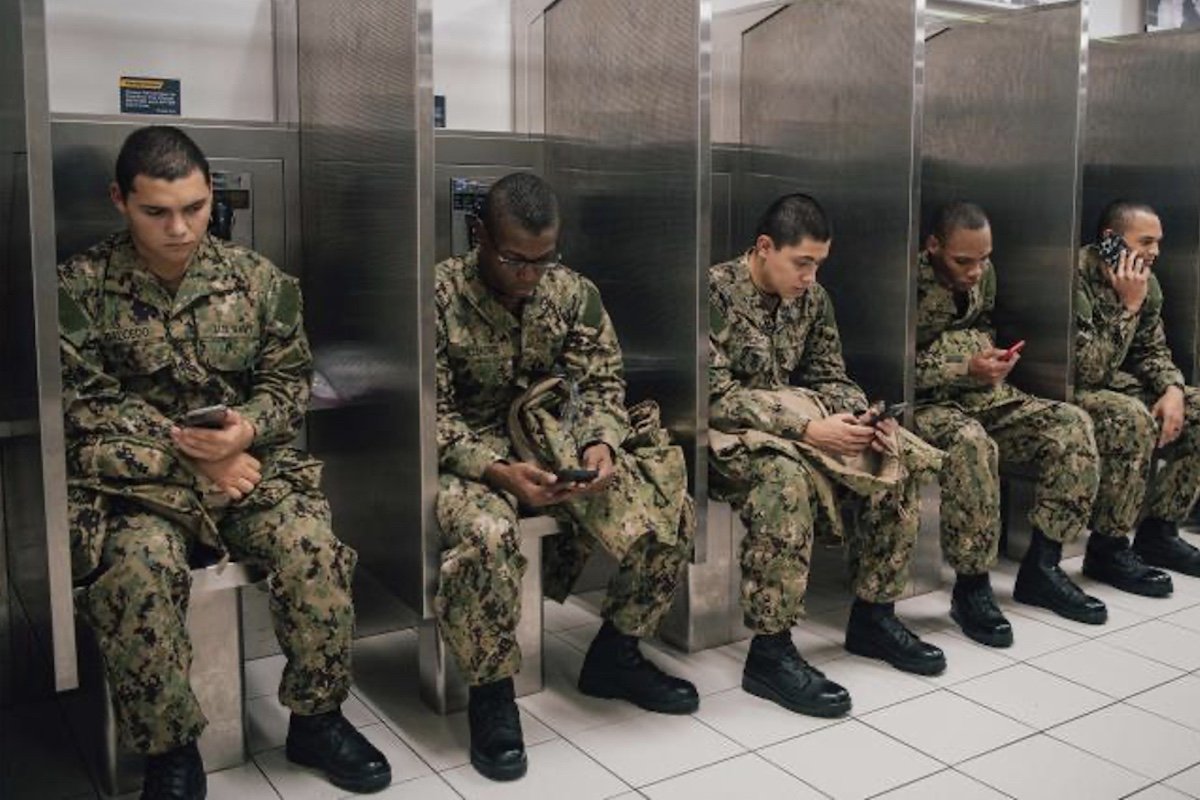
A recent data leak attributed to an Iran-linked hacking group should not be dismissed as a routine cyber incident. According to the Wall Street Journal, the Handala Hack Team claimed to have published the names and personal details of 2,379 US Marines stationed in the Persian Gulf region. The Stars and Stripes reported that US Central Command has referred questions to the Naval Criminal Investigative Service, while officials assess the authenticity of the leaked data.
More alarming than the data dump itself is the method of pressure. Task & Purpose reported that some US service members received threatening WhatsApp messages suggesting they were being watched. Handala has also claimed to hold home addresses, family information, base details, and daily routines. Whether every claim is accurate or exaggerated, the intent is clear: to make American personnel and their families feel exposed and vulnerable.
A New Form of Battlefield Pressure
This is why Washington should treat the incident as a force-protection issue, not merely a privacy breach. The US Department of Justice has already linked Handala-related infrastructure to Iranian cyber-enabled psychological operations. Reuters reported that the group quickly restored its online presence after US authorities seized domains, highlighting the resilience of these proxy-style cyber operations.
Handala fits a broader Iranian pattern. Security Week notes that the group has been tracked under several names, while Check Point Research identifies it as Void Manticore, an Iranian threat actor associated with destructive attacks and hack-and-leak operations. Unit 42 has also described Handala as a prominent Iran-linked persona blending data theft with political messaging.
The strategic context matters. Google Cloud’s M-Trends 2025 observed that Iran-nexus actors increased cyber operations and improved intrusion methods. The Center for Strategic and International Studies recently warned that Iranian cyber activity remains a serious threat to US organizations, while a joint CISA-FBI advisory specifically described Iranian campaigns combining data theft with online threats and harassment.
The wider cyber statistics are equally sobering. The Microsoft Digital Defence Report 2025 says nation-state actors are using more targeted and scalable cyber-influence tactics. The FBI’s 2025 Internet Crime Report put cyber-enabled crime losses at nearly $21 billion. IBM’s 2025 Cost of a Data Breach Report placed the global average breach cost at $4.4 million, and Verizon’s 2025 DBIR found third-party involvement in breaches had doubled to 30%.
Persian Gulf Danger
The Persian Gulf is not an ordinary posting. US Naval Forces Central Command says its Fifth Fleet area covers about 2.5 million square miles and includes three critical chokepoints: the Strait of Hormuz, the Suez Canal, and Bab el-Mandeb. US Central Command says its wider area spans more than 4 million square miles and more than 560 million people. In such a tense region, a phone number, address, or movement pattern can become operationally sensitive.
The US also has a huge human target surface. USAFacts reported that about 1.34 million active-duty troops were serving as of December 2025. Every deployed service member now carries a digital trail—old passwords, family social media, commercial data brokers, messaging apps, breached accounts, and travel habits. Iran-linked hackers do not need to steal a classified battle plan if they can build a credible intimidation profile from scattered personal data.
This escalation comes amid broader US-Iran tensions. A recent poll found that 61% of Americans now view Trump's Iran war as a mistake, reflecting public unease with the trajectory of US policy in the region. The Handala leak adds a new dimension to that anxiety, targeting not just troops but their families back home.
Stronger Response Needed
The Pentagon should respond with urgency but not panic. It should provide affected troops and families with identity-protection support, audit exposed contact information, review personal-device risks, monitor the dark-web resale of military data, and treat family safety as part of operational security. The FINRA cyber alert correctly identifies hack-and-leak operations as a deliberate tactic for reputational damage against soldiers; that damage can become a personal danger.
The US should also impose costs through attribution, sanctions, indictments, and disruption. But the deeper lesson is defensive. Unit 42’s analysis of evolving Iranian tactics shows how quickly these actors adapt. Handala’s message is meant to say that we can reach you beyond the base. America’s answer must be equally clear: personal data about troops is no longer an administrative afterthought—it is part of national defense.