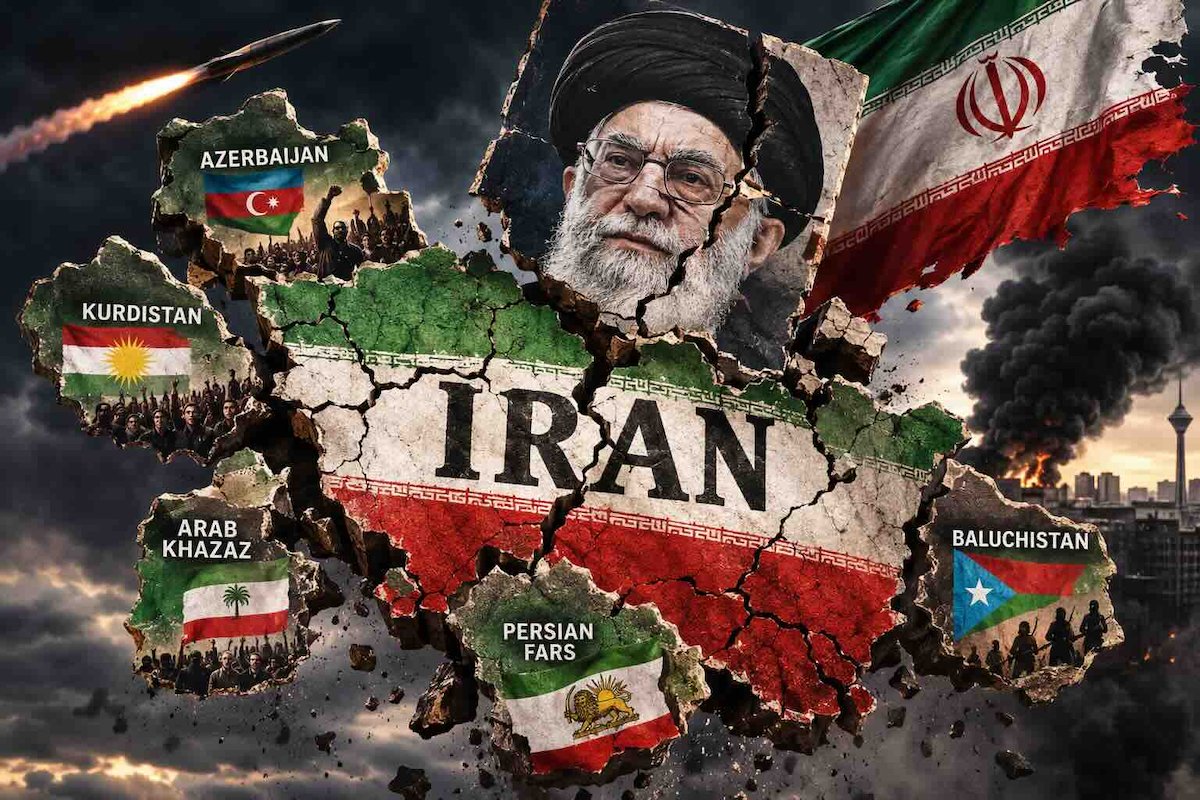
The Strait of Hormuz, a narrow waterway through which roughly a fifth of the world's oil passes, has long been a flashpoint for geopolitical tension. But the current crisis is not just about military posturing or economic leverage—it is about a political black hole emerging in Tehran. With the supreme leader's whereabouts unknown and his health in doubt, Iran's leadership is fracturing, and the consequences are rippling across Asia and beyond.
A Leadership Vacuum at the Top
Iranian state media have touted a potential deal with Oman that would ostensibly allow Tehran to maintain control over the strait. Yet many in Washington view any such arrangement as a threat to American and global commercial interests. International recognition of Iranian control would hand Tehran a powerful strategic tool—one it could wield in future disputes. The United States, already navigating complex negotiations with China and facing midterm elections, may seek to block that recognition.
But behind this apparent diplomatic victory lies a deeper transformation within Iran's regime. On August 5, China's official Xinhua news agency reported that Iranian President Masoud Pezeshkian said communication with Supreme Leader Mojtaba Khamenei has been difficult. Is Beijing signaling that it, too, cannot reach Tehran? And why would Pezeshkian make such a statement publicly?
According to Iranian media, Pezeshkian was taken to a secret location in Tehran and allowed only minutes in a dark, tinted-window car with a man presented as the supreme leader. It is unclear whether Mojtaba Khamenei is in control of his own life, let alone his country. These reports, coming from Iran's elected president, indicate a bitter split at the top, with the most radical elements of the Revolutionary Guards using Mojtaba as a figurehead to seize ultimate power.
Disarray and Devolution
This internal fragmentation has isolated both Mojtaba and the Revolutionary Guards, setting off new, disruptive dynamics. To preempt US decapitation strikes, Iran's command structures have been devolved to local levels, and recentralization seems unlikely. Rumors persist that Israel has contacts with senior officials in Tehran who could stage a coup. Such rumors fuel pervasive mutual suspicion, where anyone can be accused of treason at any moment.
These elements make it impossible to sustain clear, efficient decision-making. Any compromise could be vetoed by radical factions refusing to accept what they call a "traitor's surrender," while the supreme leader remains a ghost, handled by other ghosts. The country still retains manufacturing capacity for missiles and drones, along with ample stockpiles, but it is in deep disarray—on the verge of failing.
Even a failed state can survive and remain dangerous. Myanmar has endured years of internal conflict without a clear winner, with its military junta still in ultimate control. A failing Iran could expand a vast zone of instability stretching from Central Asia to the Mediterranean coast. The US has so far avoided being drawn into the Iranian quagmire, but Iran's disarticulation—even as it remains in de facto control of Hormuz—poses a different kind of threat to the region and the global oil supply.
Regional Realignment and China's Dilemma
On the bright side, Iran's failure is, for the first time, bringing together regional states once divided over how to cope with Tehran. They are now converging on ideas to limit Iran's harmful influence, building new medium- and long-term pressure on the regime. The region will likely hasten efforts to bypass Hormuz, and the strait will ultimately only constrain Iranian trade and further isolate the religious leadership.
For Beijing, this situation is a double-edged sword. While it may welcome America's setback, its inability to intervene and mediate leaves China out of the region's political dynamics, which are increasingly dominated by the US and Israel. Finding common ground with Washington and Israel could prove difficult for China, in part because Beijing may not see a clear upside in collaboration. However, the expansion of a political black hole along its borders may soon create new risks for China. The Iranian meltdown is occurring as Russia also struggles to hold its position in Ukraine, and China could soon find itself surrounded by zones of instability—a situation Beijing may want to prevent.
As the crisis deepens, the standoff over the strait shows no easy resolution. The threat to global food security is real, and the impact on ASEAN economies is already being felt. The region is watching closely, and the world is holding its breath.